
Arsenal Wins First Premier League Title in 22 Years

Emirates Stadium erupts in celebration as Arsenal clinches their first Premier League title in a generation, ending two decades of championship drought.
The atmosphere at Emirates Stadium reached a fever pitch as Arsenal was officially crowned Premier League champions, marking the culmination of a remarkable campaign that has captivated fans across the globe. The emotional weight of this victory cannot be overstated, as it represents the end of a two-decade-long drought for one of England's most storied football clubs. Outside the stadium, supporters of all backgrounds gathered to witness and celebrate this historic moment, their joy palpable in every cheer, embrace, and tear shed in recognition of years of waiting.
One father, standing amid the swelling crowd outside the ground, encapsulated the sheer magnitude of the achievement when speaking to his young son. "Twenty-two years," he said, shaking his head in a mixture of disbelief and reflection. "Twenty-two effing years." His words resonated throughout the celebrating masses, as countless Arsenal faithful grappled with the reality that their beloved club had finally returned to the summit of English football. The phrase became something of a rallying cry, repeated by supporters who had waited their entire adult lives for this singular moment of triumph.
The pivotal moment that essentially decided the title came when Eli Junior Kroupi gave Bournemouth an early first-half advantage in their match against Manchester City. This development sent shockwaves of optimism through the Arsenal fan base, as it became immediately apparent that City, Arsenal's principal title rivals, would struggle to overcome the deficit. From that moment forward, the red half of north London transitioned from anxious anticipation into confident celebration. The significance of Bournemouth's goal could not be understated, as it effectively removed Manchester City from contention in their head-to-head battle, making the path to glory substantially clearer for Mikel Arteta's side.

At the traditional Gunners pub located on Blackstock Road, the mood shifted dramatically as news of City's predicament filtered through to patrons who had been nervously monitoring the action. The landlord, clearly sensing the changing tide of fortune, was spotted holding a glass of champagne with undisguised optimism. While his premature celebration might have been partially motivated by the prospect of substantial financial returns from the anticipated surge in business, his gesture nonetheless symbolized the collective shift in sentiment among Arsenal supporters worldwide.
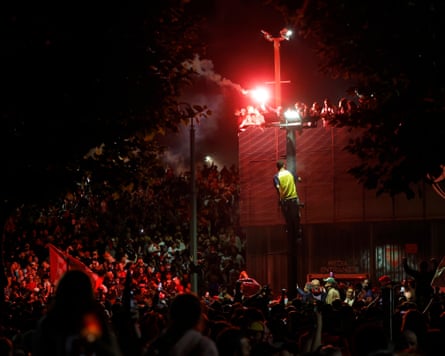
The gridlocked roads surrounding the stadium testified to the volume of supporters who had converged on the venue, transforming north London into a sea of red and white. Fans of every conceivable background and origin—including numerous expatriates who had traveled considerable distances to witness the moment—gathered in unified celebration of their shared passion. Young boys and girls, some still wearing their pyjamas, emerged from nearby homes to join the spontaneous street party that erupted in the surrounding neighborhoods. The scenes transcended traditional football support, becoming instead a genuine community celebration of resilience and collective achievement.
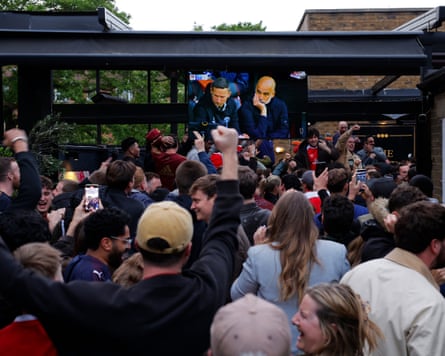
This historic championship victory represents far more than simply accumulating the most points across a Premier League season. For an entire generation of supporters, many of whom were born after Arsenal's last title win, this triumph validates years of steadfast loyalty during periods of underperformance and disappointment. The journey back to the top has been arduous, characterized by fluctuating fortunes, managerial changes, and persistent questions about whether the club possessed the requisite quality to compete with dominant rivals. Each setback along the way only strengthened the resolve of fans who refused to abandon their allegiance despite the prolonged drought.
The significance of this achievement extends beyond the immediate emotional gratification for supporters. It demonstrates that with proper investment, strategic planning, and patient building of a competitive squad, even long-suffering fanbases can witness their dreams realized. The club's management and coaching staff have crafted a team capable of sustaining excellence across an entire campaign, showcasing the kind of consistency and quality that defines true champions. The unity displayed by players, coaching staff, and supporters alike suggests that this could represent the beginning of a new era of dominance for the north London club.
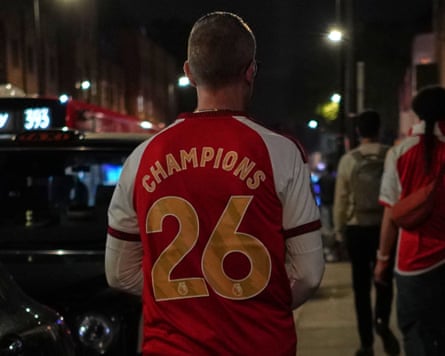
As the evening progressed, celebrations showed no signs of abating, with supporters remaining outside the stadium well into the night. Car horns honked continuously throughout the surrounding neighborhoods, while impromptu sing-alongs and displays of affection toward the club's colors dominated the streets. Taxi drivers, many of whom had navigated the chaotic traffic throughout the day, found themselves caught up in the infectious enthusiasm, some joining in celebrations or offering congratulations to jubilant passengers. The genuine happiness that pervaded the entire vicinity suggested that this achievement had touched something deeper than mere sporting success—it had restored hope and renewed faith in the institution.
Looking forward, this championship triumph establishes Arsenal as a force to be reckoned with in European and domestic football. The club now enters a new phase with enhanced credibility and the confidence that comes from performing under immense pressure and delivering results when it mattered most. For the father who had waited twenty-two years to share this moment with his son, and for countless others like him, the wait had been worth every long season of anticipation. The memories created on this extraordinary day will endure for generations, serving as a testament to the power of sporting passion and the transformative impact that victory can have on communities bound together by shared devotion to their club.
Quelle: The Guardian


