
Forever Chemicals Drop 74% in Seabird Eggs

Study shows dramatic decline in dangerous PFAS compounds in Canadian seabird eggs over 55 years, proving environmental regulations work.
A groundbreaking new peer-reviewed study reveals encouraging news in the fight against persistent environmental pollutants: levels of dangerous PFAS chemicals in Canadian seabird eggs have plummeted by up to 74% over more than half a century. The findings, published in a leading analytical science journal, provide compelling evidence that environmental regulations can successfully reverse the contamination of even the most stubborn pollutants in nature.
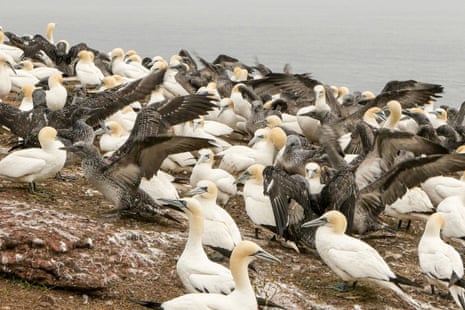
Researchers conducting this extensive investigation focused their attention on northern gannets nesting in the St. Lawrence Seaway basin, a critical ecosystem in eastern Canada. By analyzing egg samples collected over a 55-year period, scientists tracked how PFAS levels in these seabirds' bodies have changed dramatically since the 1960s. The data paint a striking picture of chemical contamination followed by recovery, offering hope that decisive environmental action can reverse even deeply entrenched pollution problems.
Per- and polyfluoroalkyl substances, commonly known as PFAS, earned their notorious nickname "forever chemicals" because they virtually never break down in the environment or in living organisms. These synthetic compounds were widely used throughout the latter half of the 20th century in industrial applications, non-stick cookware, water-resistant textiles, and fire-fighting foams. Their persistence and tendency to accumulate in biological tissues made them a growing concern for both wildlife and human health.
The historical trajectory of PFAS contamination in the gannet population followed a predictable but alarming pattern. During the 1960s, when these chemicals were beginning widespread industrial use, PFAS contamination levels in bird eggs were relatively low. However, as manufacturing and consumer applications expanded throughout the 1970s, 1980s, and 1990s, concentrations of these toxic compounds skyrocketed to dangerous levels. The peak years for PFAS in the seabird eggs corresponded with the late 1990s and early 2000s, when industrial use of these chemicals reached its historical zenith.
This peak period represented a critical moment for the St. Lawrence Seaway ecosystem. Northern gannets, as top predators in the marine food chain, accumulated PFAS at much higher concentrations than other organisms due to bioaccumulation—the process by which toxins build up in the tissues of organisms and become increasingly concentrated as they move up the food chain. The eggs of these birds served as an ideal biological indicator of overall environmental health and contamination levels in the region.
The dramatic turnaround in recent decades can be directly attributed to regulatory interventions implemented at both the national and international levels. Following growing scientific evidence of PFAS toxicity and environmental persistence, governments began restricting and banning specific PFAS compounds. These regulatory actions, combined with industry phase-outs of the most problematic chemicals, fundamentally altered the landscape of PFAS use and production.
The scientific research team behind this study emphasizes that their findings represent a powerful validation of the regulatory approach to environmental protection. By tracking PFAS concentrations across five and a half decades, they could isolate the effects of specific policy interventions and demonstrate causation rather than mere correlation. The 74% reduction in some of the most hazardous PFAS compounds clearly shows that when governments act decisively to restrict harmful chemicals, nature can recover and toxin levels can decrease substantially.
Understanding the specific PFAS compounds that showed the greatest decline provides additional insight into which regulations proved most effective. The most dramatic reductions occurred in those chemicals that faced the earliest and most comprehensive bans and restrictions. This correlation between regulatory action and chemical decline strengthens the argument for continued regulatory vigilance regarding other persistent organic pollutants and emerging contaminants of concern.
Northern gannets are particularly valuable subjects for environmental monitoring because they are long-lived seabirds with clear seasonal migration patterns and well-documented breeding colonies. The St. Lawrence Seaway basin, where these birds breed and feed, is also home to millions of people, making it a region where both wildlife and human health outcomes matter significantly. The recovery of PFAS levels in gannet eggs suggests corresponding improvements in the broader ecosystem and potentially in human exposure to these chemicals as well.
The implications of this environmental study extend far beyond the gannet population or even the St. Lawrence Seaway region. The research provides a template for understanding how regulatory intervention can address legacy pollutants that persist in the environment for decades. It demonstrates that even though PFAS chemicals are extremely stable and resistant to degradation, reducing their presence in ecosystems is achievable through coordinated policy action.
However, experts caution that while the progress documented in this study is genuinely encouraging, significant challenges remain. Many PFAS compounds are still in use in various industrial and commercial applications. New PFAS chemicals continue to be developed and introduced into commerce, sometimes as replacements for banned compounds. Additionally, PFAS contamination continues to occur through the use of firefighting foams at airports and military bases, and through the disposal of contaminated products and materials.
The study's authors hope their findings will strengthen the resolve of policymakers to continue and expand restrictions on PFAS use globally. They argue that the success demonstrated with northern gannet eggs provides clear evidence that regulatory approaches work and that similar interventions could be applied to other persistent pollutants threatening both wildlife and human populations worldwide. The dramatic decline in dangerous chemicals over five and a half decades offers a blueprint for environmental recovery.
Looking forward, ongoing monitoring of PFAS levels in seabirds and other environmental indicators will be crucial for assessing the long-term effectiveness of current regulations and identifying any emerging problems. Scientists emphasize that continued research and vigilant tracking of chemical contamination are essential components of environmental stewardship. The work done by the researchers in this study provides an important foundation for future chemical safety assessments and policy decisions.
The message from this research is clear: regulations protecting the environment work, and the evidence is written in the biology of the wildlife that share our planet. As the St. Lawrence Seaway's northern gannet population demonstrates through its eggs, when we commit to addressing chemical pollution through comprehensive and decisive regulatory action, we can reverse even the most stubborn environmental damage and restore balance to our ecosystems.
Источник: The Guardian

