
Trump's Board of Peace: Gaza's Future Hangs in Balance

Authoritarian leaders join Trump's inaugural Board of Peace meeting in Washington, expanding beyond Gaza to reshape global order with controversial membership.
A controversial assembly of global leaders convened in Washington for what Donald Trump has proclaimed as the inaugural session of his newly created Board of Peace. This unprecedented gathering brought together a diverse collection of world leaders, many of whom represent authoritarian regimes, alongside select international observers. The meeting marks a significant departure from traditional diplomatic forums and signals Trump's ambitious attempt to reshape international relations through his own institutional framework.
Guardian Europe correspondent Jakub Krupa has conducted an in-depth analysis of the attendees and the broader implications this organization may have for the established world order. The composition of this Board of Peace has raised eyebrows among diplomatic circles, particularly given the participation of leaders whose human rights records have been subject to international scrutiny. The meeting's agenda extended far beyond its original mandate, suggesting Trump's vision for this body encompasses much more than initially anticipated.
Originally conceived as a mechanism to implement Trump's comprehensive strategy for Gaza's reconstruction following the devastating conflict that left the territory in ruins, the Board of Peace has evolved into something far more expansive. The Palestinian territory, which suffered extensive destruction during the prolonged Israeli military campaign, was intended to be the primary focus of this new international body. However, Trump's ambitions for the organization have grown considerably since its inception.
The scope of the Board of Peace has undergone significant expansion since Trump first announced its creation. What began as a focused initiative to address the humanitarian and political crisis in Gaza has transformed into what the former president characterizes as a comprehensive solution to global conflicts. This evolution reflects Trump's broader foreign policy philosophy, which emphasizes direct engagement with world leaders regardless of their domestic governance records or international standing.
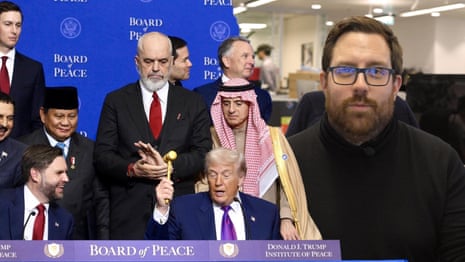
Trump's characterization of this new institution as 'the most consequential international body in history' represents a bold claim that positions it above established multilateral organizations such as the United Nations, NATO, and the G7. This ambitious description suggests Trump envisions the Board of Peace as a potential replacement or alternative to existing international frameworks that he has previously criticized as ineffective or biased against American interests.
The membership composition of the Board of Peace has generated significant controversy within international diplomatic communities. The inclusion of leaders from authoritarian regimes alongside democratic representatives creates an unusual dynamic that challenges conventional approaches to multilateral diplomacy. This eclectic mix of participants reflects Trump's transactional approach to international relations, prioritizing perceived effectiveness over ideological alignment or democratic values.
Analysis of the attendee list reveals a strategic selection process that appears to prioritize leaders who maintain cordial relationships with Trump personally, regardless of their nations' relationships with traditional American allies. This approach represents a continuation of Trump's previous presidential term, during which he frequently praised authoritarian leaders while criticizing democratic allies for what he perceived as unfair treatment of the United States.
The inaugural meeting's agenda focused heavily on two primary concerns: military deployment for Gaza peacekeeping operations and financial commitments for reconstruction efforts. These twin priorities underscore the practical challenges facing any international effort to stabilize and rebuild the devastated territory. The discussion of troop contributions suggests that Trump envisions a multinational peacekeeping force that would operate under the Board of Peace's auspices rather than traditional United Nations frameworks.
Financial considerations dominated much of the meeting's substantive discussions, with participants exploring various funding mechanisms for Gaza's extensive reconstruction needs. The scale of required investment is enormous, given the comprehensive destruction of civilian infrastructure, healthcare facilities, educational institutions, and residential areas throughout the territory. Estimates for complete reconstruction run into the tens of billions of dollars, requiring sustained international commitment over many years.
The Gaza reconstruction initiative faces numerous logistical and political challenges beyond simple funding considerations. Questions regarding governance structures, security arrangements, and the role of existing Palestinian authorities remain unresolved. The Board of Peace's approach to these complex issues will likely determine whether this initiative can achieve meaningful progress where previous international efforts have struggled.
Security arrangements for any peacekeeping force deployed to Gaza present particularly complex challenges. The territory's strategic location, dense population, and history of conflict create unique operational difficulties for international forces. Participants in the Board of Peace meeting discussed various models for peacekeeping deployment, including the possibility of creating a multinational force with contributors from nations not traditionally involved in Middle Eastern peacekeeping operations.
The expansion of the Board of Peace's mandate beyond Gaza reflects Trump's broader critique of existing international institutions. Throughout his political career, Trump has expressed frustration with multilateral organizations that he perceives as constraining American sovereignty or failing to adequately address global conflicts. The Board of Peace represents his attempt to create an alternative framework that he believes can operate more efficiently and effectively than traditional diplomatic channels.
Critics of the Board of Peace initiative argue that the inclusion of authoritarian leaders undermines its credibility and potential effectiveness. They contend that meaningful peace initiatives require commitment to democratic values and human rights principles that many board members do not uphold in their own countries. This criticism reflects broader concerns about the normalization of authoritarian governance through high-profile international engagement.
Supporters of Trump's approach argue that pragmatic engagement with all influential world leaders, regardless of their governance models, offers the best prospects for achieving concrete results in conflict resolution. They point to the limitations of traditional diplomatic approaches that often exclude important regional powers due to ideological differences or human rights concerns. This perspective emphasizes outcomes over process, arguing that effective conflict resolution requires flexibility in partner selection.
The timing of the Board of Peace's inaugural meeting coincides with broader shifts in the international system that may create opportunities for alternative diplomatic frameworks. Traditional alliances face various pressures, while emerging powers seek greater influence in global governance structures. Trump's initiative attempts to capitalize on these dynamics by offering a platform that transcends conventional alliance systems and ideological boundaries.
Regional implications of the Board of Peace extend far beyond its immediate focus on Gaza reconstruction. Middle Eastern nations view this initiative through the lens of broader regional power dynamics, including ongoing tensions between Israel and its neighbors, competition between Saudi Arabia and Iran, and the role of external powers in regional conflicts. The success or failure of the Gaza initiative could significantly influence future international approaches to Middle Eastern diplomacy.
The international community's response to Trump's Board of Peace has been mixed, with traditional allies expressing skepticism while some developing nations show interest in alternative diplomatic forums. European Union officials have indicated cautious observation of the initiative's development, while maintaining commitment to existing multilateral frameworks. This measured response reflects broader uncertainty about the Board of Peace's long-term viability and effectiveness.
Future meetings of the Board of Peace are expected to address additional regional conflicts and global challenges, potentially expanding its membership to include leaders from other conflict-affected regions. Trump's vision for the organization suggests ambitions that could eventually encompass conflicts in Africa, Asia, and Latin America, though the practical feasibility of such expansion remains questionable given the diverse nature of global conflicts and the varying interests of potential member nations.
The ultimate success of Trump's Board of Peace will likely depend on its ability to achieve tangible results in Gaza while maintaining the support of its diverse membership. The organization faces the challenge of balancing the competing interests and priorities of authoritarian and democratic members while addressing complex conflicts that have resisted previous international resolution efforts. As this unprecedented experiment in alternative diplomacy unfolds, its impact on both Gaza's future and the broader international system remains to be determined.
Kaynak: The Guardian


