
Jewish Man Charged in Pro-Palestinian Slogan Crackdown

73-year-old Jewish psychologist Stephen Heydt becomes first charged under Queensland's new hate speech laws, sparking comparisons to 1970s authoritarianism.
Stephen Heydt, a 73-year-old Jewish clinical psychologist, made headlines when he attended a rally in Brisbane last Saturday with intentions to peacefully express his political views. What began as an ordinary morning—donning a custom-made T-shirt and gathering his walking stick for support—transformed into a watershed moment in Australian free speech discourse. Within hours of addressing the crowd at the Brisbane gathering, Heydt found himself in police custody, arrested by what he describes as a large and heavily armed contingent of law enforcement officers.
Heydt's arrest represents a significant turning point in Queensland's approach to regulating public speech. The charges he faced were notably specific: one count related to his choice of clothing and a separate count for the words he spoke during his address. This dual-charge strategy underscores the breadth of the new legislation that authorities are employing to target what they characterize as antisemitic hate speech. The precision of the charges suggests that both symbolic speech through clothing and verbal expression now fall squarely within the purview of Queensland's enforcement mechanisms.
As one of the first individuals prosecuted under the recently enacted Queensland hate speech laws, Heydt's case has drawn considerable attention from civil liberties advocates, legal scholars, and political observers across Australia. The circumstances of his arrest—particularly given his own Jewish background—have sparked contentious debate about the scope and application of the legislation. Many commentators have questioned whether the laws are being applied in a manner consistent with their stated purpose and democratic principles.

The legislative framework underlying Heydt's charges represents Queensland's response to escalating tensions surrounding pro-Palestinian activism and accusations of antisemitic rhetoric at public gatherings. Policymakers in the state justified the introduction of these measures as necessary to protect Jewish communities from harassment and vilification in public spaces. However, the implementation of these laws has immediately encountered criticism from those who argue that they may infringe upon fundamental rights to freedom of expression and assembly.
Historical parallels have emerged in discussions surrounding Heydt's prosecution, with numerous commentators drawing comparisons to the 1970s Queensland era under former Premier Joh Bjelke-Petersen. During that period, Queensland became infamous for its heavy-handed approach to policing public dissent, with aggressive suppression of protests and restrictive laws that many historians now view as authoritarian. The comparison is not made lightly—it suggests that observers see troubling similarities in the state's current enforcement patterns and the political atmosphere surrounding the new hate speech legislation.
The Bjelke-Petersen era represented a particularly dark chapter in Queensland's democratic history, characterized by widespread police brutality, suppression of civil liberties, and laws that criminalized peaceful protest and political expression. During those decades, dissidents faced harassment, imprisonment, and violence from state authorities. Contemporary observers who invoke this historical reference are suggesting that Queensland's current trajectory toward stricter regulation of speech and assembly bears some worrying hallmarks of that repressive period.
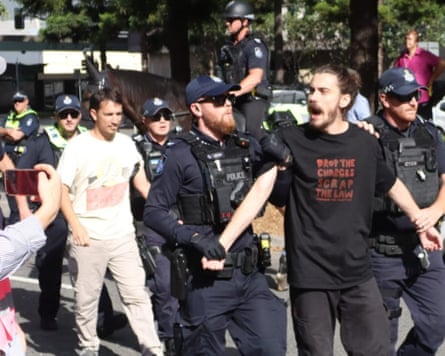
The specifics of Heydt's charges reveal the detailed nature of Queensland's enforcement approach. His custom-made T-shirt, which presumably displayed a message or slogan, became subject to legal scrutiny and formed the basis for one criminal charge. Simultaneously, the words he chanted or spoke at the rally triggered a separate charge. This methodical approach to multiple infractions suggests that prosecutors are interpreting the legislation expansively, treating both visual and verbal expressions as independently prosecutable offenses.
Legal experts have begun analyzing the constitutional and common law implications of these charges. Questions have been raised about whether the legislation satisfies established tests for restricting freedom of expression, including whether restrictions are reasonable, proportionate, and genuinely necessary to achieve legitimate objectives. The fact that Heydt himself is Jewish adds a significant layer of complexity to these discussions, as it undermines any straightforward narrative about the laws exclusively protecting vulnerable communities.
The arrest of Heydt has prompted soul-searching within Queensland's Jewish community itself. While some community leaders have supported measures to combat antisemitism, others have expressed concern that overly broad hate speech laws may ultimately harm rather than help vulnerable groups. These internal debates reflect broader tensions about how to address genuine concerns about discrimination while maintaining democratic freedoms and preventing the weaponization of laws against political opponents.
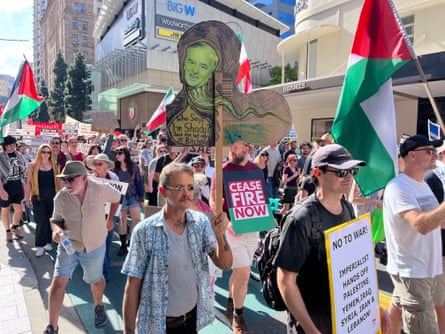
The timing of Heydt's prosecution carries significance in the context of ongoing Middle East geopolitical tensions and their domestic Australian repercussions. The Israel-Palestine conflict has become increasingly prominent in Australian political discourse and public activism. The Queensland government's introduction of stringent hate speech laws occurred amid this heightened focus on the conflict, raising questions about whether the legislation represents a proportionate response or an overreaction to legitimate political expression about international affairs.
Heydt's own background as a clinical psychologist adds another dimension to his public profile. His professional expertise in human psychology and mental health lends credibility to his articulate discussions of these complex issues. His willingness to risk legal jeopardy by attending and speaking at the rally suggests a deep commitment to principles he believes warrant public advocacy, despite the personal consequences he now faces.
The broader implications of this case extend beyond the individual circumstances of Stephen Heydt's prosecution. Civil liberties organizations, journalists, and legal scholars are watching closely to see how the Queensland courts interpret and apply the new hate speech legislation. The outcomes of these early prosecutions will likely shape the trajectory of free speech protection in Australia for years to come. Whether courts uphold the charges against Heydt or strike them down as unconstitutional will send powerful signals about the boundaries of permissible political expression in contemporary Australia.
As this case develops, Australians from across the political spectrum are grappling with fundamental questions about the proper balance between protecting vulnerable communities from genuine discrimination and preserving the democratic freedoms that characterize open societies. The prosecution of Stephen Heydt—a man who shares the religious identity that the law purports to protect—exemplifies the potential contradictions and unintended consequences that can arise when legislation is drafted or enforced too broadly. His case will likely become a defining test of how Queensland's new hate speech laws function in practice and whether they serve their stated protective purpose or instead become tools for suppressing legitimate political discourse.


