
Samsung Union Halts Strike With Bonus Deal Victory

Samsung's union suspends strike action after securing tentative agreement on employee bonuses, avoiding disruption to memory chip production.
In a significant development for South Korea's technology sector, Samsung's union has announced the suspension of a planned strike that threatened to disrupt the company's critical memory chip manufacturing operations. The decision comes after negotiators reached a tentative agreement focused on resolving disputes over employee bonus compensation, marking a potential breakthrough in labor negotiations at one of the world's largest semiconductor manufacturers.
The strike suspension represents a major turning point in ongoing labor discussions between Samsung management and union representatives. For weeks, tensions had escalated as the union demanded improved bonus structures and compensation packages for its workforce. The tentative deal addresses these core concerns, providing workers with enhanced benefits while allowing Samsung to maintain uninterrupted production schedules. This agreement demonstrates the willingness of both parties to find common ground on critical labor issues affecting thousands of employees.
Samsung's memory chip production stands as one of the most crucial operations within the company's vast industrial empire. Any disruption to these manufacturing facilities would have rippled through global supply chains, potentially affecting smartphone makers, data center operators, and countless other technology companies dependent on semiconductor supplies. The union's decision to suspend strike action therefore carries implications far beyond Samsung's walls, impacting the broader technology ecosystem and global chip markets.
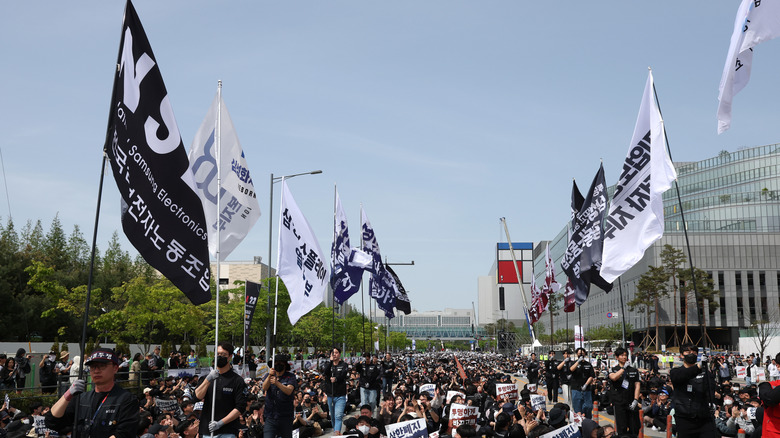
The bonus agreement negotiated between union leadership and Samsung executives represents months of intensive discussions and strategic positioning by both sides. Union representatives had threatened work stoppages to pressure the company into meeting their wage demands and improved benefit structures. Samsung, facing potential production delays and international criticism over labor practices, ultimately decided that negotiating a resolution served its long-term business interests more effectively than enduring a prolonged strike.
Key aspects of the tentative deal remain under careful review by union members, who will ultimately need to ratify any final agreement. The union has scheduled consultations with its membership to present the proposed terms and gather feedback before making a definitive decision. This deliberative process ensures that rank-and-file workers have a voice in determining whether the negotiated settlement adequately addresses their concerns and expectations. The transparent approach reflects efforts by union leadership to maintain member confidence and support throughout the labor dispute.
The labor negotiations at Samsung occurred against a backdrop of broader tensions in South Korea's technology sector regarding worker compensation and employment conditions. Union activists have increasingly organized across major conglomerates to secure better pay, job security, and workplace benefits. Samsung's willingness to negotiate a settlement sends a message to other technology companies about the growing bargaining power of organized labor in high-skill manufacturing environments.
Industry analysts have noted that Samsung's chip division operates under particularly tight production schedules, making any work stoppages especially costly to the company's financial performance and market position. The global semiconductor industry continues to experience strong demand from artificial intelligence applications, cloud computing infrastructure, and consumer electronics manufacturers. Any disruption to Samsung's memory chip output during this period of sustained demand would have resulted in significant lost revenue and market share erosion to competing manufacturers.
The suspension of strike plans demonstrates the complex dance of modern labor relations in multinational technology companies. Union representatives must balance their members' legitimate demands for improved compensation against the economic realities facing major manufacturers in competitive global markets. Samsung management, conversely, must recognize that maintaining worker satisfaction and loyalty represents a strategic investment in operational stability and long-term productivity. The tentative agreement appears to have found an equilibrium point satisfying these competing concerns.
Financial implications of the bonus deal will likely be incorporated into Samsung's upcoming earnings reports and financial guidance. Investors will scrutinize how the company accounts for enhanced compensation costs and whether the agreement strengthens or potentially strains profit margins. Market analysts have generally viewed labor peace at major technology manufacturers positively, valuing production stability and workforce retention over short-term cost minimization.
The resolution also reflects changing global attitudes toward labor relations within the technology sector. Major investors and consumers increasingly scrutinize companies' employment practices, viewing fair compensation and workplace conditions as important corporate responsibility indicators. Samsung's decision to reach a negotiated settlement rather than resist union demands aligns with broader corporate trends toward recognizing worker rights and dignity in high-technology manufacturing.
Union representatives have emphasized that the tentative agreement represents progress on long-standing grievances affecting Samsung's workforce. The bonus structure improvements particularly address concerns about pay inequality and recognition of workers' contributions to Samsung's profitability and market success. While details remain confidential pending official announcements, union leaders have indicated satisfaction with key provisions negotiated on behalf of their members.
Looking forward, the Samsung labor settlement may establish precedents for other technology manufacturers operating in South Korea and globally. If union members ratify the agreement and implementation proceeds smoothly, other companies' workforces may point to Samsung's concessions as justification for demanding similar improvements. Conversely, if the deal faces ratification challenges or implementation difficulties, it could influence how future labor negotiations unfold across the sector.
The production continuity achieved through the strike suspension provides critical reassurance to Samsung's customers and partners who depend on reliable semiconductor supplies. Original equipment manufacturers, system integrators, and technology companies worldwide can now proceed with confidence that Samsung's manufacturing capacity remains available to meet their needs. This stability strengthens Samsung's competitive position and maintains customer relationships built on reliable delivery commitments.
As the union membership prepares to review and potentially ratify the tentative agreement, attention remains focused on whether this settlement genuinely resolves underlying labor tensions or merely postpones future confrontations. The coming weeks will prove decisive as union members weigh the proposed terms and determine whether the negotiated improvements justify accepting management's final offer. Their decision will ultimately determine whether Samsung has achieved lasting labor peace or merely secured a temporary truce before negotiations resume.
来源: Engadget


