
Ted Turner, CNN Founder, Dies at 87

Ted Turner, the visionary media mogul who founded CNN and revolutionized global television news, has passed away at age 87. His legacy reshaped broadcasting.
Ted Turner, the legendary media mogul who fundamentally transformed the landscape of television journalism and established CNN as a groundbreaking news organization, has died at the age of 87. The news of his passing was officially confirmed by his family and subsequently reported by CNN on Wednesday, based on an announcement released through Turner Enterprises, the holding company that oversees his extensive business interests and philanthropic endeavors.
Turner's death marks the end of an era in broadcasting history, closing a chapter on one of the most influential and innovative figures in the development of modern news media. His visionary approach to journalism and his willingness to take bold risks fundamentally altered how news was gathered, reported, and distributed to audiences around the world. Throughout his lengthy career, Turner demonstrated an unwavering commitment to pushing boundaries and challenging conventional wisdom about what television news could achieve.
In a formal statement released following the announcement of Turner's death, Mark Thompson, who serves as the chairman and chief executive officer of CNN Worldwide, paid tribute to the late founder's exceptional leadership and pioneering spirit. Thompson characterized Turner as "an intensely involved and committed leader, intrepid, fearless and always willing to back a hunch and trust his own judgement." These words encapsulated the essence of Turner's approach to business and media innovation, qualities that defined his extraordinary career spanning several decades.
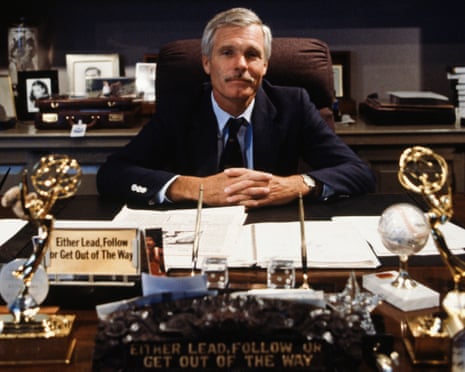
The founding of CNN in 1980 represented a watershed moment in television broadcasting history. Turner's audacious vision of creating a 24-hour news network was considered wildly unconventional at a time when traditional networks broadcast news at fixed intervals throughout the day. Despite skepticism from industry observers and competitors who dubbed the network the "Chicken Noodle Network," Turner persisted in his conviction that continuous news coverage represented the future of broadcast journalism. His pioneering concept eventually proved to be not merely viable but revolutionary, fundamentally reshaping how news organizations operated and how audiences consumed current events.
CNN's launch fundamentally disrupted the established news industry by introducing the concept of round-the-clock coverage that could respond immediately to breaking news as events unfolded. This innovation in television news meant that significant events could be covered live and in their entirety, rather than waiting for scheduled news broadcasts. The network's ability to provide continuous coverage during major international events, natural disasters, and political developments gave it an unprecedented advantage and established it as an essential source of information for viewers worldwide.
Beyond his role as a visionary broadcaster, Turner was also known for his controversial and sometimes contradictory public persona. He was outspoken on matters ranging from environmental conservation to international relations, often expressing opinions that sparked debate and discussion. His colorful personality and candid remarks made him a frequent presence in media coverage, and his influence extended far beyond the confines of the newsroom into broader cultural and political conversations.
Turner's business acumen extended well beyond the realm of news broadcasting. His Turner Broadcasting System accumulated an impressive portfolio of media properties that included TBS, Turner Network Television (TNT), and the Cartoon Network, among numerous other ventures. This diversification demonstrated his keen understanding of media markets and his ability to identify emerging opportunities for growth and expansion. His companies collectively generated substantial revenues and established him as one of the most successful media entrepreneurs of his generation.
The impact of Turner's legacy in global news cannot be overstated. CNN's model of continuous news coverage became the standard adopted by news organizations worldwide, fundamentally altering the competitive landscape of broadcast journalism. Networks that initially dismissed Turner's concept eventually rushed to develop their own 24-hour news capabilities, recognizing the competitive advantage that continuous coverage provided. Turner's willingness to invest heavily in a concept that many dismissed as impractical ultimately vindicated his business instincts and demonstrated his superior understanding of emerging media trends.
Throughout his life, Turner remained deeply engaged with his business operations and strategic direction, earning respect from colleagues and competitors alike for his operational knowledge and decision-making capabilities. His hands-on management style and willingness to make bold decisions, often based on instinct and conviction rather than extensive market research, became legendary in business circles. These qualities, while sometimes controversial, were instrumental in building CNN into the powerful institution it became.
In addition to his broadcasting achievements, Turner was also recognized for his substantial philanthropic contributions and environmental advocacy. He established the Turner Foundation and committed significant resources to causes related to environmental conservation, nuclear risk reduction, and other global challenges. His financial commitments and public advocacy on these issues demonstrated a deep concern for broader social and environmental consequences of global development and policy.
Turner's influence on news media industry standards extended to his hiring practices and editorial philosophies. He recruited talented journalists and broadcasters, many of whom went on to establish distinguished careers in their own right. The culture he fostered at CNN emphasized aggressive news gathering, comprehensive coverage, and a commitment to breaking stories first. This competitive ethos became embedded in the network's DNA and influenced generations of journalists who passed through its ranks.
The era of Turner's most direct involvement in CNN operations coincided with some of the network's most significant journalistic achievements and international coverage milestones. During the Gulf War, CNN's ability to provide live coverage from Baghdad when other networks had withdrawn their personnel demonstrated the network's unique capabilities and global reach. Such moments cemented CNN's position as a leader in broadcast journalism and vindicated Turner's original vision of continuous, breaking news coverage.
Turner's death at age 87 concludes a remarkable life characterized by innovation, risk-taking, and an unshakeable belief in his own instincts. His contributions to media and journalism fundamentally altered the trajectory of broadcast news, creating templates and standards that persist in the industry today. The 24-hour news cycle that dominates contemporary media landscape owes its existence to Turner's bold vision and his determination to pursue it despite considerable initial skepticism and opposition from established interests.
The passing of Ted Turner marks the end of a transformative period in media history. His legacy continues to influence how news organizations structure their operations, allocate resources, and approach coverage of significant events. For journalists, broadcasters, and media professionals worldwide, Turner's life and career serve as a reminder of the power of visionary thinking and the importance of trusting one's convictions in the face of conventional wisdom and institutional resistance.
来源: The Guardian


