
150 Former WHSmith Stores Set to Close

Up to 150 former WHSmith high street locations, rebranded as TGJones by Modella Capital, face imminent closure. Learn about the retail collapse.
In a significant blow to the high street retail landscape, up to 150 former WHSmith stores are facing closure after being acquired and rebranded by investment firm Modella Capital. The stores, which were originally part of the iconic British retailer's extensive network, were purchased last year and subsequently rebranded under the new name TGJones as part of an ambitious turnaround strategy that ultimately failed to deliver the expected results.
The acquisition represented what appeared to be a promising opportunity for the struggling retail locations. Modella Capital, viewing the portfolio as a chance to revitalize underperforming high street properties, invested in the stores with ambitious plans to transform them into a new retail concept. However, the rebranding initiative and operational restructuring have not achieved the commercial success that stakeholders had anticipated, leading to the difficult decision to close the majority of these locations.
This development represents another chapter in the ongoing challenges facing Britain's high street, which has been under considerable pressure from changing consumer shopping habits, increased competition from online retailers, and the lasting economic impacts of recent global disruptions. The store closures will likely result in significant job losses across multiple locations and further diminish the retail presence in numerous town centers throughout the United Kingdom.
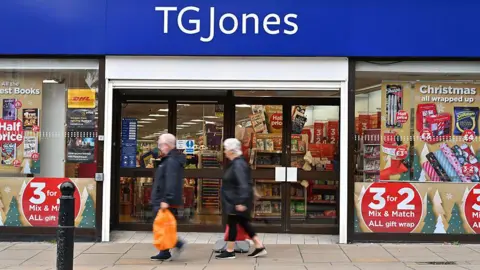
The journey of these stores from WHSmith to TGJones represents a cautionary tale about retail transformation in the modern era. When Modella Capital acquired the properties, the plan was to leverage the existing customer base and established locations to create a new retail identity that could better compete in the contemporary marketplace. The TGJones brand was intended to offer a fresh approach to retail, potentially incorporating updated merchandise, improved customer experiences, and modern store designs that would appeal to evolving consumer preferences.
However, the execution of this retail strategy appears to have encountered substantial obstacles. The rebranding effort, while comprehensive in scope, failed to generate sufficient customer engagement and footfall to sustain the expanded store network. This outcome highlights the inherent difficulties in attempting to rehabilitate struggling retail locations through branding initiatives alone, particularly in an environment where structural changes in consumer behavior have fundamentally altered the retail landscape.
The broader context of these closures cannot be overlooked when considering the implications for Britain's retail sector. Over the past several years, major retailers have faced unprecedented challenges, with numerous established brands closing significant portions of their store networks or exiting the market entirely. The shift toward online shopping, accelerated dramatically during recent years, has permanently altered consumer expectations and purchasing patterns, making traditional brick-and-mortar retail increasingly challenging to sustain profitably.
For the employees working across these TGJones locations, the announcement of closure plans represents considerable uncertainty regarding their employment prospects. The closure of 150 stores could affect thousands of workers across the country, many of whom may struggle to find comparable employment in areas where retail opportunities have been steadily diminishing. Local communities that depend on these retail establishments will also face the loss of important gathering spaces and shopping destinations within their high streets.
The WHSmith store closures also raise important questions about the viability of large-scale retail portfolios in the contemporary market. What appears evident is that simply rebranding stores and applying cosmetic changes is insufficient to ensure long-term commercial viability in an increasingly digital retail environment. Successful retail transformation requires more fundamental changes, including substantial investment in store infrastructure, compelling product differentiation, and the creation of unique shopping experiences that cannot be replicated online.
Modella Capital's experience with the TGJones venture underscores the risks involved in retail acquisition and turnaround strategies during a period of sustained industry disruption. The investment thesis that drove the acquisition—that these former WHSmith locations represented undervalued assets with turnaround potential—has not been validated by market realities. The company's decision to proceed with the planned closures reflects a pragmatic recognition that continuing to operate the struggling stores would likely result in mounting losses.
Looking forward, the question remains regarding what will become of these vacant retail properties once closures are complete. The high street faces a significant surplus of empty storefronts, creating challenges for property owners and local authorities attempting to revitalize town centers. Some locations may be repurposed for alternative uses, including residential conversions, office spaces, or hospitality venues, while others may remain vacant, contributing to further deterioration of the shopping experience in affected areas.
The closure announcement serves as a sobering reminder of the structural challenges confronting traditional high street retail in the United Kingdom and beyond. While e-commerce and digital channels continue to capture increasing market share, the physical retail environment struggles with high operational costs, limited consumer traffic, and changing expectations about the role stores should play in the overall shopping experience. For investors and operators like Modella Capital, the lesson is clear: success in modern retail requires more than acquisition and rebranding—it demands fundamental innovation and alignment with evolving consumer preferences.
As these 150 stores prepare to close, the broader retail industry will be watching closely for insights into what works and what doesn't in attempting to revitalize struggling high street locations. The TGJones experience, while ultimately unsuccessful, provides valuable data points for understanding the limitations of traditional turnaround strategies in a rapidly evolving retail landscape. For communities, workers, and stakeholders invested in these locations, the closure represents yet another chapter in the ongoing transformation of Britain's high street, a process that shows no signs of slowing down.
Source: BBC News


