
1944 Northern Ireland Murder: US GI's Dark Legacy

Historical research reveals details of William Harrison's conviction for murdering seven-year-old Patsy Wylie in Northern Ireland during WWII.
A haunting chapter of World War II history has resurfaced through recent historical research, shedding new light on a tragic crime that shook a small rural community in Northern Ireland during 1944. The case centers on William Harrison, a US soldier stationed in the region, whose conviction and execution marked one of the most disturbing incidents involving Allied forces during the war years. The murder of seven-year-old Patsy Wylie remains a sobering reminder of the darker aspects of wartime occupation and the vulnerability of civilians to military personnel deployed in their communities.
On the afternoon of 25 September 1944, Harrison approached the cottage of the Wylie family in Killycolpy, County Tyrone, with an seemingly innocent proposition. The American serviceman offered to purchase sweets and treats for the children of the household, a gesture that initially appeared friendly and generous. Having visited the Wylie residence on previous occasions, Harrison was not a complete stranger to the family, though he could hardly be considered a close friend. His familiarity with the household made the approach seem unremarkable to those present.
Mary Wylie, the mother of the household, made a decision that would prove tragically consequential. Trusting the soldier's offer, she permitted Harrison to take her young daughter Patsy across the nearby fields toward the local shops. The child, described as a bright seven-year-old, accompanied the American soldier on what should have been a simple errand to purchase confectionery. This act of parental trust, which would have seemed entirely ordinary under normal peacetime circumstances, became the last time Patsy Wylie would be seen alive.

The events that followed shocked the tight-knit community and drew urgent attention from both civilian authorities and military investigators. When Patsy failed to return home within a reasonable timeframe, alarm spread quickly through the small rural village. Search parties were organized, and the desperate hunt for the missing child soon turned into a criminal investigation when her body was discovered. The circumstances surrounding her death pointed to foul play, and suspicion rapidly focused on Harrison, who had been the last person seen with the child.
The murder investigation that followed involved coordination between civilian police forces and American military authorities stationed in Northern Ireland. Given that the accused was a US serviceman, the case carried significant diplomatic and procedural complexities. However, the evidence gathered by investigators was compelling, leading to Harrison's arrest and formal charges. The investigation examined the movements of the soldier, physical evidence from the crime scene, and witness testimonies from community members who had observed his interactions with the Wylie family in preceding weeks.
Historical records indicate that the case against Harrison was robust enough to proceed to trial. The subsequent legal proceedings took place within the context of wartime justice, where military and civilian courts sometimes worked in tandem to address serious crimes committed by service personnel. Harrison's conviction was secured through the presentation of forensic and circumstantial evidence, though specific details of the trial proceedings and evidence presentation have become somewhat obscured by the passage of eight decades.
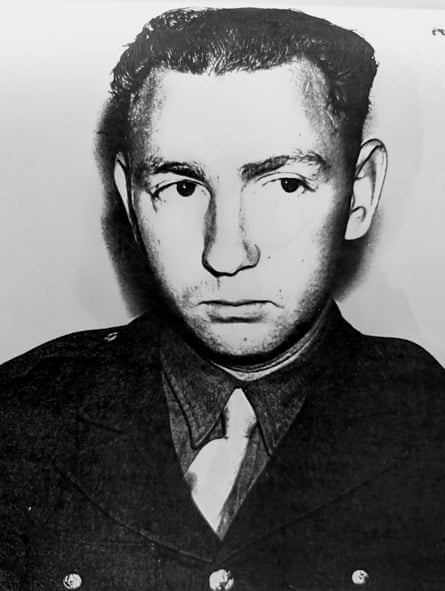
Following his conviction, Harrison received a death sentence, and the execution was subsequently carried out by hanging, making this one of the most severe punishments administered during the wartime period in Northern Ireland. The execution represented the military's determination to hold its personnel accountable for serious crimes, regardless of their status as Allied soldiers in a region where American forces were positioned as allies against Nazi Germany. The case became a matter of historical record, though details were gradually forgotten as decades passed and survivors of the era aged.
Recent historical research has revived interest in this tragic episode, bringing renewed attention to the circumstances surrounding Patsy Wylie's death and Harrison's conviction. Historians and researchers have examined archival documents, military records, and contemporary accounts to reconstruct the events of 1944 with greater precision and context. This scholarly work helps illuminate not only the immediate tragedy but also broader questions about military discipline, civilian protection, and the social dynamics between Allied forces and local populations during World War II.
The case reflects important historical themes relevant to understanding the Second World War's impact on home front communities. While the vast majority of Allied soldiers conducted themselves honorably during their deployments, isolated incidents of serious crimes served as reminders of the challenges inherent in stationing large numbers of military personnel in civilian areas. The presence of approximately 200,000 American troops in Northern Ireland during the peak years of US involvement in the European theater created inevitable cultural tensions and occasional criminal incidents.
For the Wylie family and the broader community of Killycolpy, the loss of young Patsy represented an unimaginable tragedy that extended far beyond the immediate crime. Family members lived with the trauma of the incident and its aftermath, and the community bore witness to a crime that violated the sanctity of childhood and the trust extended to those who were supposed to be protectors. The case would remain embedded in local memory for generations, a dark footnote to the history of wartime Northern Ireland.
The renewed historical examination of this case serves multiple purposes in contemporary scholarship. It provides closure and recognition to a victim whose story had faded from public consciousness, honors the memory of a child whose life was cut tragically short, and contributes to a more complete and honest historical record of the Second World War era. Furthermore, the research demonstrates how communities preserve and eventually reclaim difficult historical narratives, ensuring that such incidents are not erased from collective memory.
Understanding cases like Patsy Wylie's murder requires acknowledging the complexities of wartime occupation and the tragic consequences that could result from the intersection of military presence and civilian vulnerability. While the war itself may have ended nearly eighty years ago, the historical significance of such incidents remains relevant to discussions about military accountability, child protection, and the true costs of armed conflict on local communities. The research that continues to illuminate these historical episodes contributes to a more nuanced and comprehensive understanding of the World War II period and its lasting impacts on society.
Source: The Guardian


