
4,000 Extra Officers Deploy as London Faces Dual Mass Marches

Metropolitan Police mobilize unprecedented resources for Tommy Robinson's Unite the Kingdom rally and Nakba Day pro-Palestine march in central London.
The Metropolitan Police has announced a major security operation in central London, deploying an extraordinary 4,000 additional officers to manage what senior officials are calling potentially "one of the busiest days for policing in recent years." The unprecedented show of force comes as the capital prepares to host two significant and contentious demonstrations simultaneously, with authorities bracing for what could be one of the most challenging policing situations in recent memory.
The dual demonstrations set to take place in central London include the Unite the Kingdom (UTK) rally organised by far-right activist Stephen Yaxley Lennon, commonly known as Tommy Robinson, alongside the annual Nakba Day pro-Palestine march. These events, scheduled for the same day in the same general area, have prompted Metropolitan Police to mobilise an extensive array of resources and personnel to maintain public order and prevent potential conflicts between opposing groups.
Beyond the deployment of 4,000 uniformed officers, police will utilise an impressive array of specialised equipment and resources to manage the demonstrations. Armoured vehicles, mounted police units on horseback, specially trained police dogs, surveillance drones, and helicopter support have all been authorised for deployment throughout central London. This comprehensive security apparatus underscores the seriousness with which authorities are treating the logistical and safety challenges posed by hosting these two major protests simultaneously.
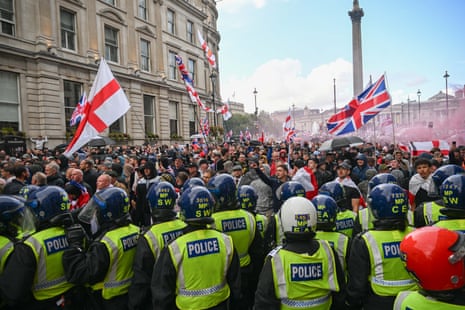
Tommy Robinson's Unite the Kingdom movement has been a source of considerable controversy and concern among police and community leaders. Robinson, whose real name is Stephen Yaxley Lennon, has become a prominent figure in far-right activism circles, and his organised rallies frequently attract large crowds of supporters. The UTK rally represents one of his larger organising efforts, and the movement itself has generated significant debate about free speech, public safety, and the right to protest in British democracy.
In contrast, the annual Nakba Day march, which commemorates what Palestinians call the catastrophe of the 1948 displacement during the Israeli-Palestinian conflict, has become an established fixture on London's protest calendar. The pro-Palestine march typically draws tens of thousands of participants and represents a sustained movement calling for Palestinian rights and solidarity. The timing of these two demonstrations on the same day has created a complex and challenging scenario for law enforcement.
Metropolitan Police leadership has indicated that the scale of expected attendance at both demonstrations necessitates this extraordinary mobilisation of resources. Officials estimate that tens of thousands of people could converge on central London, creating significant logistical challenges for traffic management, public safety, and preventing potential confrontations between groups holding fundamentally opposed political views. The deployment represents one of the largest police operations the capital has seen in recent times.
The decision to deploy armoured vehicles reflects the serious consideration police have given to potential risks associated with large-scale political demonstrations in a major urban centre. These vehicles serve multiple purposes, including rapid response capabilities, protection for officers, and psychological deterrence against individuals who might otherwise engage in violent behaviour. The inclusion of such equipment signals that authorities are taking no chances with public safety.
Mounted police units will play a crucial role in managing crowd movements and maintaining separation between opposing groups if necessary. Horses remain one of the most effective tools for crowd control, as they provide officers with height advantages and can be deployed to create barriers and direct pedestrian traffic. Additionally, the psychological impact of mounted units often encourages compliance without the need for more forceful interventions.
Police dogs and their handlers will be positioned throughout demonstration areas to provide additional security capabilities and detect potential threats. These specially trained canines serve multiple functions, from sniffing out potential weapons or explosives to providing support for officers managing crowds. Their presence, like mounted units, often has a deterrent effect on individuals considering illegal behaviour.
The deployment of surveillance drones represents a modern advancement in police capabilities for managing large public events. Drones provide real-time aerial views of crowd movements, allowing commanders to coordinate resources more effectively and respond rapidly to developing situations. This technology has become increasingly important for law enforcement managing demonstrations in densely populated urban areas.
Helicopter support will be available to provide additional surveillance capabilities and rapid transport for officers if emergency situations develop. The presence of helicopters also serves a deterrent function, as their visibility sends a clear message that law enforcement is fully mobilised and prepared for all contingencies. This level of aerial support is typically reserved for only the most significant public order situations.
The Metropolitan Police's classification of this day as potentially "one of the busiest days for policing in recent years" reflects the genuine challenges involved in simultaneously managing two large, politically motivated demonstrations. Police must balance the constitutional right to peaceful protest with the responsibility to prevent violence and maintain public safety. This balancing act becomes exponentially more complex when opposing groups are exercising their right to protest at the same location and time.
Intelligence gathering has clearly played a significant role in determining the scale of the police response. Metropolitan Police specialists have assessed intelligence regarding both demonstrations, including expected attendance figures, potential flashpoints, and historical patterns from similar events. This intelligence-driven approach allows police to deploy resources where they are most likely to be needed.
The coordination required for this operation extends beyond the Metropolitan Police itself, involving multiple agencies and organisations responsible for public safety, traffic management, and emergency services. Transport authorities must prepare for significant disruptions to normal service, emergency medical services must position additional resources, and local authorities must prepare contingency plans for various scenarios. This multi-agency coordination is essential for managing such complex public order situations effectively.
As London prepares for what promises to be one of the most challenging policing days in recent years, the Metropolitan Police has made clear that their priority remains maintaining public safety while protecting the right to peaceful protest. The extraordinary deployment of resources, from personnel to specialised equipment, demonstrates the seriousness with which authorities are approaching this complex challenge. The coming day will test the capabilities of law enforcement and the resilience of London's communities as the capital prepares to host these significant and contentious demonstrations.


