
42% Plunge: Canadians Shun US Cities Under Trump

University of Toronto research reveals Canadians are dramatically avoiding US metropolitan areas during Trump's second term, with a 42% drop in visits.
A groundbreaking research study from the University of Toronto has unveiled a significant shift in cross-border travel patterns, revealing that Canadians are substantially reducing their visits to major metropolitan areas throughout the United States. The findings, derived from innovative cell phone tracking technology, paint a compelling picture of how political circumstances are influencing consumer behavior and tourism trends between the two neighboring nations during the second Trump administration.
The data collected through an advanced cell phone tracking tool demonstrates a stark 42% year-over-year decline in Canadian visitors traveling to prominent US cities. This figure substantially exceeds the official border-crossing statistics released by government agencies, which reported a more modest 25% reduction in crossings. The discrepancy between these two data sources suggests that Canadians are making a deliberate choice to avoid American metropolitan centers specifically, rather than simply reducing overall cross-border travel.
Researchers from the University of Toronto emphasized that their findings represent a "median decline of approximately 42% in Canadian visits to US metropolitan areas – significantly higher than official border-crossing data." This observation indicates that travelers may be redirecting their journeys toward alternative destinations or domestic locations rather than crossing the border entirely. The distinction between metropolitan area visits and overall border crossings provides important insight into traveler preferences and decision-making processes.
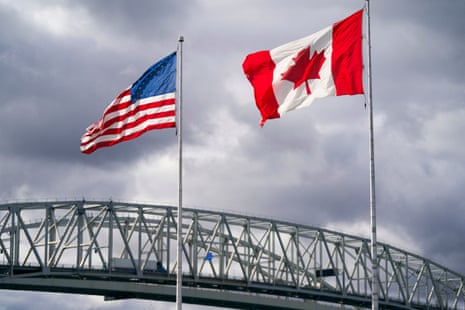
The research tool, developed to track anonymous cell phone movements across borders, offers unprecedented granularity in understanding travel patterns that traditional border statistics cannot capture. By monitoring aggregate cell phone location data, researchers can identify specific trends in how Canadians are utilizing cross-border travel during different political administrations. This methodology provides a more nuanced understanding of behavioral changes that might not be immediately apparent from standard customs and immigration records.
The Trump administration's policy positions, trade rhetoric, and international relations stance have created an environment that appears to be influencing Canadian travel decisions. Understanding these behavioral shifts is crucial for tourism boards, hospitality industries, and retail sectors in American metropolitan areas that rely heavily on Canadian visitors. The 42% decline represents a substantial impact on businesses that depend on cross-border customer traffic, particularly in cities near the Canadian border.
Metropolitan areas that have historically attracted significant Canadian tourism—including major cities in the Northeast, Pacific Northwest, and Great Lakes regions—are likely experiencing measurable economic impacts from this decline. Hotels, restaurants, shopping districts, and entertainment venues in these cities may be adjusting their strategies and marketing efforts in response to the reduced influx of Canadian customers. The disparity between the official border-crossing data and the cell phone tracking data suggests that Canadians who do cross the border may be spending less time in urban centers.
The University of Toronto research initiative represents an important evolution in travel data analysis, moving beyond traditional government statistics to capture real-time behavioral patterns. The tool's ability to track cell phone activity provides researchers with a dynamic view of how political and economic conditions influence consumer behavior across international borders. This type of data analysis can help policymakers, business leaders, and analysts understand the broader implications of political change on economic activity.
Previous research has documented how political uncertainty and policy changes can influence travel decisions, but this study provides concrete, quantifiable evidence of the phenomenon during the current administration. The 42% decline in metropolitan area visits is particularly significant because it exceeds general border crossing reductions, indicating a concentrated impact on urban tourism. This suggests that Canadians may be maintaining some cross-border commerce or visiting smaller communities, but deliberately avoiding major American cities.
The implications of this travel shift extend beyond tourism statistics to encompass broader questions about Canada-US relations and consumer sentiment. When significant portions of a neighboring country's population choose to avoid another nation's cities, it reflects underlying concerns or hesitations about the political or economic environment. Understanding these sentiments can provide valuable insights for policymakers on both sides of the border who are navigating a complex international relationship.
The research tool developed by University of Toronto researchers could serve as a model for studying cross-border movement patterns in other regions facing political or economic transitions. By comparing cell phone data with official border statistics, analysts can identify discrepancies that reveal important behavioral patterns not captured by traditional measurement methods. This approach may be adopted by other research institutions studying international travel and trade impacts.
The 25% decline shown in official border-crossing data represents the aggregate of all cross-border movement, including commercial traffic, essential travel, and leisure tourism. The fact that metropolitan area visits declined at a rate nearly twice as steep suggests that discretionary leisure travel has been hit particularly hard. This distinction is crucial for understanding which sectors of the economy are experiencing the greatest impact from changing cross-border travel patterns.
Looking forward, monitoring these travel trends will be essential for understanding how political developments continue to shape bilateral commerce and tourism. The University of Toronto's research provides a baseline for measuring whether these patterns persist, intensify, or reverse over time. As the second Trump administration unfolds, additional data collection and analysis will help clarify whether the decline in Canadian metropolitan area visits is temporary or represents a sustained shift in travel behavior.
The findings underscore the interconnected nature of political climate and consumer behavior in the modern era. Canadians' decisions to avoid American metropolitan areas during this period reflect broader concerns about the political direction of the United States and potentially about personal safety, trade policies, or general sentiment toward the current administration. These decisions have tangible economic consequences for American businesses and communities that depend on Canadian consumer spending.
The research from the University of Toronto adds credible, data-driven evidence to ongoing discussions about the state of Canada-US relations and cross-border dynamics. As governments, businesses, and analysts assess the current relationship between the two nations, this type of empirical research provides objective measures of how political circumstances translate into behavioral changes. The 42% decline in metropolitan area visits stands as a striking indicator of the current moment in bilateral relations.
Source: The Guardian


