
90 Years On: Remembering UK Schoolboys' Black Forest Tragedy

Relatives and German villagers gather to honor the 1936 Alpine disaster that claimed young lives. A story of heroism amid Nazi propaganda.
On a solemn April day in 2026, the bells of St Laurentius church in Germany's Black Forest rang out once more, echoing across the same mountainous terrain where tragedy struck nine decades earlier. The tolling bells served as a poignant reminder of the 1936 London schoolboys' mountain disaster, a fateful expedition that claimed young lives and became etched into the collective memory of two nations. As the bells sounded in remembrance, barely a dry eye remained among the gathered congregation of British relatives and German villagers, whose ancestors had witnessed one of the most harrowing mountain rescue efforts in European history.
The tragedy unfolded on April 17, 1936, when a group of London pupils and their teacher embarked on what should have been a routine hiking adventure through the picturesque Black Forest mountains. The expedition quickly turned catastrophic when the party of 27 became trapped in unexpectedly severe weather conditions, with deep snow and treacherous fog reducing visibility to mere meters. Temperatures plummeted well below freezing as darkness fell, and the young hikers found themselves isolated and increasingly desperate on the unforgiving slopes of Schauinsland mountain, unprepared for the sudden Alpine winter that had descended upon them.
The rescue effort that followed demonstrated extraordinary courage and community spirit from the local villagers of Hofsgrund. When two of the boys, exhausted and frost-bitten from their ordeal, managed to navigate through the blinding snow to reach a farmhouse in the valley below, they stumbled through the door with terrifying news: their entire party was stranded on the mountain, scattered across the slopes with dwindling chances of survival. The alarm raised by these two survivors galvanized the community into immediate action, with local men risking their own lives by venturing into the deadly weather with only sledges and hand-held lanterns to guide their way.
The rescue operation in the Black Forest became one of the most dramatic mountain emergencies of the era, with brave villagers pushing through blizzard conditions to locate and extract the stranded schoolboys. The cooperation between the German rescue teams and British survivors created an unlikely bond of shared humanity in the face of natural disaster. Each recovered boy represented a small victory against the mountain's merciless conditions, though the effort came too late for some of the youngest members of the party who succumbed to hypothermia before help could reach them.
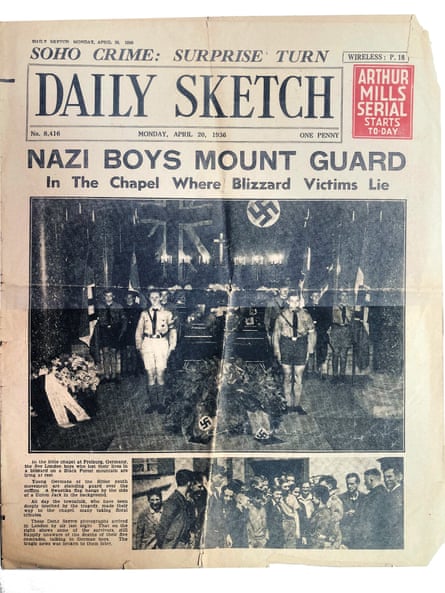
The historical significance of this disaster extended far beyond the immediate tragedy. Nazi authorities, who were consolidating power in Germany during 1936, seized upon the incident as a propaganda opportunity. What had been a genuine humanitarian rescue effort and a tragic loss of young life was repurposed in official Nazi narratives to demonstrate German efficiency, valor, and superiority. The regime's propaganda machine transformed the mountain rescue into a symbolic story of Aryan heroism and strength, distorting the actual events to serve their ideological purposes and further the goals of the emerging totalitarian state.
The 1936 Black Forest incident has remained a complex historical event, representing both genuine human compassion and its exploitation by a dangerous regime. For the families affected by the tragedy, the loss of young lives cast a permanent shadow, yet the heroism of the Hofsgrund villagers stood as a testament to human decency and community solidarity. The anniversary gatherings over the decades have served to reclaim the true narrative of the event, emphasizing the real heroism of ordinary people rather than the propaganda narratives imposed upon it by the Nazi government.
The 90-year commemoration in 2026 brought together multiple generations whose family histories were forever linked by that fateful April night. British families traveled to Germany to stand alongside the descendants of the rescuers, creating a meaningful dialogue across the decades and across national boundaries. The service at St Laurentius church became not just a memorial to the dead, but a celebration of the enduring human connections forged through shared tragedy and mutual respect.
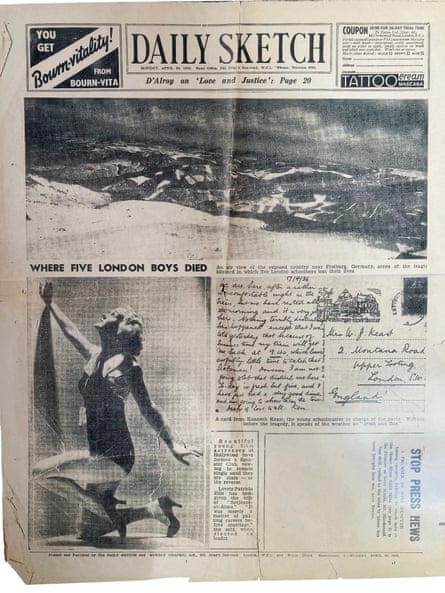
Contemporary accounts and newspaper archives, particularly The Daily Sketch's coverage from April 1936, have provided invaluable documentation of the mountain rescue efforts and casualties. These historical records reveal the detailed timeline of events, the names of victims and heroes alike, and the immediate public reaction to the disaster in both Britain and Germany. Researchers and historians have used these sources to piece together an accurate account of what happened on Schauinsland, working to separate fact from the propagandistic distortions that emerged in subsequent Nazi-era publications.
The Black Forest tragedy of 1936 serves as a powerful reminder of the dangers inherent in mountain climbing, particularly when weather conditions change rapidly and communication systems are limited. It also demonstrates the resilience of mountain communities and their instinctive willingness to risk their own safety for strangers in peril. The story has been passed down through generations of both British and German families, maintaining the memory of those who perished and honoring those who sacrificed to attempt their rescue.

Modern safety standards for school expeditions and mountain hiking owe much to lessons learned from tragedies such as this one. The memorial events and anniversary gatherings serve an educational function, reminding contemporary hikers and expedition planners of the importance of proper preparation, weather forecasting, and emergency protocols. The tragedy has become a case study in mountaineering safety courses and in historical discussions about the responsibility adults bear when leading young people into challenging environments.
The enduring significance of remembering this tragedy lies not merely in acknowledging loss, but in celebrating the resilience of communities across borders. The relationship between Hofsgrund and the families of the London schoolboys represents a profound example of how shared human experience can forge connections that transcend nationality, culture, and even the ideological divisions of their respective governments. Ninety years later, the bells of St Laurentius continue to ring not only as a warning from history, but as a symbol of hope and human solidarity in the face of tragedy.
Source: The Guardian


