
ACLU Challenges Louisiana's Election Suspension

Voting rights groups sue to block Louisiana governor from suspending primary elections after controversial redistricting order affects Black voters.
The American Civil Liberties Union has initiated legal action on behalf of multiple Louisiana voting rights groups, filing suit Friday in state court to challenge the authority of Governor Jeff Landry and Secretary of State Nancy Landry to suspend the state's congressional primary elections. This aggressive litigation marks a significant escalation in the ongoing battle over voting access and electoral representation in the state, as civil rights organizations mobilize to protect what they argue are fundamental democratic rights.
The legal challenge comes in response to Governor Landry's controversial decision announced Thursday to halt the state's congressional primary election, despite the fact that early voting had already commenced. The governor's order aims to facilitate the creation of new congressional districts ahead of the 2026 election cycle, ostensibly to comply with a recent high-profile Supreme Court ruling. This unprecedented suspension of an election already in progress has sent shockwaves through voting rights advocates and political observers, raising serious questions about the proper scope of executive authority over electoral processes.
The governor's actions were precipitated by the Supreme Court's 6-3 decision in the Louisiana v. Callais case, announced Wednesday, which fundamentally reshaped the constitutional landscape surrounding voting rights protections. The court's majority opinion invalidated significant portions of the Voting Rights Act, landmark civil rights legislation enacted in 1965 to combat racial discrimination in voting. The controversial ruling further declared that one Louisiana congressional district with a majority-nonwhite voting population violated equal protection provisions of the United States Constitution, effectively invalidating the district as currently configured.

This Supreme Court decision represents a dramatic departure from decades of voting rights jurisprudence and has profound implications for minority voting power across the nation. The 6-3 conservative majority's decision to curtail Voting Rights Act protections fundamentally weakens federal oversight of state election practices, particularly in jurisdictions with histories of racial discrimination in voting. Legal experts argue this ruling opens the door for states to implement redistricting plans that dilute the electoral strength of minority voters, a concern that appears directly relevant to Louisiana's current redistricting initiative.
The ACLU lawsuit challenges the legality and constitutionality of suspending elections that have already begun, arguing that such extraordinary measures require far more substantial justification than what the governor has provided. The voting rights organizations maintain that halting primary elections midstream violates state law and potentially infringes on the constitutional rights of Louisiana voters who were promised the opportunity to participate in the electoral process. Their legal arguments focus on the due process violations and equal protection concerns that arise from arbitrarily canceling elections without proper legal authority or adequate notice to the electorate.
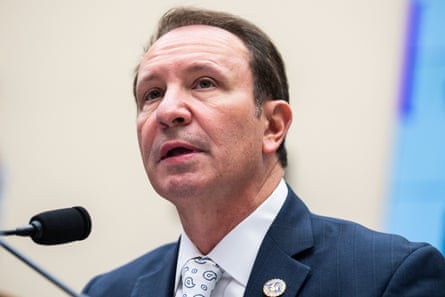
The timing of the governor's election suspension raises additional constitutional concerns among civil rights advocates. With early voting already underway when the suspension was announced, countless Louisiana citizens had already cast ballots in reliance on the state's original election schedule and existing congressional districts. These voters now face uncertainty about the validity of their votes and whether their early ballots will be counted, creating potential chaos in the electoral process. The ACLU argues that this retroactive disruption of voting that has already occurred constitutes an unprecedented overreach of gubernatorial power.
Governor Landry, a Republican who assumed office in January 2024, has positioned the redistricting effort as necessary to comply with the Supreme Court's recent ruling. However, voting rights groups contend that the governor is using the court decision as cover for a purely partisan effort to dilute Black voting power in Louisiana's congressional delegation. They point out that the original congressional districts were carefully drawn to provide minority voters with fair representation, and they argue that the new districts will inevitably reduce Black electoral influence in the state.
The state's redistricting history provides crucial context for understanding the current dispute. Louisiana has been subject to increased federal scrutiny of its voting practices for decades due to documented patterns of racial discrimination. The federal voting rights protections that the Supreme Court recently gutted were specifically designed to prevent precisely the kind of discriminatory redistricting that voting rights groups fear is now underway. By invalidating key provisions of the Voting Rights Act, the conservative Supreme Court majority has essentially removed the primary tool that had been available to challenge discriminatory redistricting plans in states with histories of racial bias.
The broader national implications of this Louisiana dispute extend far beyond the state's borders. If Governor Landry succeeds in implementing new congressional districts that reduce minority voting power, other states with Republican leadership may follow suit, embarking on similar redistricting efforts in the absence of Voting Rights Act constraints. This potential domino effect represents a fundamental threat to minority representation in Congress and state legislatures across the nation, particularly in the South where the Voting Rights Act has been most vigorously enforced historically.
Legal analysts have observed that the governor's decision to suspend elections already in progress may constitute an even more vulnerable legal position than the underlying redistricting plan itself. Election law experts emphasize that suspending elections after voting has commenced raises fundamental due process concerns that apply regardless of one's views on redistricting. The courts may view this action as an extraordinary and constitutionally suspect use of executive authority that requires substantial justification beyond a desire to change district boundaries.
The ACLU and allied voting rights organizations are urging the state court to act with urgency to restore the suspended primary election or establish a clear legal framework governing how the election should proceed. They argue that Louisiana voters have a fundamental right to participate in congressional elections according to the schedule and district configurations that were in effect when early voting commenced. Any new election procedures or district maps should only take effect for future elections, after proper notice and opportunity for public input, they contend.
The outcome of this lawsuit will likely establish important precedents regarding the relationship between Supreme Court rulings, gubernatorial authority, and the protection of voting rights at the state level. If the court blocks the election suspension, Governor Landry may be forced to implement any redistricting changes through a more traditional legislative process, potentially delaying implementation until the 2028 elections or beyond. Conversely, if the court upholds the governor's authority to suspend the election, the decision could embolden other states to take similar extraordinary measures when they claim compliance with federal court orders requires it.
Source: The Guardian


