
AI Cheating Crisis at Princeton: 30% of Students Breaking Honor Code

Princeton faces an AI cheating epidemic with 30% of students using AI tools, yet peers refuse to report violations. Discover how elite universities combat academic dishonesty.
Princeton University, one of America's most prestigious institutions, faces an unprecedented crisis that threatens its centuries-old academic integrity standards. The infiltration of artificial intelligence into campus life has created a perfect storm of academic dishonesty, where 30% of students are engaging in AI-driven cheating while their peers maintain a code of silence about violations. This troubling trend reveals a fundamental shift in how elite universities must approach honor codes and academic conduct in the age of advanced technology.
Despite boasting a staggering $38 billion endowment, one of the largest among American universities, Princeton appears ill-equipped to handle the digital revolution sweeping through its hallowed halls. The institution's wealth, while substantial, cannot purchase solutions to problems rooted in student behavior and institutional culture. Meanwhile, the university grapples with more mundane challenges—many of its historic dormitories still lack modern air conditioning systems, a detail that underscores the gap between Princeton's financial resources and its infrastructure modernization efforts.
The situation at Princeton reflects broader trends affecting universities across the nation, where AI cheating has become increasingly sophisticated and difficult to detect. Students are leveraging large language models and other artificial intelligence tools to complete assignments, generate essays, and solve problem sets with minimal effort. The accessibility and efficiency of these tools have normalized their use among a significant portion of the student body, transforming what was once considered egregious academic misconduct into what many students view as simply another study resource available to them.
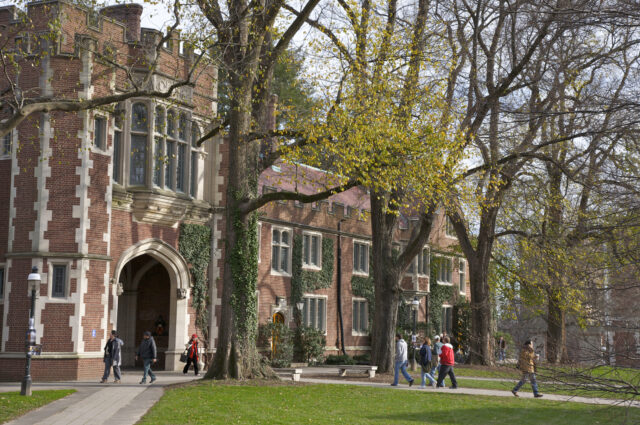
What makes Princeton's situation particularly acute is not merely the prevalence of AI-assisted academic dishonesty, but the university's apparent inability to enforce consequences. The reluctance of students to report their peers' violations represents a cultural shift away from the traditional honor code system that Princeton has maintained for generations. This peer-to-peer accountability mechanism, which once served as the backbone of academic integrity at elite institutions, has effectively collapsed under the weight of widespread normalization of AI tool usage among students.
The Daily Princetonian recently published an investigative report revealing how artificial intelligence is disrupting Princeton's long-standing academic traditions and institutional values. The article highlighted the tension between the university's formal honor code—a system built on trust and student self-governance—and the reality of widespread AI usage that many students no longer consider a violation worth reporting. This cultural disconnect suggests that Princeton's institutional structures, designed for an earlier era of academic life, are fundamentally misaligned with contemporary student perspectives on technology and academic work.
The implications of this crisis extend far beyond Princeton's campus. As the first generation of students to grow up with accessible AI tools navigates higher education, universities nationwide are confronting similar challenges. The question is not whether AI cheating will continue to proliferate, but rather how institutions can adapt their academic integrity frameworks to address technological realities while maintaining educational standards. Princeton's experience serves as a cautionary tale for peer institutions attempting to balance innovation with tradition.
Traditional enforcement mechanisms at Princeton and similar institutions relied heavily on peer reporting and the internalized shame associated with honor code violations. However, the ubiquity of AI tools has fundamentally altered this calculus. When a majority of students are using AI in ways that blur the lines between acceptable assistance and outright cheating, the social stigma dissolves. Students no longer view themselves as whistleblowers protecting institutional integrity, but rather as potential targets of their peers' resentment for enforcing outdated rules in a digitally transformed environment.
Faculty members at Princeton face their own challenges in detecting AI-generated work. While some institutions have invested in AI detection software, these tools remain imperfect and often generate false positives. Moreover, the rapid pace of AI development means that detection technologies quickly become obsolete as new models emerge with different fingerprints and patterns. Professors find themselves in an impossible position: they cannot reliably identify AI-assisted work, cannot depend on student reporting, and lack clear institutional guidance on how to respond to suspected violations.
The university's administration has begun implementing new proctoring procedures for in-person examinations, marking a significant departure from Princeton's traditional testing environment. After 133 years of a system based on student honor and trust, the institution is shifting toward more invasive monitoring and supervision. This represents a tacit admission that the honor code system, while conceptually elegant, cannot survive the technological disruption of the AI era. The move reflects a broader trend among universities retreating from trust-based systems toward surveillance-based approaches as traditional mechanisms of academic integrity break down.

The broader question facing Princeton and its peer institutions is whether academic integrity frameworks designed for the pre-digital era can be meaningfully adapted for the AI age, or whether entirely new approaches to evaluating student learning must be developed. Some educators argue that universities should fundamentally reimagine assessment methods, moving away from traditional essays and problem sets that AI can easily complete, toward competency-based evaluations and project-based learning that emphasize critical thinking and creative synthesis. Others contend that such wholesale curriculum transformation is neither feasible nor desirable.
The silence of students unwilling to report their peers' AI-driven cheating reflects a practical calculation: in a world where 30% of the student body is engaged in some form of AI-assisted academic dishonesty, maintaining the honor code through peer enforcement becomes a losing proposition for anyone who dares to report violations. Students who report their peers risk social ostracism, damaged friendships, and the label of being a "snitch" in an environment where cheating has become normalized. This social calculus creates a prisoner's dilemma where individual rational actors (remaining silent) produce collectively irrational outcomes (widespread academic dishonesty).
Looking forward, Princeton must grapple with fundamental questions about its institutional identity and values. The university's $38 billion endowment provides resources to implement technological solutions, hire additional academic integrity staff, and conduct comprehensive reviews of honor code policies. However, no amount of financial investment can solve a problem rooted in cultural attitudes and student beliefs about the legitimacy of AI tool usage. Until Princeton's leadership successfully articulates why academic integrity matters and why AI cheating undermines educational value, enforcement efforts will likely prove insufficient.
The crisis at Princeton offers important lessons for the broader higher education community. Elite institutions cannot assume that their traditional values and institutional structures will survive technological disruption without intentional adaptation and cultural reinforcement. The time for universities to proactively reshape their approach to academic integrity is now, before the normalization of AI-assisted academic work becomes even more entrenched in student culture. Princeton, with its resources and influence, has an opportunity to lead this transformation—or it will continue to manage the slow erosion of its academic standards.
Source: Ars Technica


