
AI Data Centers Face Growing Local Resistance

Tech industry confronts community opposition as AI data centers spread across America, raising concerns about resource allocation and environmental impact.
The rapid expansion of artificial intelligence data centers across the United States has sparked an unexpected cultural conflict that mirrors broader anxieties about technological disruption. These massive facilities, essential for powering the AI revolution, are increasingly becoming lightning rods for local opposition as communities grapple with the implications of hosting some of the nation's most power-hungry infrastructure projects.
The situation draws an ironic parallel to a 2016 controversy when Marco Gutiérrez, a prominent Mexican-American political figure and founder of Latinos for Trump, voiced concerns on national television about cultural dominance. His dramatic prediction about demographic change through ubiquitous taco trucks became a cultural flashpoint in the immigration debate. Fast forward to 2024, and America faces a different kind of pervasive expansion—one driven by technology rather than cuisine, yet equally contentious in its implications for communities being reshaped by corporate investment.
Unlike the theoretical threat Gutiérrez warned about, the expansion of AI infrastructure is concrete, immediate, and already reshaping local economies and environments. Major technology companies and specialized data center operators are actively scouting locations, establishing facilities that consume massive amounts of electricity, water, and other critical resources. The scale of this buildout is staggering, with industry projections suggesting thousands of new facilities will be needed within the coming decade to meet artificial intelligence demands.
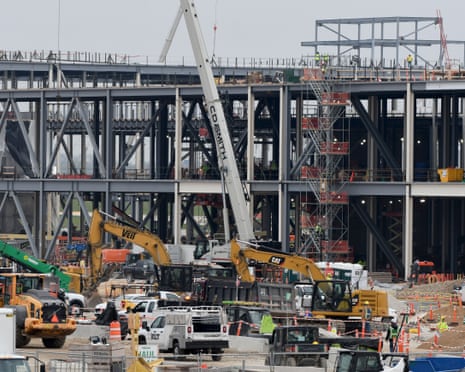
Communities across America are increasingly discovering what it means to have an AI data center in their backyard. The infrastructure requirements are extraordinary—these facilities demand continuous power supply, sophisticated cooling systems, and high-speed internet connectivity. In rural areas particularly, the arrival of a major data center can fundamentally alter local power grids, water supplies, and infrastructure planning. What initially appears as economic opportunity often reveals hidden costs that residents and local governments were not fully prepared to address.
The environmental impact of data center operations has emerged as a primary concern driving local resistance. These facilities consume electricity at rates comparable to small cities, often drawing power from already-stressed electrical grids. Water consumption for cooling systems can strain local water supplies, particularly in regions already facing drought conditions. In some cases, data centers have consumed millions of gallons of water daily, creating direct competition with agricultural operations and residential needs. Communities that have historically prioritized environmental stewardship are finding themselves at odds with the promises of technological progress.
Beyond environmental concerns, local communities are questioning whether the promised economic benefits justify the infrastructural burden. While tech companies emphasize job creation and tax revenue, critics point out that the positions created are often specialized and require training that local workforces may not possess. The majority of high-skill jobs are filled by workers relocated from outside the region, while residents are left with construction jobs that end once facilities are completed. The long-term economic narrative promoted by industry advocates increasingly conflicts with the actual economic reality experienced by host communities.

The AI industry has responded to mounting resistance by adopting a defensive posture, framing local opposition as discriminatory and counterproductive. Technology leaders argue that blocking data center development impedes beneficial innovation and disadvantages America in global competition with China. This framing attempts to reposition legitimate community concerns as parochial NIMBYism—"Not In My Back Yard"—rather than reasonable environmental and economic anxiety. The industry narrative suggests that communities resisting data center development are somehow opposing progress itself and acting against national interests.
However, this defensive framing misses important nuances in the debate. Communities are not uniformly opposing technological development; rather, they are seeking genuine participation in decisions that profoundly affect their futures. The complaint is not that change is happening, but that change is being imposed from outside with minimal consultation about local priorities. Residents want assurance that their water supplies, power infrastructure, and quality of life are being protected as part of technological advancement, not sacrificed for it.
The tension between AI infrastructure expansion and community autonomy reflects deeper questions about who benefits from technological progress and who bears its costs. Large technology corporations and their shareholders benefit substantially from data center deployment, as do the specialized workers brought in from outside communities. Local residents, by contrast, inherit environmental risks and infrastructure strain with fewer direct benefits. This asymmetry naturally generates friction and resentment, particularly in communities already experiencing economic hardship.
Several communities have successfully negotiated more favorable terms with data center operators, requiring environmental impact assessments, workforce development commitments, and community benefit agreements. These negotiations demonstrate that opposition need not mean categorical rejection, but rather a demand for accountability and equitable burden-sharing. When companies are forced to genuinely engage with community concerns rather than dismissing them, better outcomes typically emerge for all parties involved.
The expansion of AI data centers will undoubtedly continue, as the economic incentives driving their development are enormous. The question is not whether these facilities will be built, but rather how communities can ensure they are developed responsibly and equitably. This requires moving beyond the current dynamic where industry frames any local resistance as discrimination, and instead acknowledging that communities have legitimate interests in protecting their resources and futures.
The warning about artificial intelligence infrastructure takeover is not hyperbolic—it reflects real anxieties about technological change that is happening at unprecedented scale and speed. Communities watching data centers appear across their landscapes, consuming vast resources and reshaping local environments, are right to demand a seat at the table. As America continues building the infrastructure for AI dominance, ensuring that this development serves broad public interests rather than just corporate profits will determine whether technological progress strengthens or divides American communities.
The taco truck comparison, while humorous, ultimately illustrates how predictions about change taking over America miss the more significant point about equity and choice. Communities deserve the right to shape their own futures and determine what kind of development serves their interests. Moving forward, the conversation about data center expansion must evolve from dismissing local concerns as discrimination to genuine dialogue about how technological advancement can be pursued in ways that respect community autonomy and protect shared resources.


