
AI Firm Anthropic Prevails in Battle with Pentagon over Autonomous Weapons

A federal judge grants Anthropic a temporary injunction, siding with the AI company in its standoff with the Department of Defense over the use of its Claude AI model.
In a significant legal victory for Anthropic, a federal judge in California has sided with the artificial intelligence firm in its case against the Department of Defense. The ruling grants Anthropic a temporary injunction, pausing the government's punitive measures against the company while the court hears the full case.
The dispute centers around Anthropic's refusal to allow the Pentagon to use its Claude AI model in autonomous weapons systems. The Department of Defense had declared Anthropic a supply chain risk and ordered government agencies to cease using its technology, a move the company argued violated its First Amendment rights.
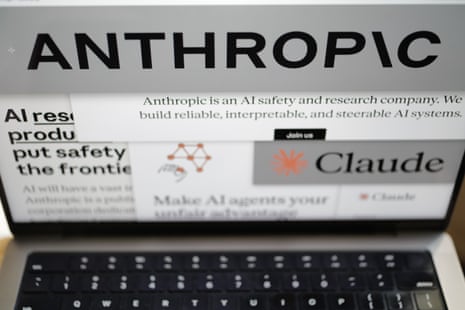
Judge Rita Lin, presiding over the case in the northern district court of California, agreed with Anthropic's position, granting the temporary injunction. This means the government's punitive actions against the AI firm will be paused while the court examines the merits of the company's lawsuit.
The case represents the latest clash between technology companies and the military over the use of advanced AI systems. Anthropic has maintained a firm stance against allowing its models to be used in autonomous weapons, citing ethical concerns and the potential for misuse.
This ruling is a significant victory for Anthropic, which has positioned itself as a leader in the ethical development of artificial intelligence. The company's stance has put it at odds with the Pentagon's push to incorporate AI into its arsenal, raising important questions about the boundaries of military technology and the role of private firms in shaping its use.
The outcome of this case could have far-reaching implications for the relationship between the tech industry and the defense establishment, as well as the broader debate over the ethical deployment of AI systems. Anthropic's win in the initial round of this legal battle is a testament to its commitment to its principles and a signal that the courts are willing to uphold the rights of tech companies to make such choices.
As the case progresses, legal experts will be closely watching to see how the courts navigate the complex intersection of national security, corporate autonomy, and the responsible development of artificial intelligence. The stakes are high, and the outcome could shape the future of AI governance and the role of private firms in shaping the technology's use.
Source: The Guardian


