
Air France, Airbus Guilty in 2009 Crash Killing 228

French court finds Air France and Airbus guilty of manslaughter in 2009 Air France Flight 447 disaster. Historic verdict on aviation safety.
Air France and Airbus have been found guilty of manslaughter by a French court in connection with one of aviation's deadliest disasters. The verdict marks a historic moment in aviation accountability, as the court determined that both the airline and aircraft manufacturer bore criminal responsibility for the deaths of 228 people aboard Flight 447, which crashed into the Atlantic Ocean on June 1, 2009. This groundbreaking decision represents one of the most significant legal outcomes in commercial aviation history, establishing new precedent for corporate accountability in aviation accidents.
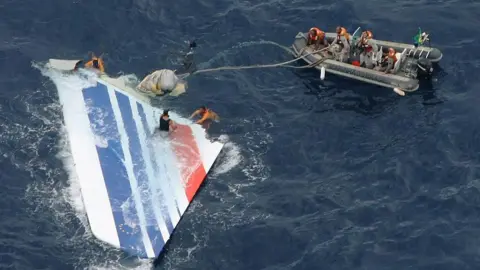
The tragic 2009 plane crash occurred when Air France Flight 447, an Airbus A330 operating between Rio de Janeiro and Paris, encountered severe thunderstorms over the Atlantic. The aircraft experienced a sudden loss of control at cruise altitude, eventually spiraling downward and plunging into the ocean, killing all 228 passengers and crew members on board. The disaster remained unexplained for nearly two years until French accident investigators recovered the flight data recorders from the ocean floor, revealing the technical and human factors that contributed to the catastrophe.
The investigation into the crash uncovered a complex chain of events involving technical failures and crew performance issues. The aircraft's pitot tubes—instruments that measure airspeed—became unreliable due to icing at high altitude, providing contradictory speed readings to the autopilot and flight control systems. This led to the autopilot and autothrottle disengaging, presenting the flight crew with an unexpected and confusing situation during instrument meteorological conditions. The subsequent loss of situational awareness, combined with aerodynamic stalls that the pilots struggled to recognize and recover from, resulted in the aircraft's uncontrolled descent into the ocean.
The French court's guilty verdict focused on Air France's responsibility for inadequate training and procedural failures. Prosecutors argued that the airline failed to provide sufficient training to its pilots on how to respond to high-altitude stalls, particularly in conditions where the pitot tube systems could fail. The court found that Air France's training protocols did not adequately prepare the flight crew to handle the specific scenario that unfolded on that fateful flight, demonstrating negligence in crew preparation and safety procedures. Additionally, the airline's maintenance and safety procedures were scrutinized for potential shortcomings in aircraft inspection and airworthiness certification.
Airbus was also held culpable for design and manufacturing deficiencies related to the aircraft's pitot tube system. The manufacturer knew of potential icing issues with the Thales AA pitot probes used on the A330, yet the company failed to mandate their replacement across the entire fleet in a timely manner. The court determined that Airbus bore responsibility for not adequately warning operators about the hazards associated with these sensors or for not implementing more aggressive retrofit programs earlier. Furthermore, prosecutors contended that the aircraft's design lacked sufficient safeguards against the cascading failures that occurred when the pitot tubes became unreliable.
The legal proceedings lasted several years, with families of the victims, aviation safety advocates, and regulatory authorities all contributing to the investigation and trial. The French judicial system conducted an exhaustive examination of technical evidence, expert testimony, and corporate documentation to determine accountability. The prosecution presented compelling arguments that both organizations had the knowledge and capability to prevent the disaster but failed to implement adequate safety measures. This thorough investigation demonstrated the complexity of modern aviation accidents, where multiple factors converge to create catastrophic outcomes.
The guilty verdict carries significant implications for aviation safety and corporate responsibility across the industry. Airlines and manufacturers now face heightened legal exposure for failures in training, maintenance, and design, potentially leading to more rigorous safety standards and operational procedures worldwide. The decision sends a clear message that commercial aviation companies cannot escape accountability when negligence contributes to loss of life. Industry observers expect this ruling to influence how airlines approach pilot training programs and how manufacturers design and test safety systems, particularly those critical to flight control.
Victims' families have expressed that the verdict, while not bringing their loved ones back, provides a measure of justice and validates their years of fighting for accountability. The relatives endured an agonizing investigation period and lengthy legal proceedings while seeking to understand how and why their family members perished. The court's findings acknowledged the systemic failures and corporate oversights that contributed to the tragedy, offering some closure to those devastated by the disaster. Many victims' advocates view the guilty verdict as a vindication of their determination to ensure that aviation companies prioritize safety over cost considerations.
The sentencing phase of the proceedings will determine the financial penalties and sanctions imposed on both Air France and Airbus for their convictions. Legal analysts expect substantial fines for both organizations, reflecting the severity of the offense and the magnitude of the tragedy. Beyond financial penalties, the companies may face other consequences including enhanced regulatory oversight, mandatory safety program improvements, and potential restrictions on certain operations. The court's final sentencing decision will likely set benchmarks for future aviation industry litigation involving corporate manslaughter charges.
This landmark case underscores the critical importance of aviation safety standards and corporate accountability in the modern airline industry. The tragedy of Flight 447 and its subsequent legal resolution have already prompted changes throughout the aviation sector, including enhanced pitot tube designs, improved pilot training curricula, and more stringent manufacturer testing requirements. Airlines and aircraft manufacturers have invested heavily in upgrading systems and procedures to prevent similar accidents, informed by the lessons learned from this disaster. The verdict serves as a permanent reminder that aviation safety cannot be compromised or overlooked without severe consequences.
The historical significance of this French court decision extends beyond the immediate parties involved, influencing how aviation regulators worldwide approach corporate oversight and accident investigation. International aviation authorities have examined the case carefully to understand how systemic failures occur and how they can be prevented through better regulation and corporate governance. The guilty verdict reinforces the principle that those responsible for transporting millions of passengers annually bear an absolute obligation to maintain the highest safety standards and respond promptly to identified hazards. As aviation continues to evolve with new technologies and increased traffic, this case remains a sobering reminder of the consequences of negligence in an industry where safety must always be paramount.
Source: BBC News


