
Altman Faces Lying Claims in High-Stakes OpenAI Trial

Sam Altman confronts accusations of dishonesty during testimony in landmark OpenAI lawsuit that could reshape the AI company's future and determine leadership control.
A pivotal courtroom battle is unfolding that will determine the trajectory of one of the world's most influential artificial intelligence companies. The OpenAI trial brings together two of tech's most prominent figures—Elon Musk and Sam Altman—in a legal showdown with far-reaching implications for the future of AI development, corporate governance, and the responsibilities of technology leaders. The case centers on fundamental questions about OpenAI's mission, its organizational structure, research funding mechanisms, and whether executives should be permitted to profit from breakthrough technologies developed under the company's banner.
Elon Musk initiated the legal action by alleging that OpenAI has fundamentally betrayed its original nonprofit charter and humanitarian mission. According to Musk's complaint, the organization that was founded to develop safe artificial intelligence benefiting all of humanity has instead become a vehicle for personal enrichment of select executives, particularly Sam Altman. Musk asserts that OpenAI executives orchestrated what amounts to stealing a charitable organization by converting it into a for-profit venture, with unwitting assistance from Microsoft. The billionaire entrepreneur claims he was manipulated into contributing $38 million in foundational funding through deception about the company's long-term direction and governance structure.
During his extensive testimony, Musk experienced a grueling and contentious cross-examination that spanned three demanding days. OpenAI's legal representative, William Savitt, systematically attempted to dismantle the credibility of Musk's accusations by challenging his interpretation of events, questioning his memory of conversations, and highlighting inconsistencies in his narrative. The questioning became heated at times, with Musk visibly frustrated as Savitt pressed him on specific claims that OpenAI executives conspired with Microsoft to fundamentally transform the company's structure and mission without proper disclosure or consent from founders and early investors.
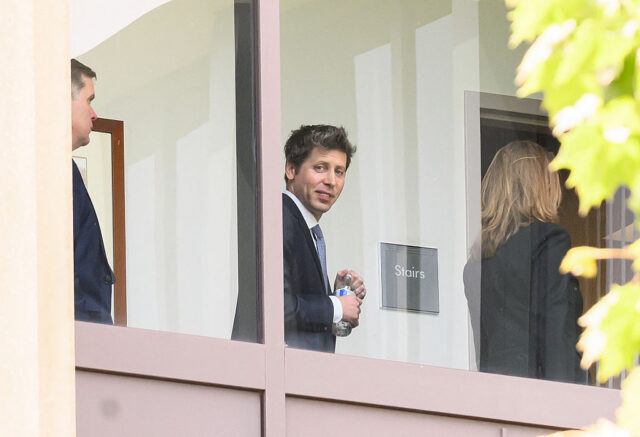
In stark contrast to Musk's tumultuous time on the witness stand, Sam Altman's testimony on Tuesday presented a notably different dynamic. When facing questions from Musk's attorney, Steven Molo, Altman did not encounter the same aggressive interrogation tactics that characterized Musk's cross-examination. Instead, Altman's appearance on the stand revealed an individual who began with visible signs of nervousness but gradually composed himself throughout the questioning. The OpenAI CEO's testimony lasted approximately four hours, during which he calmly presented evidence and arguments designed to undermine Musk's core allegations about the company's restructuring.
Altman's defense strategy throughout the trial has focused on characterizing Musk's motivations as rooted in personal revenge rather than principled concern about corporate governance. Altman contends that Musk's lawsuit emerged only after Musk discovered he would not be selected as OpenAI's chief executive officer. According to Altman's narrative, Musk harbors resentment about his exclusion from leadership and views the lawsuit as a mechanism to damage a company that outcompeted his own artificial intelligence ventures. This characterization of Musk's intentions has become a central theme in the defense's case against the allegations.
The trial encompasses several crucial legal and business questions that extend far beyond the personal conflict between these two tech entrepreneurs. At stake is the fundamental nature of OpenAI's organizational structure and whether the company's conversion from a nonprofit research organization to a hybrid model with for-profit elements violated commitments made to early investors and supporters. The case also examines AI research funding mechanisms and whether major technology corporations like Microsoft have exerted inappropriate influence over research directions and commercial applications. Additionally, the trial addresses the broader question of whether and how corporate executives should be permitted to benefit financially from artificial intelligence breakthroughs developed by their organizations.
Throughout the proceedings, both sides have presented competing narratives about OpenAI's founding principles, the evolution of its business model, and the intentions of key decision-makers. Musk's legal team has worked to establish that explicit promises were made regarding the organization's nonprofit status and its commitment to developing AI for humanity's benefit. OpenAI's defense, conversely, argues that business evolution is natural and necessary, and that restructuring decisions were made transparently and with proper governance considerations. The differing portrayals of OpenAI's organizational history represent fundamentally different interpretations of what transpired during the company's critical transition period.

The implications of this landmark AI lawsuit extend beyond OpenAI itself, potentially setting precedents for how technology companies structured as hybrid nonprofit-for-profit entities should be governed and managed. Industry observers are watching closely to understand what standards courts will establish for corporate transparency, founder commitments, and stakeholder protections in the rapidly evolving artificial intelligence sector. The outcome could significantly influence how future AI companies structure themselves and what obligations they must maintain toward their original missions and founding principles.
As the trial continues, the testimony from both Musk and Altman provides crucial evidence that will help determine whether OpenAI's transformation was conducted properly and ethically, or whether it represents a breach of fiduciary duty and misleading of early stakeholders. The court's ultimate decision will have substantial consequences for AI company governance, corporate responsibility in the technology sector, and the future direction of one of the most important organizations in artificial intelligence development. The case represents a watershed moment for examining how rapidly growing technology companies balance commercial interests with their stated humanitarian missions and obligations to founders and early investors who believed in their original vision.
Source: Ars Technica


