
Amazon's Global Dominance: Why Western Rivals Can't Compete

Explore why Amazon dominates e-commerce globally with no serious Western competitors. Analyze the business factors behind its unprecedented market supremacy.
Amazon's dominance in e-commerce represents one of the most remarkable business phenomena of the modern era. The Seattle-based tech giant has established an nearly unassailable position in online retail markets across North America and Europe, leaving competitors far behind in terms of market share, customer base, and technological infrastructure. This extraordinary concentration of power raises important questions about why established retailers and ambitious startups alike have failed to mount serious challenges to Amazon's supremacy on both sides of the Atlantic.
The answer to this question lies in a complex combination of factors that have accumulated over more than two decades. Amazon's competitive advantages stem from first-mover benefits, massive capital investment, relentless focus on customer experience, and a willingness to sacrifice short-term profitability for long-term market dominance. These elements have created a virtually impenetrable moat around the company's core business, making it exceptionally difficult for rivals to establish comparable platforms or services.
One of the most fundamental reasons for Amazon's lack of Western rivals traces back to the company's early strategic decisions. When Jeff Bezos founded Amazon in 1994, the internet was still in its infancy, and few business leaders recognized the transformative potential of online retail. Amazon's founder, however, possessed a visionary understanding of how the internet would reshape commerce, and he invested aggressively in technology infrastructure, logistics networks, and customer acquisition at a time when other companies were hesitant to commit resources to these areas. This bold bet on the future gave Amazon an almost insurmountable head start that subsequent competitors could never overcome.
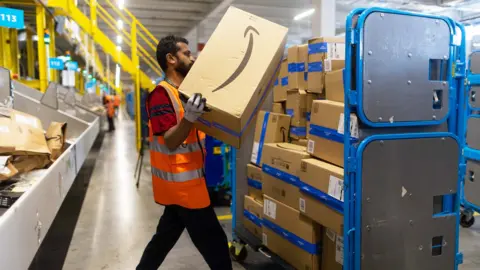
Scale and logistics infrastructure represent perhaps the most significant barrier to entry for potential competitors. Amazon has spent decades and tens of billions of dollars building a global network of fulfillment centers, distribution facilities, and last-mile delivery operations. This extensive physical infrastructure allows the company to offer rapid delivery times and competitive pricing that smaller retailers simply cannot match. Replicating this infrastructure would require an enormous capital investment that few companies could justify, especially given the uncertainties involved in competing against an entrenched incumbent.
The network effects created by Amazon's marketplace platform further cement its dominant position. Third-party sellers are attracted to Amazon because it offers access to millions of customers, reliable payment processing, and fulfillment services. Customers, in turn, are drawn to Amazon because they can find virtually any product they want with reliable delivery. This positive feedback loop creates a self-reinforcing dynamic that makes it increasingly difficult for competitors to attract both sellers and customers in sufficient numbers to achieve critical mass.
Technology and data capabilities represent another crucial dimension of Amazon's competitive moat. The company has invested heavily in artificial intelligence, machine learning, and sophisticated recommendation algorithms that personalize the shopping experience for each customer. These technological advantages allow Amazon to optimize inventory management, predict consumer demand with remarkable accuracy, and suggest products that customers are most likely to purchase. Building comparable technological capabilities would require not only substantial capital investment but also the acquisition of top engineering talent, which Amazon can easily afford to do through its financial resources and reputation.
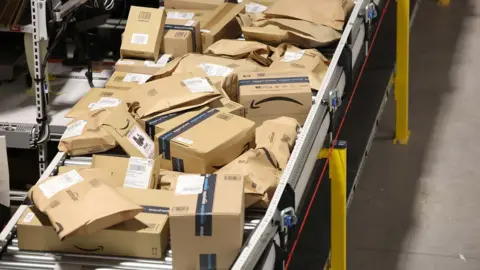
The rise of Amazon Prime represents a strategic masterstroke that has fortified the company's market position while making it nearly impossible for rivals to compete directly. By bundling fast shipping, video streaming, music services, and other benefits into a single subscription, Amazon created a powerful incentive for customers to shop predominantly on its platform. Prime's success has generated enormous customer loyalty and switching costs, as customers become reluctant to abandon their Prime memberships and the associated benefits even if they discover better prices elsewhere.
Capital availability and investor confidence have also played a crucial role in Amazon's ascendancy. While the company was unprofitable for many years, investors understood the long-term vision and remained patient as Jeff Bezos prioritized market share growth over current earnings. Most publicly traded competitors, by contrast, face relentless pressure from shareholders to deliver quarterly profits, forcing them to make more conservative business decisions that ultimately limit their ability to invest in the kind of long-term initiatives that Amazon pioneered.
The regulatory environment has also inadvertently benefited Amazon relative to potential Western rivals. For much of Amazon's growth phase, antitrust regulators took a hands-off approach, allowing the company to pursue aggressive strategies that might have faced greater scrutiny had they been attempted by traditional retail incumbents. This regulatory leniency provided Amazon with additional time and freedom to consolidate its market position before facing serious legal constraints.

Traditional retail companies that emerged as potential competitors faced significant cultural and organizational barriers to competing effectively in the digital realm. Established retailers like Walmart, Target, and European department stores had built their businesses around physical stores, supply chains optimized for inventory distribution to brick-and-mortar locations, and organizational cultures that reflected their heritage in traditional retail. Pivoting these massive organizations to compete effectively in e-commerce proved extraordinarily difficult, and by the time these companies invested seriously in their digital capabilities, Amazon had already established such a dominant position that their efforts felt like playing catch-up rather than genuine competition.
International expansion attempts have also failed to seriously challenge Amazon's dominance. While companies like Alibaba have emerged as dominant forces in Asian e-commerce markets, no Western competitor has successfully replicated Amazon's success on a global scale. Alibaba's inability to gain significant traction in Western markets, despite its massive scale and resources, demonstrates that even well-capitalized companies face enormous challenges when attempting to dislodge an entrenched competitor from their home market. The combination of existing customer relationships, brand recognition, logistics infrastructure, and accumulated data advantages that Amazon possesses in Western markets creates a competitive gap that has proven insurmountable.
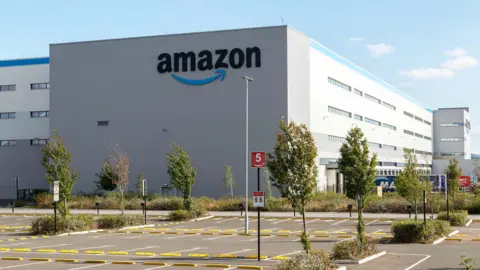
The consolidation trend in online retail has further reinforced Amazon's dominance rather than challenging it. Instead of emerging as genuine competitors, many promising e-commerce companies have been acquired by Amazon or other tech giants, effectively removing them from independent competition. This acquisition strategy has allowed Amazon to eliminate threats before they could develop into serious rivals, while simultaneously absorbing their technology, customer bases, and talented employees.
Looking forward, the absence of Western rivals to Amazon appears likely to persist for the foreseeable future. The barriers to entry have become so substantial, and Amazon's accumulated advantages have become so pronounced, that new entrants would face virtually insurmountable obstacles in attempting to compete. Rather than seeing the emergence of a single dominant Western competitor to Amazon, the future of e-commerce is more likely to involve a fragmented landscape of specialized retailers serving specific niches, combined with Amazon's continued dominance of the general online retail market. This outcome reflects the winner-take-most dynamics characteristic of digital platform businesses, where network effects and economies of scale create natural monopolies that are extremely difficult to disrupt once established.
Source: BBC News


