
Amazon's UK Drone Delivery Service Launches

Amazon successfully delivers first UK parcels via drone aircraft. The unmanned system can handle 100 deliveries daily within a 12km radius of its distribution hub.
Amazon has achieved a major milestone in its logistics innovation by successfully launching its first drone delivery service in the United Kingdom. The initiative marks a significant step forward in the company's long-standing commitment to revolutionizing the parcel delivery industry through cutting-edge unmanned aircraft technology. This groundbreaking service represents years of research, development, and regulatory approval work by Amazon's dedicated drone program team.
The unmanned delivery aircraft has the capacity to dispatch up to 100 parcels daily, operating within a 12-kilometer radius of Amazon's designated distribution hub. This operational range covers a substantial area that encompasses numerous residential neighborhoods and commercial zones, making the service accessible to thousands of potential customers. The specific location of this inaugural service has already attracted considerable attention from local residents, with many curious onlookers visiting the area simply to witness the futuristic technology in action.
According to reports from the launch area, local interest in the drone parcel delivery innovation has been remarkably high. Community members have expressed enthusiasm about being among the first to experience this advanced delivery method. One observer noted that residents "had people come just to see it," highlighting the public fascination with Amazon's ambitious venture into autonomous last-mile delivery solutions.
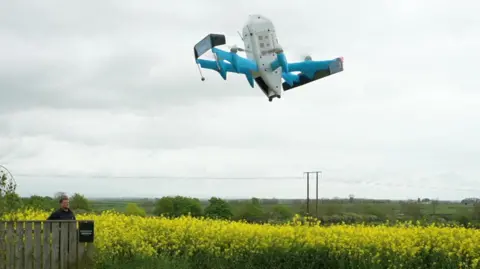
This UK launch represents a crucial phase in Amazon's broader strategy to establish drone delivery networks across multiple markets. The company has been investing heavily in autonomous delivery infrastructure for several years, with previous pilot programs operating in other countries. The UK rollout demonstrates Amazon's confidence in the technology's readiness for wider commercial deployment, having addressed safety concerns and secured necessary regulatory clearances from aviation authorities.
The unmanned logistics system operates using sophisticated navigation and collision-avoidance technology that allows the aircraft to deliver packages autonomously to customers' addresses. Each drone is equipped with advanced sensors, GPS positioning systems, and fail-safe mechanisms designed to ensure safe operation even in various weather conditions and urban environments. Amazon has worked extensively with regulatory bodies to establish safety protocols and operational guidelines for these flights.
The 12-kilometer service radius represents a carefully calculated operational zone based on battery life, safety considerations, and network coverage requirements. Within this area, eligible customers can receive their Amazon orders delivered directly to their properties within specified time windows. The company has implemented a selection process to identify which customers and parcels are suitable for drone delivery, ensuring the service works efficiently for appropriate items and locations.

Amazon's venture into autonomous delivery technology addresses several longstanding challenges in the e-commerce logistics sector. Traditional delivery methods often struggle with last-mile inefficiencies, particularly in addressing areas with challenging topography or limited road access. Drone delivery bypasses many of these constraints by utilizing airspace, potentially reducing delivery times and operational costs significantly. The technology also aligns with growing consumer expectations for faster, more convenient delivery options.
The company's drone program, known internally as Prime Air, has undergone extensive testing and refinement since its conception. Amazon invested billions of pounds in developing proprietary aircraft designs, battery technology, and autonomous flight systems tailored specifically for commercial parcel delivery. The UK service launch reflects the culmination of this substantial investment and demonstrates the technological maturity of the platform.
Regulatory approval for drone delivery operations in the UK required extensive coordination with the Civil Aviation Authority and other government agencies. Amazon had to demonstrate that their aircraft met stringent safety standards, that operators were properly trained, and that comprehensive insurance coverage was in place. The approval process took considerable time but ultimately validated the feasibility and safety of the delivery model.
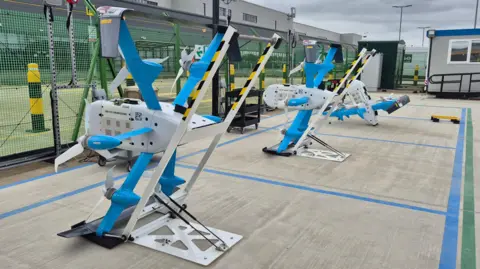
The launch of this service has generated significant interest within the logistics and technology industries. Competitors are closely monitoring Amazon's progress with drone delivery, recognizing that success in this market could reshape the entire parcel delivery landscape. Several other major logistics companies and retailers have expressed interest in pursuing similar technologies, suggesting that drone delivery may become increasingly common in coming years.
Local community response to the UK pilot has been overwhelmingly positive, with minimal complaints regarding noise, safety, or privacy concerns. The presence of the delivery drone program has even become something of a local attraction, with neighbors gathering to observe the aircraft in operation. This public support provides a favorable foundation for potential expansion of the service to additional areas.
Amazon has indicated that the current pilot represents just the beginning of a much larger rollout strategy. The company plans to analyze operational data, customer feedback, and efficiency metrics from this initial phase to refine the service before expanding to other UK locations. Future iterations may include improvements to flight speed, payload capacity, or service hours based on real-world performance data gathered during this pilot period.

The environmental implications of widespread drone delivery adoption are noteworthy. These aircraft produce zero direct emissions and consume significantly less energy per delivery compared to traditional combustion-engine delivery vehicles. Scaling the technology across Amazon's vast logistics network could yield substantial carbon footprint reductions, contributing to the company's broader sustainability goals.
Customer eligibility for the drone delivery service has been restricted during this pilot phase to ensure controlled testing conditions. Amazon is methodically expanding the eligible customer pool based on how smoothly operations proceed. Eventually, the company aims to make drone delivery available to all customers within service zones, creating a seamless experience where customers can choose autonomous delivery as their preferred option when available.
The success of this UK initiative could have significant implications for Amazon's international expansion plans. The company operates in dozens of countries globally, and many regions face similar logistics challenges that drone delivery could address. Should the UK pilot prove successful and profitable, Amazon may accelerate deployment to European, Asian, and other international markets where regulatory frameworks allow for such operations.
Source: BBC News


