
AMD Ryzen AI Halo PC Launches at $3,999

AMD unveils its Ryzen AI Halo PC priced at $3,999 and announces new Ryzen AI Max 400 chips to compete with NVIDIA's offerings.
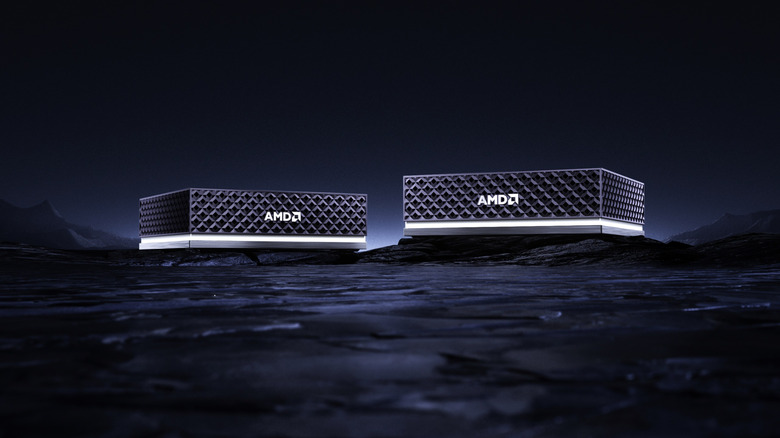
AMD has officially announced its aggressive entry into the high-performance AI computing market with the introduction of its Ryzen AI Halo PC, priced at an accessible $3,999. This strategic move positions the semiconductor giant in direct competition with NVIDIA's DGX Spark system, signaling AMD's commitment to capturing market share in the rapidly expanding artificial intelligence and machine learning sectors. The announcement represents a significant milestone for AMD as it expands its portfolio beyond traditional consumer and enterprise computing into specialized AI workstations.
The Ryzen AI Halo PC is designed to deliver powerful performance for AI workloads while maintaining a consumer-friendly price point that undercuts many competing solutions. By offering robust computational capabilities at this price tier, AMD aims to democratize access to professional-grade AI computing tools for developers, researchers, and AI enthusiasts who previously faced prohibitive costs. The system represents a calculated effort to establish AMD as a viable alternative to NVIDIA's dominant position in the AI accelerator market.
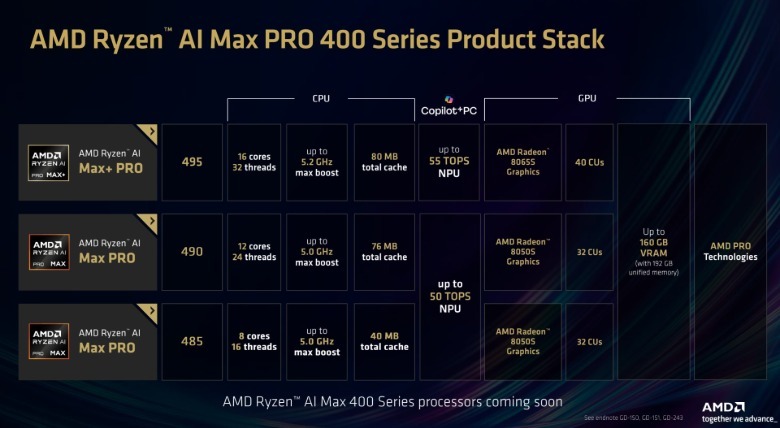
Accompanying the Halo PC announcement, AMD has unveiled its new Ryzen AI Max 400 chips, which form the technological foundation of this advanced computing system. These processors incorporate AMD's latest architectural innovations designed specifically to optimize AI processing and machine learning inference tasks. The Max 400 series represents the culmination of extensive research and development, incorporating features that address the unique computational demands of modern artificial intelligence applications.
The Ryzen AI Max 400 processors boast impressive specifications that rival and in some cases surpass existing solutions in their category. These chips feature an increased core count, enhanced memory bandwidth, and optimized instruction sets specifically for neural network computations and tensor operations. The integration of specialized AI acceleration units allows the Max 400 series to deliver substantially higher performance per watt compared to general-purpose processors, making them particularly attractive for power-conscious data center and edge computing environments.
AMD's pricing strategy for the Ryzen AI Halo PC reflects a conscious decision to compete aggressively with NVIDIA's established offerings while maintaining profitability. At $3,999, the system positions itself as a premium yet accessible solution for professionals seeking powerful AI capabilities without enterprise-level expenditures. This price point suggests that AMD is banking on feature differentiation and performance-per-dollar metrics to sway purchasing decisions away from entrenched NVIDIA systems.
The broader competitive landscape has intensified as artificial intelligence applications have proliferated across industries ranging from healthcare and finance to automotive and robotics. NVIDIA's DGX Spark has set benchmarks for performance and reliability that other manufacturers must match or exceed. AMD's entry into this space with competitive hardware and aggressive pricing demonstrates the company's strategic ambitions to reshape the AI acceleration market and establish long-term dominance in this lucrative segment.
The technical specifications of the Ryzen AI Halo PC include configurations optimized for various machine learning scenarios, from model training to inference deployment. The system incorporates ample RAM, high-speed storage, and multiple GPU options to ensure that professionals can tackle diverse computational challenges. AMD has engineered the system for thermal efficiency and reliability, recognizing that professional users demand equipment that can operate continuously under demanding workloads without performance degradation.
Industry analysts have noted that AMD's move reflects broader trends in the semiconductor industry toward specialization and vertical integration. Rather than competing solely on generic processing power, companies like AMD are designing entire ecosystems around specific use cases and applications. The Ryzen AI Halo PC exemplifies this approach, combining optimized processors, system architecture, and software frameworks into a cohesive solution purpose-built for modern AI workflows.
Software compatibility and ecosystem development represent critical factors in the success of AMD's AI platform. The company has invested significantly in ensuring that popular AI frameworks such as PyTorch, TensorFlow, and ONNX Runtime function seamlessly on its hardware. Additionally, AMD provides optimized libraries and development tools that enable programmers to maximize performance gains while minimizing the time required for code optimization and tuning.
The announcement of the Ryzen AI Halo PC comes at a pivotal moment when demand for AI computing resources continues expanding exponentially. Organizations worldwide are investing heavily in artificial intelligence infrastructure to enhance operations, improve decision-making, and create new revenue opportunities. AMD's offering arrives at precisely the right moment to capture demand from enterprises and organizations seeking alternatives to incumbent vendors and more flexible computing architectures.
Looking ahead, AMD's strategy encompasses not only direct competition with NVIDIA but also differentiation through superior value propositions, innovative features, and strategic partnerships with system integrators and cloud providers. The company recognizes that success in the AI computing market requires sustained investment in research, engineering excellence, and customer support. By introducing competitive products like the Ryzen AI Halo PC at compelling price points, AMD signals its determination to become a dominant force in shaping the future of artificial intelligence hardware and infrastructure.
The introduction of the Ryzen AI Halo PC and Max 400 processors demonstrates AMD's unwavering commitment to innovation and market leadership in the rapidly evolving AI computing landscape. As organizations continue their digital transformation journeys and increasingly rely on artificial intelligence capabilities, AMD's new products arrive as timely solutions that address genuine needs for powerful, affordable, and reliable AI computing platforms. The company's aggressive pricing and competitive specifications suggest that we may be entering a new era of healthy competition in the AI hardware market, ultimately benefiting customers and accelerating innovation across the industry.
Source: Engadget


