
Angelenos Adapt to Soaring Gas Prices: Innovative Strategies for LA Drivers

As gas prices in Los Angeles hit record highs, drivers are getting creative to deal with the financial burden. Explore the unique ways Angelenos are navigating the costliest gas in the US.
Los Angeles drivers are facing an unprecedented challenge as the cost of gas surges to record highs, threatening the city's notorious love affair with the automobile. From coasting downhill to banding together with neighbors, Angelenos are getting creative in their efforts to cope with the financial strain.
Jack Nooney, a musician and full-time grocery deli employee, has experienced firsthand the impact of these skyrocketing fuel costs. Commuting nine miles each way from his San Fernando Valley apartment to Santa Monica can often take an entire gas-guzzling hour due to LA's notorious traffic. Nooney, who makes $20 per hour, says it's become painfully clear that these surging gas prices will take a significant toll on his already tight budget.
Angelenos are now paying an average of nearly $5.90 per gallon, with some stations charging a shocking $8 per gallon. These outsized prices are directly linked to the Iran war, which has created the largest supply disruption in the history of the global oil market, according to the International Energy Agency.
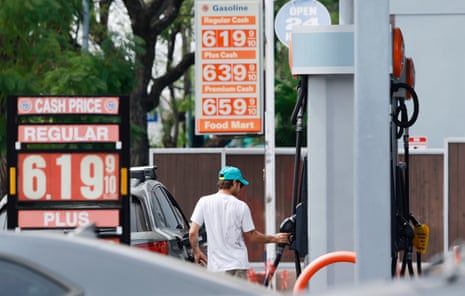
In response to these daunting fuel costs, Angelenos are employing a range of creative strategies to keep their vehicles on the road. Some are shopping around for the best deals, while others are coasting downhill to conserve precious gas. Many drivers are also banding together with neighbors, carpooling, or exploring alternative modes of transportation, such as public transit or bicycles.
The impact of these high gas prices is being felt across all sectors of the LA economy, from individuals to businesses. Small business owners are facing difficult decisions as they grapple with the increased costs of delivering goods and services. The city's rideshare drivers, who rely on their vehicles for their livelihoods, are particularly vulnerable to the financial strain.
Despite the challenges, Angelenos are demonstrating their resilience and adaptability. Community-based solutions, such as neighborhood carpooling initiatives, are emerging as drivers band together to share the burden. Some are even exploring more sustainable transportation options, such as electric vehicles or micromobility alternatives like electric scooters and bicycles.
As the global oil market continues to be disrupted, the people of Los Angeles are proving that they are more than just a car-centric city. They are a community of problem-solvers, willing to rethink their relationship with the automobile and find innovative ways to navigate the new realities of the energy crisis.
The surging gas prices in Los Angeles may be a challenge, but they are also an opportunity for the city to redefine its transportation landscape and lead the way in sustainable mobility solutions. By embracing creativity and collaboration, Angelenos are demonstrating that they can weather the storm and emerge stronger, more resilient, and less dependent on the car-centric status quo.


