
Anti-Vaccine Rhetoric Fuels Global Measles Crisis: US Role Revealed

Experts warn that US government's downplaying of measles threatens worldwide containment efforts as countries lose elimination status due to falling vaccination rates.
The global fight against the measles virus is facing a new threat, and the United States government may be playing a significant role. Experts warn that the amplification of anti-vaccine rhetoric by US officials, coupled with a perceived deprioritization of the measles virus, could have far-reaching consequences for countries around the world.
The World Health Organization (WHO) recently announced that six European countries - the United Kingdom, Spain, Austria, Armenia, Azerbaijan, and Uzbekistan - have officially lost their measles elimination status. This means that the measles virus has been circulating continuously in these countries for more than 12 months. To effectively contain measles, health recommendations call for at least 95% of children to be fully vaccinated, but vaccination rates have been falling across Europe.
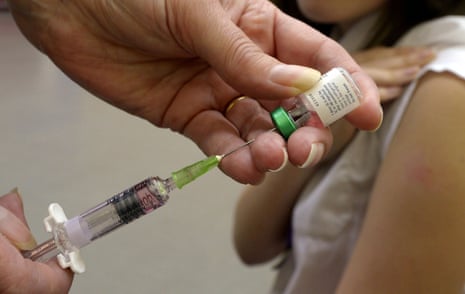
The problem, according to experts, is that the anti-vaccine rhetoric emanating from the United States government has the potential to impact global measles containment efforts. As the US amplifies messaging that downplays the seriousness of the measles virus, it sends a signal to the world that the disease is not a priority, undermining public health efforts worldwide.
"Viruses don't know borders," said one public health expert. "What happens in the US can have ripple effects globally, and that's a concerning reality we're facing with the measles crisis." The expert noted that the US government's stance on measles could embolden anti-vaccine movements in other countries, further eroding vaccination rates and making it harder to contain outbreaks.
To address the growing threat, health organizations are calling for a renewed global commitment to measles vaccination and education campaigns. They argue that combating misinformation and restoring public trust in vaccines is critical to reversing the alarming trend of falling vaccination rates worldwide.
"The measles virus doesn't respect national borders," said a WHO official. "If we don't act now to strengthen vaccination efforts globally, we risk undoing decades of progress in measles elimination. The stakes are high, and the time to act is now."


