
Athens Mayor Fights Overtourism Crisis Threatening City

Athens mayor Haris Doukas tackles overtourism crisis as 8 million visitors overwhelm 700,000 residents. Neighborhoods losing authenticity.
The ancient capital of Greece faces an unprecedented challenge as overtourism threatens to fundamentally transform the character of one of Europe's most historically significant cities. With approximately 700,000 permanent residents navigating daily life alongside nearly 8 million annual tourists, Athens finds itself at a critical crossroads between preserving its cultural heritage and managing the economic benefits of tourism. Haris Doukas, the socialist mayor elected on a platform of urban renewal and citizen-focused governance, has emerged as a vocal advocate for rebalancing the relationship between tourism and residential life in the overcrowded Greek capital.
Walking through the narrow, winding streets of Athens's historic neighborhoods, the scale of the tourism phenomenon becomes immediately apparent. Tourist groups with their distinctive colored caps and identification badges congregate around every major archaeological site, from the iconic Parthenon to lesser-known classical ruins scattered throughout the city center. These visitors traverse the same pedestrian pathways used daily by residents attempting to conduct ordinary business, creating constant bottlenecks in already congested areas. The sheer volume of foot traffic has transformed what were once intimate public spaces into crowded thoroughfares, fundamentally altering the texture of urban life for those who actually call Athens home.
Mayor Doukas has consistently warned that the current trajectory of tourism growth is unsustainable and threatens the very essence of what makes Athens culturally and historically valuable. In his view, the city risks becoming merely a backdrop for tourist consumption rather than a living, breathing community where ordinary Athenians can thrive. His administration has increasingly adopted the position that Athens cannot function as a giant hotel, a phrase that encapsulates the core tension between tourism development and residential quality of life. This perspective represents a significant shift from decades of municipal policy that prioritized visitor numbers and tourism revenue above nearly all other considerations.

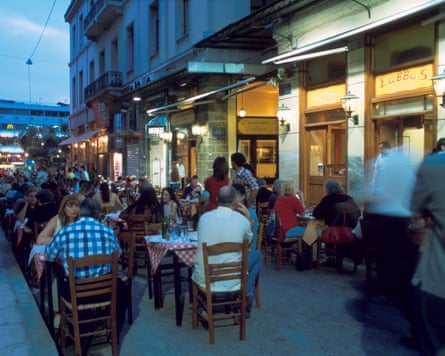
The neighborhoods most severely impacted by overtourism are experiencing profound demographic and cultural changes. Long-time residents are increasingly priced out of their own communities as property owners convert residential apartments into short-term tourist rentals, fundamentally altering the social fabric of historic districts. Young families who once lived in central neighborhoods are forced to relocate to distant suburbs, while local businesses catering to residents—traditional bakeries, family-owned tavernas, neighborhood groceries—are replaced by tourist-oriented shops selling mass-produced souvenirs and overpriced meals. The loss of residential authenticity in these areas represents not merely an aesthetic concern but a genuine community crisis with long-term social implications.
Doukas's approach to addressing this crisis emphasizes the need for comprehensive urban planning that prioritizes the needs of permanent residents while still allowing for sustainable tourism. His administration has begun implementing policies designed to regulate short-term rental properties, restrict certain types of tourism-related businesses in residential zones, and create protected areas where local character is preserved through careful zoning regulations. These measures represent an intentional rejection of the laissez-faire tourism development model that had dominated Athens for the previous two decades, reflecting a belief that deliberate intervention is necessary to prevent further deterioration of neighborhood conditions.
The scale of the tourism challenge becomes clearer when considering the mathematical reality: Athens hosts more than eleven tourists for every permanent resident annually. This ratio far exceeds sustainable levels for most cities and creates conditions where tourist infrastructure and services begin to dominate the urban landscape. Streets that were designed centuries ago for local foot traffic now accommodate massive tour groups navigating with maps and smartphones. Public facilities become overwhelmed during peak seasons, affecting both tourists and residents who find city services strained to capacity. The infrastructure of Athens, despite significant investments in recent decades, struggles to manage the volume of human movement through its historic center.

Beyond the immediate challenges of crowding and congestion, overtourism in Athens raises important questions about cultural preservation and urban sustainability. Archaeological sites themselves face physical stress from the constant stream of visitors, with research suggesting that increased foot traffic accelerates deterioration of ancient stones and structures. The noise pollution generated by large tour groups echoing through narrow streets creates a constant low-level assault on the acoustic environment that residents must navigate daily. Water consumption spikes during tourist seasons, placing pressure on municipal resources, while waste generation from millions of additional people creates logistical challenges for city sanitation services.
The economic perspective on overtourism in Athens reveals a complex picture that complicates simple solutions. Tourism generates substantial revenue for the city and provides employment for thousands of workers in hotels, restaurants, tour companies, and related services. Many small business owners depend entirely on tourist spending to maintain their livelihoods, and any significant reduction in visitor numbers would create immediate economic hardship for these workers. This economic reality creates tension with Doukas's vision of urban reclamation and suggests that any viable solution must carefully balance cultural and residential concerns with the legitimate economic needs of tourism-dependent workers and businesses.
International examples provide some guidance for how cities might address similar challenges. Barcelona, Venice, and other historically significant European cities have grappled with comparable overtourism problems, implementing various strategies from visitor caps to dispersed tourism development in less-visited neighborhoods. Some cities have successfully redirected tourists toward peripheral areas and lesser-known cultural sites, distributing visitor impact more broadly across the urban landscape. Others have invested in technological solutions, from online reservation systems that manage visitor flows to digital experiences that reduce the need for physical site visits. Athens could potentially learn from these international precedents while adapting solutions to its unique geographic, historical, and cultural context.
The philosophy underlying Doukas's approach reflects a broader European conversation about what cities owe their permanent residents versus what they can sustainably offer to visitors. This perspective suggests that cities are primarily communities where people live, work, and raise families, not primarily consumption destinations for tourists. From this viewpoint, tourism should be structured to serve the city's primary function as a residential community rather than the reverse. This represents a fundamental reorientation of how municipal government thinks about its primary responsibilities and stakeholders, prioritizing the needs of permanent residents and long-term community health over short-term tourism revenue maximization.
Implementing restrictions on tourism development or visitor numbers inevitably creates friction with tourism industry stakeholders, hoteliers, and tour operators who benefit from the current system of unregulated growth. These groups have successfully lobbied against restrictive measures in the past, and significant political resistance to meaningful change should be expected. The mayor's administration will need to carefully construct political coalitions that support balanced tourism management, potentially including neighborhood associations, environmental organizations, and cultural preservation groups that share concerns about overtourism's negative impacts. Building this political consensus represents one of the central challenges in translating the mayor's vision into concrete policy changes.
Looking forward, Athens faces a critical decision about its future identity and function. The city can continue on its current trajectory toward becoming primarily a tourist attraction, with local residents increasingly pushed to peripheral areas and cultural authenticity replaced by commercialized tourist experiences. Alternatively, under leadership like that provided by Mayor Doukas, Athens can deliberately choose to invest in preserving itself as a living community where tourism is managed to serve residents' interests rather than overwhelming them. This choice has implications far beyond Athens itself, potentially influencing how other historically significant cities approach the challenge of balancing tourism growth with community preservation. The coming years will reveal whether the new municipal administration can successfully translate its vision for sustainable tourism and community protection into effective policy implementation that demonstrably improves conditions for ordinary Athenians.


