
Audi Q9 Flagship SUV Interior Revealed

Audi's new Q9 flagship SUV features a luxurious interior with matte finishes and premium materials. See the design details before its summer launch.
MUNICH—The automotive world is about to witness a significant shift in luxury segment positioning as Audi prepares to unveil its highly anticipated Q9 flagship model later this summer. Historically, the prestigious A8 sedan carried the torch as Audi's flagship vehicle, representing the pinnacle of the brand's engineering and design philosophy. However, the landscape of consumer preferences has dramatically transformed in recent years, with SUV demand reshaping the entire automotive market. This seismic shift toward sport utility vehicles has proven so powerful that even in traditionally sedan-focused European markets, the majority of luxury car buyers now opt for SUVs over traditional sedans, fundamentally changing how manufacturers approach their product portfolios.
The new Q9 represents more than just a new model—it marks Audi's strategic commitment to the full-size SUV segment and underscores the company's recognition of North America's critical importance to its global business strategy. The development of this flagship model reflected meticulous attention to regional preferences, with the engineering team making deliberate design choices specifically tailored to North American consumers. One particularly telling example of this market-focused approach involved a seemingly minor but ultimately meaningful redesign: the cupholders were specifically engineered to accommodate the oversized insulated beverage containers that experienced a surge in consumer popularity. Such details exemplify how Audi balanced global design principles with localized functionality requirements to create a truly market-responsive flagship vehicle.
While the exterior design of the new Q9 remains heavily camouflaged for now—a common practice during the final stages before official unveiling—the production interior has been carefully documented through exclusive photography. The design team presented multiple interior trim variations to showcase the flexibility and customization options available to potential buyers. Rather than committing to a single aesthetic direction, Audi developed alternative interior schemes that appeal to different consumer sensibilities and design preferences. Beyond the dramatic dark finishes visible in the current imagery, which evoke stark, sophisticated aesthetics, the palette extends to warmer, lighter tones that create entirely different emotional responses.
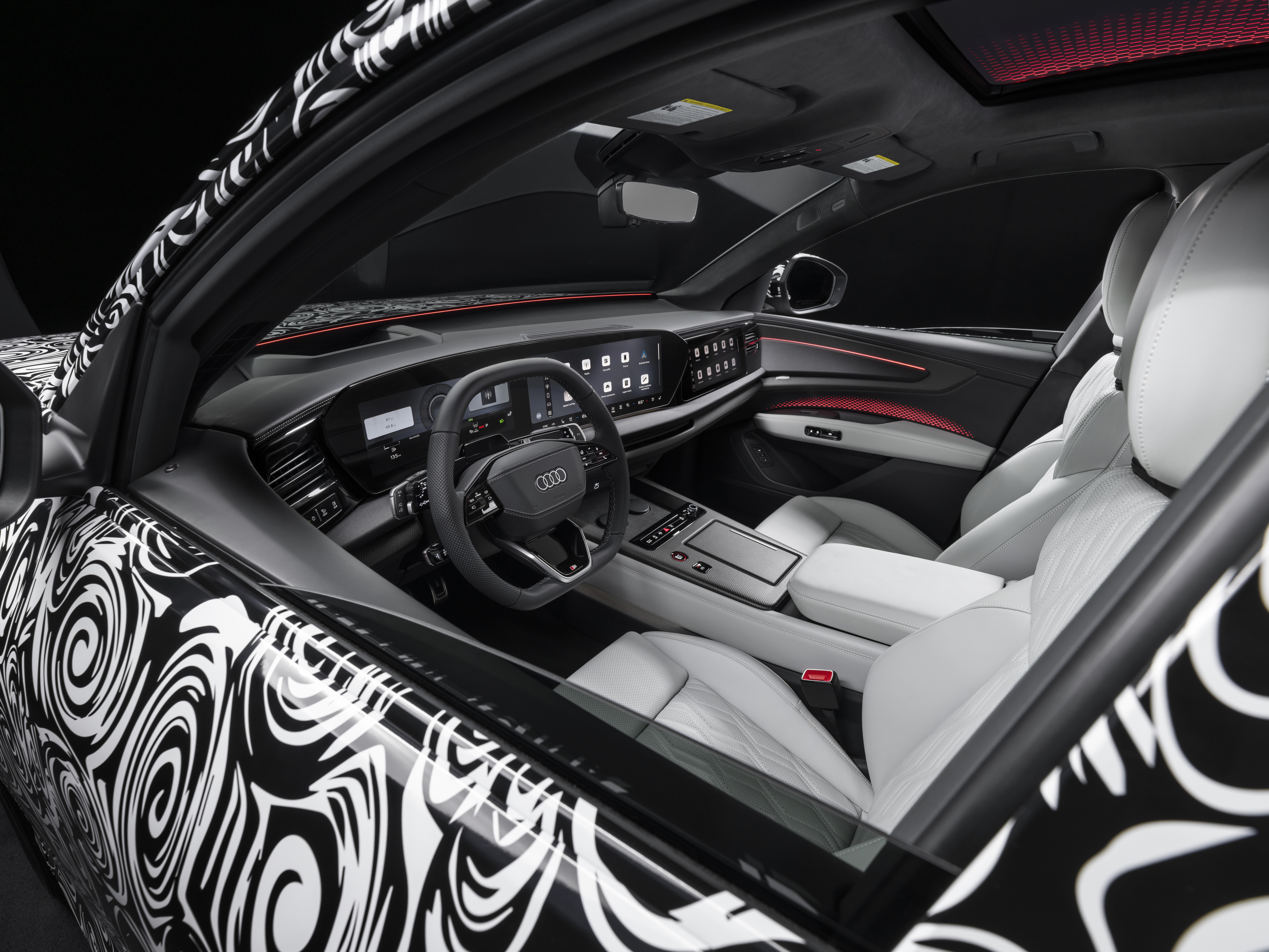
The alternative interior color schemes draw inspiration from diverse visual references and cultural aesthetics. For consumers preferring warmer, more inviting environments, Audi offers beiges and browns throughout the cabin, creating a more traditional luxury ambiance. Among the most intriguing material options is an open-grain olive wood alternative that provides a natural, organic aesthetic distinctly different from the coarse carbon fiber visible in the primary design scheme shown. This thoughtful material selection represents a broader design philosophy where the Q9 interior purposefully distances itself from the glossy, reflective finishes that have dominated luxury automotive interiors for the past decade. Instead, the design team made a deliberate choice to embrace matte finishes throughout the cabin wherever practical, creating a more sophisticated, understated appearance that appeals to contemporary luxury consumers who prefer tactile authenticity over reflective shine.
The strategic deployment of varied textures throughout the interior creates visual and tactile interest that significantly elevates the overall cabin experience. Rather than relying on uniform materials across broad surfaces, the designers layered different textures—wood grains, carbon patterns, leather surfaces, and matte finishes—to create depth and complexity that draws the eye and engages the sense of touch. This sophisticated approach to material mixing prevents the interior from feeling monotonous or one-dimensional, instead creating a rich, layered environment that rewards closer inspection. The philosophy represents a maturation in luxury automotive design, moving beyond the simple equation of
Source: Ars Technica


