
Aung San Suu Kyi Moved to House Arrest Amid Military Control

Myanmar's former leader Aung San Suu Kyi, Nobel Peace Prize winner, has been relocated to house arrest following her detention since the 2021 military coup.
Aung San Suu Kyi, the celebrated Nobel Peace Prize laureate and former leader of Myanmar, has been transferred to house arrest according to an announcement made by the country's military authorities. This significant development marks another chapter in the turbulent political situation that has gripped the Southeast Asian nation since the dramatic military intervention in 2021.
The Myanmar military coup that occurred in February 2021 fundamentally altered the nation's political landscape, removing Suu Kyi from power and triggering widespread international condemnation. Since that fateful moment, Suu Kyi has remained in detention under the control of the military junta, which consolidated its authority through force and suppressed democratic institutions that had been gradually developing in the country.
Suu Kyi's relocation to house arrest represents a shift in how the military regime is managing her detention, though the fundamental restrictions on her freedom remain intact. The decision reflects the military's approach to controlling the former democratic leader while managing international pressure and domestic sentiment regarding her imprisonment. Political imprisonment and detention without fair trial have become hallmarks of the military government's governance strategy since taking power.
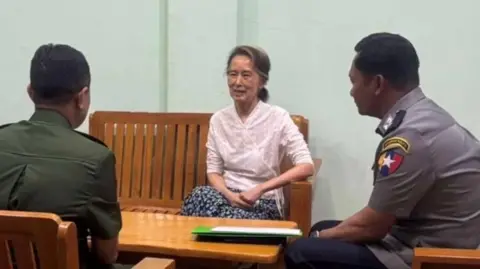
The movement to house arrest comes after months of legal proceedings that have been widely criticized by human rights organizations and international observers as lacking transparency and due process. Suu Kyi faced multiple charges in military courts, which many external analysts viewed as politically motivated prosecutions designed to neutralize her influence and prevent any potential return to political power. The legal system under military rule has been scrutinized for its inability to provide fair and impartial justice.
As a Nobel Peace Prize laureate, Suu Kyi's detention has drawn particular international attention, as she was awarded the prestigious honor in 1991 in recognition of her non-violent struggle for democracy and human rights in Myanmar. Her imprisonment stands in stark contrast to the ideals for which she was recognized by the Nobel Committee, creating a powerful symbol of the democratic backsliding in the country.
The military's statement regarding the house arrest transfer provides limited details about the conditions or duration of this arrangement, which is typical of the junta's communications with the press and international community. Such opacity has characterized the regime's handling of information about political detainees and continues to fuel concerns about the true nature of Suu Kyi's situation and treatment.
Throughout her detention, various reports from human rights groups, news organizations, and diplomatic sources have painted a picture of a severely restricted life for the former leader. Her supporters have organized international campaigns demanding her release and the restoration of democracy in Myanmar, while the military government remains steadfast in its control over state affairs and political processes. The democracy movement in Myanmar continues to face significant challenges under military rule.
The implications of this house arrest transfer extend beyond Suu Kyi herself, affecting the broader political dynamics within Myanmar and international relations. Countries around the world, including the United States, European Union nations, and regional players, have expressed concerns about the military coup and its aftermath, implementing various sanctions and diplomatic measures to pressure the regime. The international community's response has been mixed, with some nations maintaining engagement while others have taken harder stances against the junta.
Domestically, Myanmar has experienced significant civil unrest, economic deterioration, and humanitarian challenges since the military takeover. The coup disrupted democratic governance that had been progressively developing since 2011, when Myanmar began transitioning away from decades of military rule under Suu Kyi's National League for Democracy (NLD) party. The regression has affected millions of ordinary citizens who depended on the gradual institutional improvements and economic development that were beginning to take root.
Suu Kyi's prominence in international affairs cannot be understated, as she spent years as a symbol of resistance against military authoritarianism and a beacon of hope for democratic change in Asia. Her journey from political prisoner in the 1990s to elected leader and then back to detention illustrates the precarious nature of democratic progress in nations with deep-rooted military institutional power. Her story resonates with global audiences concerned about the erosion of democratic norms and human rights protections.
The house arrest arrangement, while potentially offering some improved living conditions compared to prison detention, does not represent a fundamental change in her status as a political prisoner. Human rights organizations have continued to monitor her situation closely, calling for her unconditional release and the restoration of legitimate democratic governance in Myanmar. International pressure campaigns have included appeals to the United Nations and regional organizations to intervene on behalf of political detainees.
Looking forward, the trajectory of Myanmar's political future remains deeply uncertain. The military regime has shown little inclination toward reconciliation with democratic opposition figures or returning to democratic processes. Suu Kyi's continued detention serves as a powerful symbol of the military's determination to maintain control and eliminate potential challenges to its authority, regardless of international opinion or pressure.
The situation demands continued attention from the international community and advocates for human rights and democratic governance. Suu Kyi's case exemplifies the broader struggles faced by democracy activists and political leaders across the region who challenge authoritarian rule. As Myanmar navigates this turbulent period, the fate of prominent political figures like Suu Kyi will likely remain a focal point for those monitoring the country's progress toward or away from democratic governance and respect for fundamental human rights.
Source: BBC News


