
Australian Media's Dramatic Budget Coverage Decoded

Murdoch papers attack Jim Chalmers' budget as radical wealth redistribution. Explore how Australia's media outlets interpreted the controversial fiscal policy.
Australia's media landscape erupted into fierce debate following Treasurer Jim Chalmers' latest budget announcement, with coverage ranging from scathing criticism to measured analysis. The Murdoch-controlled newspapers took particularly aggressive stances, with headlines designed to inflame rather than inform voters about the government's fiscal direction. The varied interpretations across different media outlets reveal not just differing political perspectives, but fundamentally different narratives about what the budget means for ordinary Australians.
The Daily Telegraph led the charge with inflammatory rhetoric, describing the budget as nothing short of a communist takeover of New South Wales. The newspaper's front page featured Treasurer Chalmers alongside communist imagery—a red hammer and sickle symbol—suggesting the government had steered the nation toward socialist policies. The characterization of Chalmers as "Lying Jim" was paired with suggestions he was "cackling like the devil" while implementing devastating tax measures. This hyperbolic approach exemplified how partisan media outlets shaped public discourse around the budget announcements.
Beyond the theatrical communist accusations, Murdoch publications launched coordinated attacks on what they termed the most radical redistribution of wealth since the Whitlam era. The comparison to the controversial 1970s Labor government served a specific rhetorical purpose: invoking memories of economic chaos, inflation, and industrial unrest that characterized that period. By drawing this parallel, the newspapers sought to delegitimize current economic policies by association with a previously unpopular administration. The strategy represented a deliberate attempt to shape voter sentiment before broader public understanding of policy details could take hold.
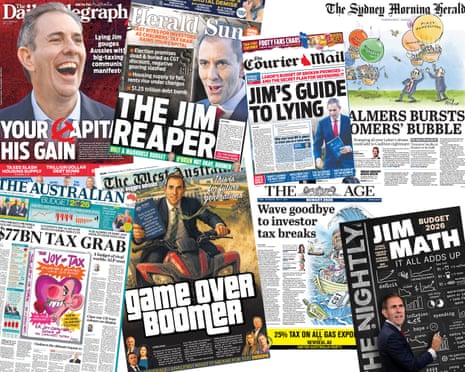
The coverage extended beyond simple political disagreement into territory that raised questions about journalistic standards and media responsibility in democratic discourse. Rather than providing detailed analysis of specific budget measures, their economic implications, or comparative assessments of different policy approaches, major outlets opted for sensationalism. The use of communist imagery and inflammatory language appeared designed to trigger emotional responses rather than facilitate informed debate about taxation, spending priorities, and economic management.
Different media organizations adopted distinctly different editorial positions on the budget's merits and implications. While some outlets focused on tax changes and their potential impact on various demographic groups, others emphasized spending commitments and social policy initiatives. The fragmentation of media coverage meant that Australian readers encountered vastly different versions of the same budget announcement depending on which publications they consumed. This media fragmentation complicated public understanding of complex economic policy, as citizens lacked a shared factual baseline for discussion.
The specific targeting of Jim Chalmers as a political figure rather than analysis of his Treasury team's policy work highlighted how personality-driven coverage dominated the narrative. References to Chalmers' demeanor, his statements, and his perceived motives overshadowed substantive examination of budget provisions. This approach reflected broader trends in contemporary political journalism, where personalities often matter more than policies in shaping coverage decisions. The treasurer became a caricature rather than a policy-maker in much of the media commentary.
The comparison of current budget measures to the Whitlam government's policies deserved closer scrutiny given its centrality to the Murdoch media's argument. The Whitlam era (1972-1975) did indeed see expansionary fiscal policies and attempts at significant social reform, but also economic headwinds including global inflation and stagflation. However, contemporary economic conditions, policy tools, and global financial integration differed substantially from the 1970s context. The historical comparison, while rhetorically powerful, oversimplified complex questions about whether different eras' policies were actually comparable or relevant to current challenges.
Various commentators and analysts pointed out that budget coverage revealed fundamental divisions in Australian media ownership and editorial direction. The concentration of media ownership among a handful of proprietors meant that coordinated messaging across multiple outlets amplified particular political narratives. Readers relying on a limited set of news sources encountered remarkably consistent framing that presented the budget in exclusively negative terms, without exposure to alternative interpretations or counterarguments that appeared in other publications.
The reference to a Zara dress in some coverage appeared to reflect efforts at creating human-interest angles or lifestyle impacts from budget changes. Rather than addressing broad economic principles, some media outlets focused on how budget measures might affect consumer behavior, fashion purchasing, or lifestyle choices. This approach attempted to make abstract economic policy tangible through relatable consumer examples, though critics argued it trivialized serious questions about government revenue, spending priorities, and economic management.
The "Jim Reaper" characterization that appeared in some headlines employed grim imagery to suggest the treasurer was harvesting taxpayer wealth. The personification of Chalmers as death itself conveyed an apocalyptic vision of budget impacts while avoiding substantive engagement with specific policy measures. This metaphorical approach allowed commentators to express strong opposition without necessarily explaining exactly which provisions they opposed or why reasonable people might disagree about their merits. The rhetorical device substituted emotional impact for analytical clarity.
International observers watching Australian media coverage noted the unusual intensity and coordinated nature of attacks on budget announcements. In many comparable democracies, budget releases generate diverse media responses reflecting different political perspectives, but with more separation between news reporting and opinion commentary. The Australian coverage demonstrated how concentrated media ownership could produce remarkably unified messaging that blurred distinctions between news and advocacy. This observation raised questions about whether Australian voters received adequate exposure to multiple interpretations of their government's policies.
The budget coverage debate highlighted ongoing concerns about media literacy and public discourse in Australia. Citizens needed to develop sophisticated skills to navigate polarized media environments where the same policy announcement could be described as either sensible economic management or socialist catastrophe depending on which outlet they consulted. The responsibility fell on individual readers to seek out diverse sources, recognize rhetorical techniques, and develop independent assessments of complex policy questions. Educational institutions and public broadcasters faced pressure to help citizens develop these critical media analysis skills.
Looking ahead, the budget coverage controversy raised broader questions about the future of political journalism in Australia and comparable democracies. Would media organizations increasingly rely on sensationalism and partisan framing to drive engagement and revenue? Would balanced coverage become rarer as outlets competed for attention in crowded information environments? These questions extended beyond the immediate budget debate to fundamental questions about whether media systems could adequately serve democratic functions when ownership concentration permitted coordinated messaging campaigns designed to influence rather than inform.
Source: The Guardian


