
Author Defends AI Use Despite Fake Quotes in Book

Journalist Steven Rosenbaum acknowledges synthetic quotes in his new book about AI and truth, but plans to continue using artificial intelligence tools.
Journalist and author Steven Rosenbaum finds himself in an ironic predicament that underscores one of the central tensions in modern publishing. His recently published book, The Future of Truth: How AI Reshapes Reality, explores the troubling ways in which artificial intelligence distorts factual accuracy and manipulates information in our digital age. Yet a comprehensive investigation by The New York Times has revealed that Rosenbaum's own work contains problematic quotations that he now admits were either improperly attributed or entirely synthetic in origin—generated by the very AI tools he utilized during his research phase.
The discovery presents a fascinating case study in the contradictions inherent in contemporary authorship when AI technology intersects with journalistic integrity. Rosenbaum's book, published by Simon & Schuster, purports to examine how "Truth is being bent, blurred, and synthesized" under the relentless pressure of rapidly advancing, profit-motivated artificial intelligence systems. The irony is not lost on observers: an author warning about AI's capacity to distort reality has himself fallen victim to the very phenomenon he chronicles. This situation raises fundamental questions about the responsibility of writers and publishers to maintain standards of accuracy even as they experiment with emerging technologies.
The specific quotations in question have drawn particular attention from the individuals who allegedly made them. Tech reporter Kara Swisher, a prominent voice in technology journalism, explicitly told the New York Times that she had "never said" one of the quotes attributed to her in Rosenbaum's text. Similarly, Northeastern University professor Lisa Feldman Barrett, a respected neuroscientist and researcher, noted that certain quotations "don't appear in [my] book, and they are also wrong." These contradictions suggest that Rosenbaum's AI research tools may have generated plausible-sounding but entirely fabricated statements, attributing them to real people without verification.
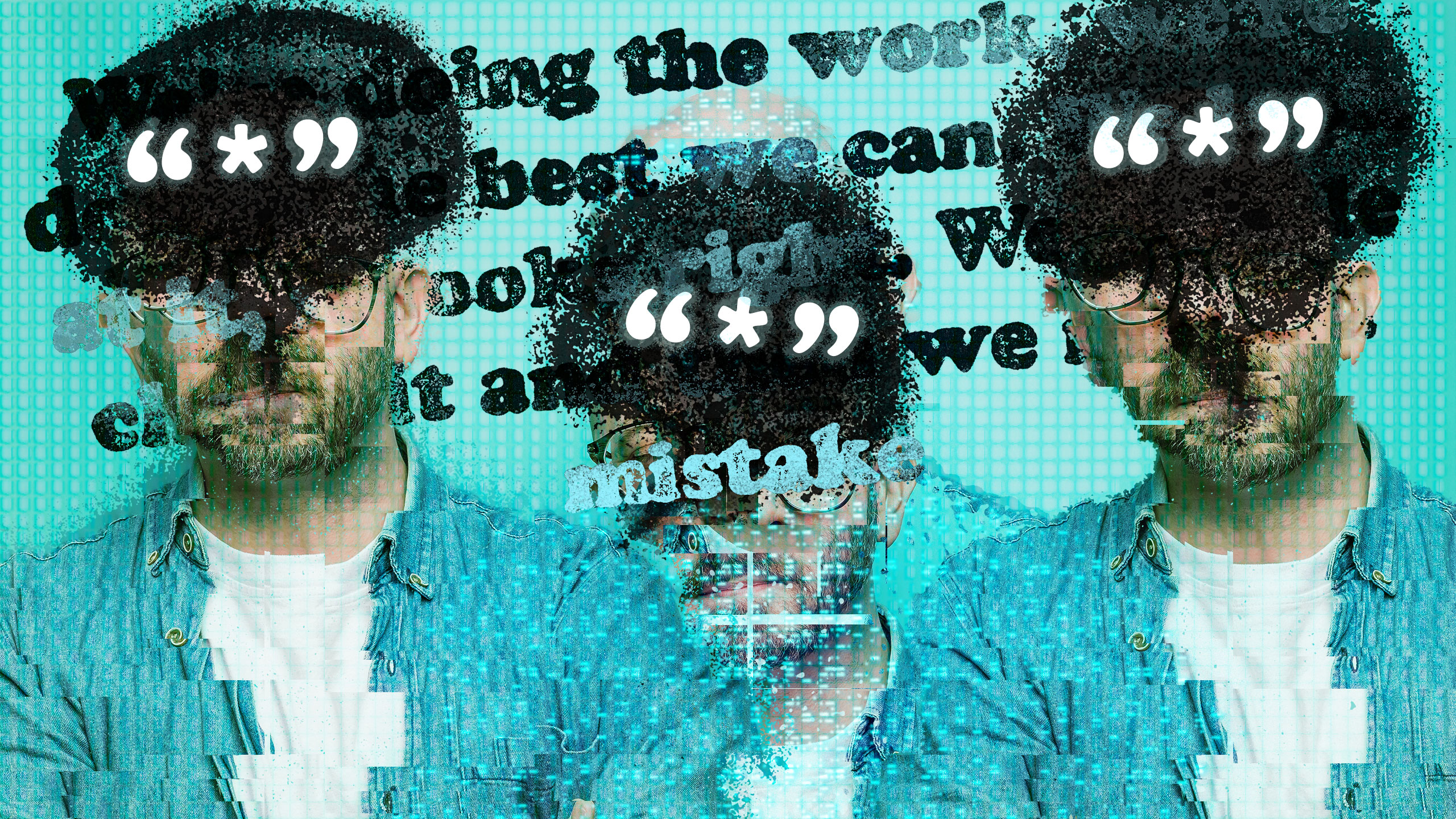
What makes this situation particularly noteworthy is Rosenbaum's response to the discovery. Rather than abandoning his use of artificial intelligence in his research and writing process, the author has indicated that he intends to continue employing AI tools for future projects. He is currently working in collaboration with his editors on what he describes as a comprehensive "citation audit" designed to correct the errors in subsequent printings of the book. This approach suggests that Rosenbaum views the problem not as a fundamental flaw in using AI for research, but rather as a technical issue requiring better verification procedures and quality control mechanisms.
The decision to maintain confidence in AI tools despite having experienced concrete negative consequences reflects a broader philosophical position. Rosenbaum appears to believe that artificial intelligence represents a valuable—perhaps even necessary—asset for modern authors and researchers, and that the solution lies not in wholesale rejection of these technologies but in implementing more rigorous fact-checking protocols. This stance positions him somewhat provocatively as someone writing cautionary tales about AI while simultaneously betting on the technology's utility when properly managed and supervised.
The broader publishing industry will be watching this situation closely, as it raises urgent questions about industry standards. Publishers, editors, and authors must grapple with how to responsibly integrate AI into their workflows while maintaining the foundational commitment to factual accuracy that has long defined credible journalism and serious non-fiction. The presence of synthetic quotes in a book explicitly about the dangers of synthetic information is not merely embarrassing—it threatens the credibility of both the author and his important message about the challenges posed by increasingly sophisticated AI systems.

Rosenbaum's acknowledgment of the problem demonstrates at least a willingness to engage with criticism transparently. He has not attempted to minimize the severity of the errors or blame external actors entirely. The forthcoming citation audit represents a concrete commitment to correction, which may help restore some degree of trust among readers and critics. However, the fundamental question persists: can authors and publishers adequately oversee AI systems to prevent similar errors from occurring in the future?
The synthetic quotes incident also highlights the particular challenges that language models and other AI systems present for research and writing. These tools excel at generating text that sounds plausible and reads fluently, but they operate without any genuine understanding of truth or accuracy. When an AI system encounters a request to locate or generate a quote from a particular person, it may produce something that matches the stylistic patterns it has learned from its training data without any mechanism to verify that the statement was actually made by that person.
For researchers like Rosenbaum, this creates a precarious situation. The efficiency gains offered by AI systems—the ability to rapidly process large volumes of information and generate relevant citations—must be carefully balanced against the human work required to verify those citations independently. The temptation to trust AI outputs, especially when they appear well-sourced and properly formatted, can lead to errors slipping through to publication if verification steps are insufficient.
The conversation around this incident will likely influence how other authors and publishing houses approach their own AI implementation strategies. Some may become more cautious, implementing stricter verification protocols before incorporating AI-generated content. Others may follow Rosenbaum's path, viewing the errors as growing pains in an evolving technological ecosystem. What seems clear is that this situation cannot be ignored or treated as an isolated incident—it represents a real and present challenge to the integrity of published information in an age of advanced artificial intelligence.
As Rosenbaum proceeds with his citation audit and continues his work exploring how AI shapes our relationship with truth, his personal experience will undoubtedly inform his perspective. Whether he and other authors can successfully navigate the dual challenge of leveraging AI's capabilities while maintaining rigorous standards of accuracy will be an important measure of whether the technology can be responsibly integrated into serious intellectual work. The stakes, as his own book argues, are high: our collective ability to distinguish truth from fiction in an increasingly AI-mediated world depends on these kinds of decisions being made carefully and transparently.
Source: Ars Technica


