
Bangkok Bus and Freight Train Collision Kills 8+

A devastating collision between a freight train and passenger bus in Bangkok has resulted in at least eight deaths. Fire engulfed the bus following the impact.
A tragic transportation accident unfolded in Bangkok as a freight train collided with a passenger bus, resulting in at least eight confirmed fatalities. The devastating incident sent shockwaves through the Thai capital, prompting an immediate response from emergency services and local authorities who rushed to the scene to assist survivors and contain the crisis.
According to police and rescue officials, the impact of the collision was severe enough to trigger a catastrophic fire that rapidly engulfed the bus in flames. The intense heat and smoke from the blaze complicated rescue operations, as emergency responders worked against time to locate and evacuate any remaining passengers trapped within the vehicle. The combination of the initial collision and subsequent fire created an extremely hazardous environment for first responders.
The bus and train crash occurred at a critical intersection point in Bangkok where railway tracks cross a major roadway. Officials have begun preliminary investigations into the circumstances surrounding the collision, examining factors such as visibility conditions, signal functionality, and whether proper safety protocols were followed by both the bus driver and train operators at the time of impact.
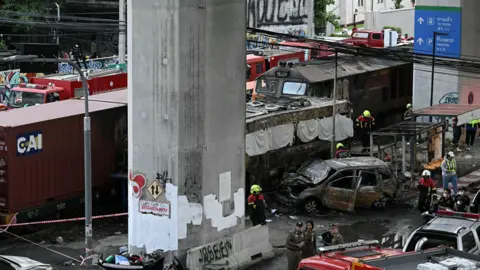
Emergency medical services responded rapidly to triage and transport the injured to nearby hospitals. The severity of the accident left many victims with critical injuries requiring immediate medical intervention. Field medics established temporary treatment stations near the collision site to stabilize patients before transportation to medical facilities equipped to handle trauma cases of this magnitude.
Rescue teams deployed specialized equipment to search through the wreckage of the bus for any additional survivors or victims. The intense heat from the fire made this search particularly dangerous, requiring firefighters to employ protective gear and strategic cooling techniques to safely navigate through the damaged vehicle. Dogs trained in search and rescue were also utilized to assist in locating anyone who may have been trapped or hidden within the debris.
The Bangkok transportation collision immediately raised concerns about safety protocols at railway crossings throughout the city. Local authorities and transport officials have pledged to conduct comprehensive reviews of all existing safety systems, including automatic crossing gates, warning lights, and emergency stopping mechanisms to prevent similar tragedies in the future.
Eyewitnesses at the scene reported hearing a deafening impact followed by the sound of the fire rapidly spreading through the bus. Many bystanders attempted to help evacuate passengers before emergency services arrived, with some performing basic first aid and CPR on victims pulled from the burning vehicle. Their immediate actions likely saved numerous lives in the critical minutes following the accident.
Thai transport authorities have suspended operations on the affected rail line while investigators thoroughly examine the scene and collect evidence. This operational disruption will impact commuter schedules and freight transportation routes throughout Bangkok and surrounding regions during the investigation period. Officials estimate that the closure could last several days depending on the scope of the investigative process.
The death toll from this fatal train and bus accident continues to be confirmed as medical examiners work to identify victims and notify their families. The toll of eight deaths represents a significant tragedy for Bangkok, drawing attention to longstanding concerns about traffic safety and coordination between different modes of transportation in the congested urban environment.
Officials have begun reaching out to families of those involved in the accident, offering support services and counseling to survivors and witnesses. Mental health professionals have been mobilized to assist first responders and rescue workers who were exposed to the traumatic nature of this incident. Grief counseling centers have been established for family members affected by the loss.
Preliminary reports indicate that safety inspections of both the freight train and the passenger bus had been conducted within the required timeframes prior to the accident. However, investigators are examining whether maintenance records were properly documented and whether all required safety features were functioning at the time of the collision. These technical aspects will be crucial in determining whether equipment failure contributed to the tragedy.
The incident has sparked broader discussions among Bangkok residents and government officials about the need for improved traffic safety measures and better coordination between railway and road transportation systems. Many advocates for transport safety are calling for increased funding for infrastructure improvements and the implementation of more advanced collision avoidance technology at railway crossings throughout Thailand.
This accident in Bangkok serves as a stark reminder of the risks associated with complex urban transportation networks where multiple modes of transit intersect. The tragedy has reignited conversations about whether existing safety standards are sufficient to protect the thousands of daily commuters who rely on public transportation. Transport officials have committed to working with international safety experts to evaluate current protocols and implement evidence-based improvements.
Source: BBC News


