
Bank of England Deputy Warns Stock Markets Overvalued

A senior Bank of England official breaks tradition with candid assessment of inflated stock market valuations and predicts significant market correction ahead.
In a remarkably candid departure from typical central bank restraint, a high-ranking official at the Bank of England has publicly warned that stock markets are trading at unsustainably high levels and face a substantial correction in the coming months. The statement represents an unusual move for a senior monetary policy figure, who typically avoid making direct predictions about equity market movements to prevent accusations of market manipulation or undue influence.
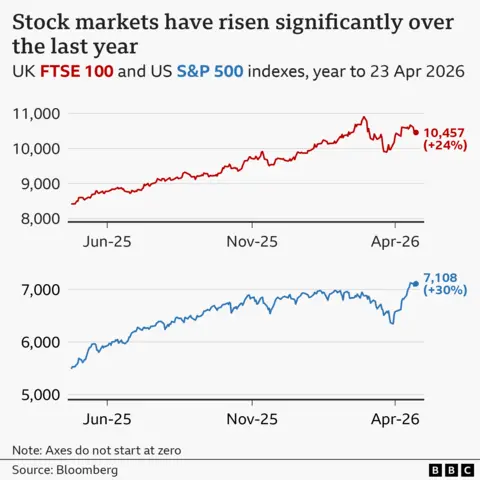
The deputy's comments highlight growing concerns within the central banking community about the disconnect between current market valuations and underlying economic fundamentals. This market valuation warning comes at a time when global stock indices have reached record highs despite persistent economic headwinds, including stubborn inflation rates and geopolitical tensions. The official's willingness to speak so directly suggests serious apprehension about the sustainability of current price levels across major equity indices.
Typically, Bank of England officials carefully weigh their public statements to avoid spooking markets or creating unnecessary volatility. Their communications are usually measured and deliberate, designed to manage market expectations without appearing to take sides on whether equities are fairly valued. However, this particular intervention breaks that well-established pattern, suggesting that internal assessments of market risk have reached a threshold where public guidance is deemed necessary.

The backdrop for this warning involves several interconnected factors that have propelled stock market valuations to historically elevated levels. Tech stocks, in particular, have experienced explosive growth driven by enthusiasm around artificial intelligence applications and other emerging technologies. This sector concentration has inflated overall market indices, even as traditional economic metrics such as earnings growth and revenue expansion have not kept pace with equity price appreciation.
The inverse relationship between interest rates and equity valuations has also played a critical role in pushing stocks higher. Markets had priced in expectations of interest rate cuts during the latter half of the year, which would theoretically support higher stock valuations by reducing the discount rate applied to future corporate earnings. However, persistent inflation and hawkish comments from central bank officials have cast doubt on the timing and magnitude of anticipated rate reductions.
Asset managers and institutional investors have increasingly acknowledged the market overvaluation concerns, though few have been as direct as this Bank of England official. The price-to-earnings ratios for major stock indices have expanded significantly beyond their historical averages, a metric that many investors view as a critical warning signal. When companies must grow earnings substantially faster than their historical norms just to justify current share prices, the risk of disappointment increases materially.
The timing of this warning is particularly significant given the upcoming economic data releases and central bank meetings scheduled for the coming quarter. Markets have grown accustomed to a pattern where disappointing economic news translates into expectations for easier monetary policy, which then drives equity prices higher. This dynamic has created what some observers call a "bad news is good news" mentality in markets, where weakness in economic data is interpreted as positive for stocks.
However, the Bank of England official's comments suggest that this supportive dynamic may be breaking down. If central banks remain committed to fighting inflation and maintaining higher interest rates for longer than markets currently expect, the rationale for elevated stock valuations would weaken considerably. The divergence between market expectations and central bank guidance has widened, creating the potential for a significant repricing event.
International market participants have taken note of the Bank of England's more hawkish and critical tone regarding equity valuations. Given London's status as a global financial center and the pound sterling's role as a reserve currency, statements from Bank of England officials carry outsized influence on international markets. This intervention has already prompted discussions among major asset allocators about reducing their equity exposure and rebalancing portfolios toward more defensive positions.

The broader context involves a fundamental reassessment of how investors should price risk in an environment of higher structural inflation and more restrictive monetary policy. For much of the past decade, central banks engaged in unprecedented stimulus measures that compressed risk premiums across all asset classes. As that era ends and rates remain elevated for extended periods, traditional valuation models suggest that lower equity prices would be warranted.
Many professional investors have begun positioning their portfolios defensively in anticipation of potential market correction scenarios. This shift involves increasing allocations to bonds, cash equivalents, and dividend-paying stocks with more stable cash flows. The move represents a pragmatic acknowledgment that the era of easy money and generously-priced growth stocks may be concluding.
The Bank of England's critique also extends to the broader financial system stability implications of overvalued markets. When asset prices become disconnected from economic reality, they create vulnerabilities that can propagate through the financial system when corrections occur. Central banks have a responsibility to monitor these dynamics and alert the public to emerging risks, which appears to be the primary motivation behind this official's candid remarks.
Moving forward, investors face a decision point regarding how to respond to this guidance from an influential central bank official. Some will interpret the warning as an opportunity to de-risk portfolios before a potential decline, while others may view it as overly pessimistic or a sign that the worst of monetary tightening is behind us. The resolution of this disagreement will likely play out over the coming quarters as economic data emerges and central bank actions become clearer.
The willingness of Bank of England leadership to speak so plainly about market risk and asset price overvaluation represents a noteworthy shift in central bank communication strategy. Rather than maintaining a neutral posture and allowing markets to discover pricing through their own mechanisms, this official has chosen to provide explicit guidance about the sustainability of current valuations. This approach carries risks, including accusations of market interference, but it also reflects the seriousness with which current conditions are being viewed internally.
Source: BBC News


