
Bank of England Holds Rates at 3.75% Amid Inflation Concerns

The Bank of England keeps interest rates steady at 3.75% despite rising inflation signals linked to geopolitical tensions affecting fuel prices.
The Bank of England has made the decision to maintain UK interest rates at their current level of 3.75%, a choice that surprised some market analysts who anticipated potential movement given the evolving economic landscape. The monetary policy committee's decision came following a comprehensive review of economic data and forward-looking assessments, with the rate-setting body determining that holding steady was the most prudent course of action at this juncture.
The decision to keep rates unchanged comes at a time when inflation pressures are showing signs of acceleration across multiple sectors of the British economy. These inflationary signals have been primarily driven by geopolitical developments, particularly the escalating tensions involving Iran, which have created significant uncertainty in global energy markets and pushed crude oil prices upward. With the UK's economy heavily reliant on imported energy, the ripple effects of these international developments are beginning to manifest in domestic pricing pressures.
The monetary policy committee, which comprises the Bank's senior economists and external experts, convened for its scheduled meeting and voted unanimously to leave borrowing costs unchanged. This decision was announced at noon on Thursday, following the conclusion of the committee's deliberations on the state of the British economy and the appropriate path for monetary policy going forward.

The fuel price impacts stemming from the Iran-related geopolitical situation have become a central concern for policymakers in recent weeks. Rising energy costs have the potential to feed through into broader inflation measures, affecting not only consumer prices at petrol pumps but also business operating costs and heating expenses for households across the nation. The Bank of England must carefully calibrate its response to ensure that temporary energy-driven inflation does not become embedded in longer-term inflation expectations.
Despite these inflationary headwinds, the Bank appears to be taking a measured approach, preferring to observe how economic data evolves before making adjustments to interest rate policy. The committee's assessment suggests that maintaining the current rate level allows them to preserve optionality while gathering more information about the persistence of inflation pressures and the broader trajectory of economic growth. This holding pattern reflects the inherent uncertainty surrounding both the duration of geopolitical tensions and their ultimate economic consequences.
Market participants and economists have been closely watching for signals about the Bank's inflation tolerance and future policy direction. The decision to hold rates steady, rather than increase them in response to rising inflation signals, suggests that the committee may believe current inflation pressures are transitory in nature. However, this interpretation depends heavily on assumptions about how quickly international tensions may ease and energy prices may stabilize.
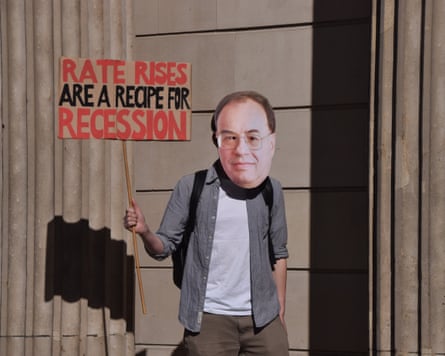
The UK economy has been navigating a complex set of challenges in recent months, including persistent inflation from earlier pandemic-related supply chain disruptions, labor market dynamics, and now geopolitical supply shocks. The Bank's decision to pause rate adjustments reflects the committee's view that the balance of risks and opportunities warrants a wait-and-see approach rather than preemptive policy tightening. This strategy allows them to avoid potential overreactions to what might prove to be temporary shocks.
Looking ahead, market participants are now speculating about when the next rate decision might differ from this holding pattern. The Bank has indicated that future policy decisions will depend on the evolution of inflation data, labor market conditions, and broader economic growth indicators. If inflation pressures prove more persistent than currently anticipated, or if they accelerate beyond the committee's expectations, the Bank may need to reconsider its current stance at subsequent meetings.
The decision has immediate implications for borrowers and savers across the United Kingdom. With interest rates remaining unchanged, mortgage holders with variable rate mortgages will see no change in their monthly payments, while savers can expect their deposit rates to remain broadly stable in the near term. However, the underlying inflation concerns mean that real returns for savers may continue to be pressured if price increases accelerate while rates remain fixed.
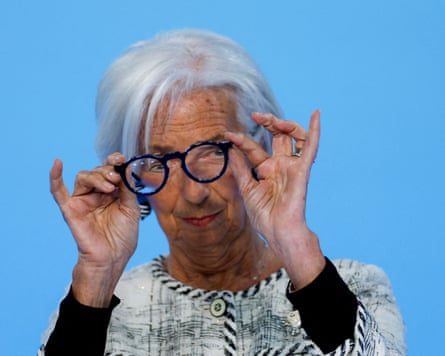
Financial institutions and corporate borrowers have also been monitoring the Bank's rate decisions closely, as they rely on these signals to make long-term investment and expansion decisions. The holding pattern provides some clarity for business planning purposes, though the underlying uncertainty about future inflation trajectories means that many companies may remain cautious about major capital expenditures. The interplay between monetary policy decisions and broader economic confidence will likely be crucial in determining whether the UK achieves a smooth economic path or faces more significant turbulence.
The Bank of England's approach reflects the broader global context in which many central banks are grappling with similar inflation concerns tied to energy price volatility. International observers will be watching to see whether the Bank's measured approach proves appropriate or whether more aggressive action becomes necessary. The committee's willingness to hold steady despite inflation signals suggests confidence that the current policy stance remains conducive to price stability over the medium term, though this assessment will be continuously reassessed as new economic data emerges.
Source: The Guardian


