
Bank Refuses £900 HMRC Cheque: Woman Faces 94-Mile Journey

Annabel Yates battles Lloyds Bank over depositing HMRC cheque after branch closures. Discover how banking changes are affecting UK customers.
Annabel Yates finds herself caught in a frustrating predicament that highlights the growing challenges facing customers across the United Kingdom as traditional banking services continue to evolve. The situation centers on her attempt to deposit a £900 cheque from Her Majesty's Revenue and Customs (HMRC), a seemingly straightforward transaction that has become considerably complicated due to significant changes in how Lloyds Bank operates its service offerings.
According to Yates, the bank closure situation has left her with no viable local options for depositing her HMRC payment. Rather than being able to visit a nearby branch as customers could have done in previous years, she now faces the prospect of traveling an enormous 94 mile round trip just to complete this basic banking function. This extraordinary distance requirement has understandably frustrated Yates, who questions whether such inconvenience is acceptable in the modern era.
The circumstances surrounding her dilemma are emblematic of a broader nationwide trend affecting countless communities. Bank branch closures have accelerated dramatically over the past several years, with financial institutions consolidating their physical presence in favor of digital banking platforms and centralized service hubs. For those who rely on in-person services or who simply prefer traditional banking methods, these closures have created genuine hardship.
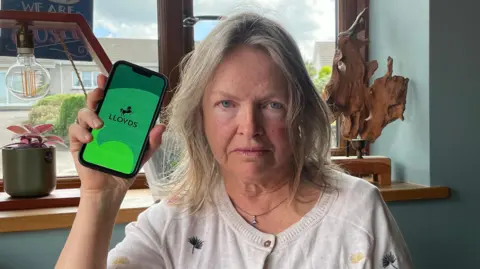
Lloyds Bank, one of the United Kingdom's largest financial institutions, has been at the forefront of this transformation. The banking giant has been systematically reducing its branch network, citing increased adoption of online and mobile banking as justification for the closures. However, critics argue that this strategy disproportionately affects elderly customers, those in rural areas, and individuals who lack confidence with digital technologies.
The specifics of Yates' situation are particularly telling. She attempted to deposit a government cheque—money that was legitimately owed to her—only to discover that the nearest bank location capable of handling this transaction had become inaccessible. This creates a paradox: government agencies still issue cheques in certain circumstances, yet banking infrastructure to handle these payments has become increasingly sparse.
Consumer advocates have raised serious concerns about the equity implications of such widespread branch closures. When individuals are forced to travel dozens of miles simply to access basic financial services, fundamental questions arise about whether the banking system is serving all segments of the population adequately. For pensioners, disabled individuals, and those living in less densely populated regions, the situation becomes particularly acute.
The HMRC cheque deposit represents a form of payment that many citizens still receive. Whether relating to tax refunds, benefits, or other government payments, these cheques continue to play a role in the financial system. Yet the infrastructure to process them at the local banking level has deteriorated markedly, creating friction and frustration for recipients who simply wish to access their money.
Yates' experience raises important questions about alternative solutions that financial institutions should consider implementing. Digital deposit options, partnerships with local retailers, or mobile banking services could potentially mitigate some of the difficulties created by physical branch closures. However, many such alternatives remain unavailable or underutilized in practice.
The broader context of this individual case reflects systemic changes in the UK financial sector. Over the past decade, hundreds of bank branches have closed across the country, with rural and small-town communities being particularly affected. This trend has continued despite growing evidence that such closures create genuine hardship for significant portions of the population.
Financial inclusion has become an increasingly important topic among policymakers and consumer protection organizations. When accessing basic banking services requires traveling nearly 100 miles, serious questions arise about whether the current system adequately serves the public interest. Various groups have called for regulatory interventions to slow or reverse the pace of closures, particularly in underserved communities.
Annabel Yates' situation is not unique; many customers across the United Kingdom have reported similar difficulties following their local bank closures. The cumulative effect of these individual experiences points to a significant gap between the banking industry's digital ambitions and the practical needs of its customer base. Some segments of society simply cannot or prefer not to rely entirely on online and mobile platforms.
The case also underscores the disconnect between what financial regulators have described as acceptable service standards and what customers actually experience in their daily lives. While banks argue that digital alternatives provide equivalent service, the lived experience of customers like Yates suggests otherwise. The inability to deposit a government cheque without extraordinary effort represents a failure of the system to serve fundamental customer needs.
Moving forward, this situation highlights the need for more nuanced discussions about the future of banking in the United Kingdom. Rather than accepting branch closures as inevitable, stakeholders—including regulators, financial institutions, and consumer advocates—should work to develop solutions that balance operational efficiency with genuine customer service. This might involve mandating certain service levels in underserved areas, requiring partnerships with alternative service providers, or establishing clearer standards for what constitutes adequate banking access.
For Annabel Yates, the immediate challenge remains how to deposit her £900 HMRC cheque with minimal inconvenience. Her situation serves as a powerful reminder that behind industry statistics and business decisions lie real people whose financial needs require practical, accessible solutions. Until the banking sector addresses these fundamental gaps in service accessibility, customers will continue to face frustrating situations that undermine their confidence in financial institutions and raise legitimate concerns about equity and inclusion.
Source: BBC News

