
Banksy's Mysterious London Statue Sparks Art World Buzz

A striking new statue featuring a blindfolded figure appears in central London with Banksy's signature. The artist has yet to confirm the controversial work.
A captivating new statue has materialized in the heart of central London, complete with what appears to be Banksy's signature etched at its base, igniting speculation and excitement among art enthusiasts worldwide. The large-scale sculpture, positioned prominently on a plinth in Waterloo Place, depicts a figure marching forward while blinded by a swirling flag, creating a powerful visual commentary on contemporary society. The street art icon has characteristically remained silent on the discovery, neither confirming nor denying his involvement in the striking installation.
The mysterious appearance of the signature has sent shockwaves through the art community, as Banksy's London works consistently generate significant cultural dialogue and media attention. Known for his thought-provoking and politically charged graffiti pieces, the anonymous artist has built an international reputation for challenging authority and questioning societal norms through his visual statements. This latest apparent addition to his portfolio continues his pattern of creating installations that combine technical skill with compelling social commentary, demanding viewers confront uncomfortable truths about their world.
The statue's subject matter appears deliberately symbolic, with the blindfolded figure surrounded by or obscured by flag imagery—a motif that could reference nationalism, propaganda, or the ways in which patriotic sentiment can cloud individual judgment. Such thematic elements align perfectly with Banksy's established artistic methodology, which frequently explores themes of power, authority, and collective behavior. The placement in Waterloo Place, a prestigious location in Westminster, makes the work particularly noteworthy, as it represents a bold statement in one of London's most visible public spaces.

The Banksy signature discovery follows the artist's established protocol for revealing new works to the public. Rather than announcing pieces himself, the elusive creator typically allows his works to be discovered organically before either confirming or remaining cryptic about their origins. This unconventional approach has become part of his artistic brand, creating a relationship with audiences based on verification and authentication through his official website and social media channels. The delay in confirmation, if confirmation comes at all, adds to the intrigue and generates ongoing conversation about the work's meaning and significance.
Artists and critics have already begun analyzing the symbolic implications of the sculpture's design and its placement within London's urban landscape. The figure's blindness could represent the way citizens are deliberately kept ignorant of political truths, or how nationalist fervor prevents clear vision of reality. The flag-centered imagery introduces layers of meaning related to national identity, cultural pride, and the potential dangers of uncritical patriotism. These interpretive possibilities have spawned countless discussions on social media platforms and in art publications, demonstrating the cultural impact of Banksy's work extends far beyond the physical piece itself.
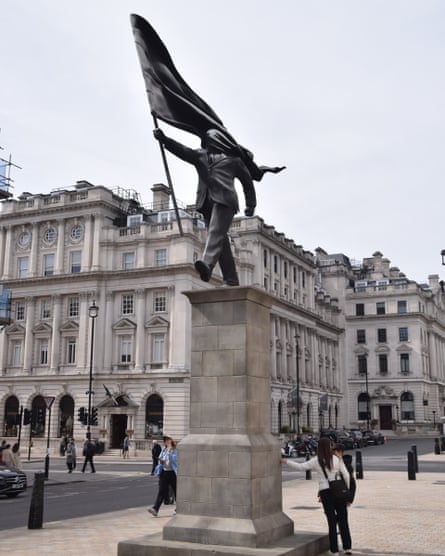
Waterloo Place, the location of this potential new Banksy installation, holds historical significance as a central London landmark and public gathering space. The positioning of such a provocative sculpture in this prominent location raises questions about how the work was installed and whether it will remain in place or be subject to removal by authorities. Previous Banksy works have faced varying responses from city officials—sometimes removed quickly, sometimes preserved as cultural artifacts worthy of protection. This particular piece's longevity and fate will depend on public reception and official response from London's municipal authorities.
The provocative street art piece continues Banksy's long tradition of creating works that provoke thought, generate debate, and challenge viewers to consider their own complicity in systems of control or propaganda. His works frequently ask uncomfortable questions about society while remaining visually striking and technically impressive. The statue's apparent monumentality—its substantial scale and permanent-seeming construction—represents a departure from some of his smaller, more ephemeral pieces, suggesting an evolution in his artistic approach or a statement designed to demand lasting attention.
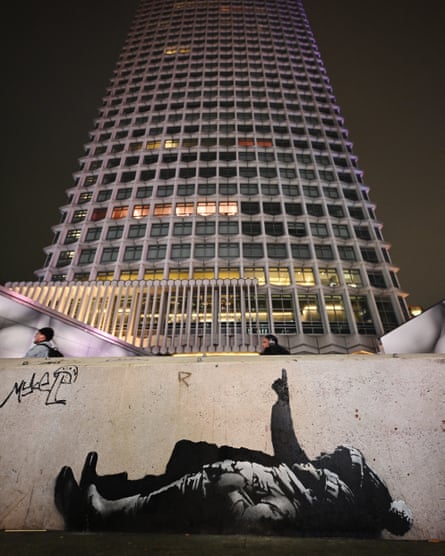
Art authentication experts and Banksy enthusiasts have begun examining the signature and artistic style to assess the likelihood that this work originates from the renowned artist's hand. The quality of craftsmanship, the thematic coherence with his previous work, and the distinctive signature all suggest authenticity, though without official confirmation, questions remain. This pattern of public speculation followed by eventual confirmation or denial has become characteristic of how Banksy's art is discovered in the contemporary digital age, where news travels instantly and communities form around artistic mysteries.
The apparent sculpture has already attracted crowds of visitors eager to witness the work in person and document it for social media sharing. This organic, grassroots form of art appreciation and publicity generation is entirely consistent with how Banksy's works typically circulate through contemporary culture. Rather than relying on traditional art world gatekeepers like galleries and museums, his pieces gain visibility through word-of-mouth, viral social media posts, and news coverage—a distribution model that arguably democratizes access to contemporary art while maintaining the artist's anonymity and mystique.
Whether or not Banksy ultimately confirms his involvement in the Waterloo Place installation, the work has already achieved its apparent goal of generating conversation and prompting viewers to engage critically with its message. The statue invites reflection on how individuals become complicit in larger systems of control, how group identity can override personal judgment, and what it means to march forward blindly in service of abstract concepts like nationality or patriotic duty. These themes resonate deeply in contemporary political discourse, making the work immediately relevant to current global conversations about populism, nationalism, and individual agency.
Source: The Guardian


