
Barron Trump Time Travel Theory Debunked

Explore the viral conspiracy theory linking Barron Trump to a 19th-century book. Discover why this internet phenomenon has captured attention and what it reveals about modern misinformation.
In recent weeks, an intriguing and somewhat absurd conspiracy theory has swept across social media platforms, capturing the imagination of internet users worldwide. The theory centers on Barron Trump, the president's son, and makes the outlandish claim that he may somehow be a time traveler. While this notion is entirely without merit, the viral nature of this idea offers fascinating insights into how misinformation spreads in the digital age and what underlying factors drive people to embrace such fantastical narratives.
The theory draws its origins from a curious historical source: a 19th-century children's book titled "Baron Trump's Marvellous Underground Journey," written by American lawyer and author Ingersoll Lockwood in the late 1800s. The book tells the whimsical tale of a young nobleman named Baron Trump who becomes weary of his pampered existence at Trump Castle. Driven by a sense of adventure and curiosity about the world beyond his gilded walls, Baron discovers an ancient manuscript penned by a mysterious sage called Don.
According to the manuscript within Lockwood's fictional narrative, "terrible disturbances" on Earth had once forced humanity to seek refuge in vast underground bunkers, establishing what the text cryptically refers to as a "World Within a World." Intrigued by these revelations, the young Baron embarks on an ambitious expedition to Russia, determined to uncover the mysteries of this supposedly hidden civilization and verify the claims made in Don's ancient writings.
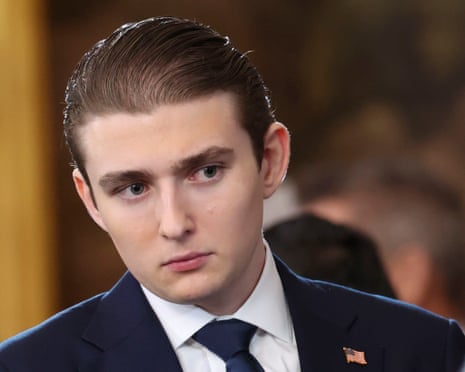
The remarkable coincidence that a 19th-century fictional character shares the name "Baron Trump" with the modern-day president's son has proven irresistible to conspiracy theorists and internet users seeking hidden meanings. The parallels—however superficial—have spawned countless theories, memes, and video essays exploring the possibility that the real Barron Trump might somehow be connected to this historical fiction. Some theorists have even suggested that the book was a prophetic text or that Barron possesses knowledge of secret underground worlds, though these claims lack any factual basis whatsoever.
FBI Director Kash Patel, interestingly enough, has ventured into children's literature himself, authoring a series of stories centered around a character known as King Trump. His literary efforts have been widely panned by critics for their quality and have become something of a running joke in popular culture. However, Patel's foray into creative writing pales in comparison to the original Ingersoll Lockwood novel, which despite its age and obscurity, has now achieved a strange sort of renewed relevance through association with modern politics and celebrity.

The viral spread of the Barron Trump time travel theory reveals much about contemporary information ecosystems and the psychology of belief formation online. In an era characterized by genuine political turbulence and economic uncertainty, such fantastical theories can serve as an escape valve for collective anxiety. They provide a sense of secret knowledge or special insight that ordinary citizens might not possess, which can be psychologically appealing, especially when confronted with complex, troubling real-world events that seem beyond individual comprehension or control.
Furthermore, this particular conspiracy theory emerges at a moment when numerous serious issues demand public attention and scrutiny. The ongoing tensions surrounding potential military conflicts in the Middle East, including discussions of conflict with Iran, demand serious policy debate and oversight. Simultaneously, citizens across the nation grapple with persistent inflation and rising costs of living that strain household budgets and create genuine economic hardship. Additionally, the continued revelations and discussions surrounding the Epstein files and cases related to the disgraced financier represent serious matters of criminal justice and institutional accountability that require focused attention.
When viewed in this broader context, the emergence and viral propagation of the Barron Trump time travel conspiracy serves as a useful distraction from these weightier matters. It channels public attention and energy away from substantive policy debates and toward entertainment-focused speculation. This pattern—where outlandish theories emerge to distract from serious political issues—has become increasingly common in modern discourse, highlighting the challenges facing democratic societies in maintaining focus on what matters most.
The factual reality, of course, is straightforward: Barron Trump is not a time traveler, and the 19th-century novel was simply a product of its era's literary imagination. Ingersoll Lockwood was a prolific writer of his time, penning numerous works of fiction that explored imaginative themes including underground worlds, secret civilizations, and fantastical journeys. His Baron Trump character was entirely fictional, created decades before the modern Trump family rose to prominence in American public life. The synchronicity of names is mere coincidence, albeit a remarkable one that the internet has seized upon with characteristic enthusiasm.
As digital natives and casual internet users continue to encounter and share these theories, it becomes increasingly important to maintain critical thinking skills and to distinguish between entertaining speculation and serious factual claims. While conspiracy theories can be amusing diversions, their proliferation can also erode public trust in institutions, create unnecessary confusion about actual events, and divert civic attention from matters that genuinely warrant scrutiny and action. Understanding why these theories appeal to us and how they spread through our information networks is crucial for maintaining a healthy democratic discourse and an informed citizenry capable of addressing real challenges.
The Barron Trump time travel saga ultimately serves as a case study in modern viral misinformation and the peculiar ways that historical coincidences can capture public imagination in the digital age. Rather than dismissing those who engage with such theories as simply foolish, it's more productive to examine what social, economic, and psychological factors make such narratives appealing. By doing so, we may better understand our shared information environment and work toward fostering more robust critical thinking and more grounded public discourse in an increasingly complex world.
Source: The Guardian

