
Beekeeper Sentenced to Jail for Releasing Bees on Eviction Officers

Massachusetts woman faces six-month jail sentence after deliberately releasing bee swarms on sheriff's deputies during an eviction proceeding at her friend's home.
A Massachusetts beekeeper has been handed a significant legal penalty following an extraordinary incident in which she deliberately released swarms of her insects on law enforcement officials executing an eviction order. Rebecca Woods received a six-month jail sentence after the court heard testimony and evidence regarding her deliberate action to free her bees during the contentious eviction process.
The incident occurred when sheriff's deputies arrived at the residential property of Woods' elderly friend, a cancer patient facing displacement from their home. According to court documents and witness accounts, Woods made the conscious decision to open the truck containing her bee hives, allowing the insects to swarm in the vicinity of the law enforcement officers who were there to execute the eviction order. This action resulted in chaos at the scene and raised serious questions about the appropriate use of force and obstruction of legal proceedings.
In her defense during the legal proceedings, Woods provided a somewhat unconventional explanation for her actions. She insisted that her primary motivation was not to interfere with the eviction process or endanger the deputies, but rather to allow her bees to access the abundant natural resources in the area. According to Woods, the property where her friend lived featured a beautiful and thriving flowering landscape that would provide ideal foraging opportunities for her insect colonies.
The case has garnered significant attention, highlighting the complex intersection between property rights, animal welfare advocacy, and legal compliance. Woods' unusual defense strategy and the nature of her actions have sparked broader conversations about creative protest methods and the boundaries of acceptable behavior during legal enforcement actions.
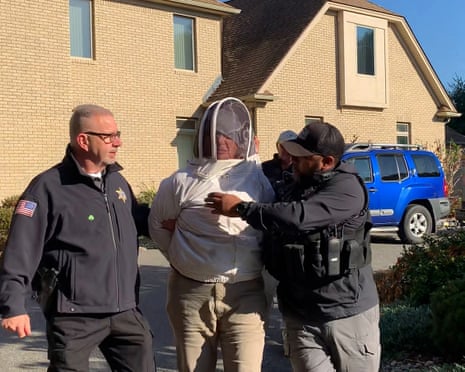
The Massachusetts court system ultimately determined that Woods' actions constituted a serious enough offense to warrant the six-month incarceration sentence. Legal experts have analyzed the case extensively, noting that while sympathetic motivations may have underlain Woods' behavior, the deliberate release of a large number of insects on law enforcement officers presented genuine safety concerns and constituted obstruction of legal proceedings. The court's decision sends a clear message about the limits of protest and interference with official legal actions.
Woods' case has become something of a focal point for discussions about activism, civil disobedience, and the creative—sometimes unconventional—ways that individuals attempt to resist what they perceive as unjust outcomes. However, the judicial system has made it clear that regardless of one's personal motivations or concerns about a particular legal action, deliberately releasing insects on officers conducting their official duties crosses a legal and safety line.
The incident also raised broader questions about animal welfare and the safety implications of such actions. Animal welfare advocates have debated whether the bees themselves were placed in danger by being released in such a chaotic situation, and whether Woods' stated concern for their welfare was genuinely reflected in her actions. The welfare of both the law enforcement officers and the bees themselves became relevant considerations in the legal proceedings.
The elderly cancer patient at the center of the eviction case has not made public statements about Woods' actions or the legal outcome. However, the incident has drawn attention to broader issues surrounding housing security for vulnerable populations, including elderly individuals and those dealing with serious health challenges. The emotional and practical stakes of eviction cases are particularly high when they involve individuals facing difficult personal circumstances.
Rebecca Woods' sentencing has become part of the broader legal and social discourse around property rights, tenant protections, and the appropriate methods for advocating for vulnerable individuals facing displacement. While Woods' intentions regarding her elderly friend may have been sympathetic, the court determined that the method she chose—deliberately releasing bees on law enforcement officers—was both dangerous and illegal.
The case serves as a cautionary tale about the importance of operating within legal boundaries, even when acting with what one believes are noble motivations. Legal experts have emphasized that there are appropriate channels for challenging evictions, appealing decisions, and advocating for the protection of vulnerable individuals, and that circumventing these established processes through direct action can result in serious legal consequences.
As Woods begins her six-month sentence, the broader implications of her case continue to reverberate. The incident has prompted discussions among beekeeping communities, legal advocates, and social justice activists about how to balance passionate advocacy for causes one believes in with respect for the rule of law and public safety. The case remains a unique and striking example of an individual's attempt to intervene in a legal proceeding through highly unconventional means.
The legal consequences imposed on Woods reflect the court's determination that releasing a large number of insects on law enforcement officers conducting official duties is a serious offense that cannot be justified by sympathetic personal motivations. Her case will likely be referenced in future discussions about protest, civil disobedience, and the limits of creative resistance to legal actions perceived as unjust or harmful.
Source: The Guardian


