
Belgian Court Greenlights Landmark Trial Over 1961 Assassination of Congolese PM Lumumba

A Belgian court has cleared the way for a trial over the 1961 killing of Congolese independence leader Patrice Lumumba. The case targets a 93-year-old former diplomat accused of involvement in the assassination.
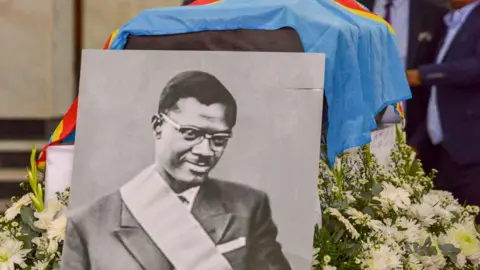
Patrice Lumumba, the first democratically elected prime minister of the Democratic Republic of the Congo, was a celebrated figure in the African independence movement. His rise to power in 1960 following the Congo's liberation from Belgian colonial rule was short-lived, as he was ousted and assassinated the following year. Now, more than 60 years later, a Belgian court has cleared the way for a trial targeting a former Belgian diplomat accused of complicity in Lumumba's murder.
The defendant, Etienne Davignon, is a 93-year-old former Belgian diplomat who is accused of involvement in the 1961 assassination of Lumumba. Davignon has denied the allegations, but the Belgian court has ruled that the case can proceed to trial, a significant development in the long-running efforts to uncover the truth behind Lumumba's death.
Lumumba's assassination was a pivotal moment in the decolonization of Africa, and the circumstances surrounding his death have long been shrouded in mystery and controversy. {{IMAGE_PLACEHOLDER}} The new trial represents an opportunity to shed light on the Belgian government's potential role in the killing of this iconic Congolese leader.
The case was brought forward by the Lumumba Foundation, which has been pushing for accountability and transparency around the events of 1961. The foundation argues that Davignon, who served as a Belgian diplomat at the time, was involved in discussions and decisions that ultimately led to Lumumba's demise.
Lumumba's death was a profound tragedy for the Congolese people and the broader African independence movement. He was seen as a charismatic and visionary leader who threatened the interests of the colonial powers in the region. {{IMAGE_PLACEHOLDER}} The circumstances of his murder have long been debated, with allegations of Belgian and American involvement in the plot.
The upcoming trial represents a crucial opportunity to shed light on this dark chapter of history and to potentially hold those responsible to account, even decades later. It will be closely watched by historians, human rights advocates, and the Congolese people as they seek to uncover the truth and achieve a measure of justice for Patrice Lumumba's legacy.
Lumumba's life and death have become deeply intertwined with the broader struggle for African independence and self-determination. His legacy continues to inspire people around the world who fight against oppression and for the rights of marginalized communities. {{IMAGE_PLACEHOLDER}} This trial, if it proceeds as scheduled, could be a significant moment in the ongoing efforts to reconcile with the painful history of colonialism and its lasting impacts.
As the case moves forward, it will be important to closely follow the developments and to ensure that the proceedings are conducted in a fair and transparent manner. The pursuit of justice for Lumumba's death, even after more than 60 years, remains a crucial step in the long and arduous journey towards healing and reconciliation in the Congo and beyond.
Source: BBC News


