
Belgian Diplomat Dies Before Trial in Lumumba Murder Case

Étienne Davignon, 93, passes away before facing charges in the 1961 assassination of Congolese leader Patrice Lumumba, ending historic investigation.
The death of Étienne Davignon, a prominent Belgian diplomat and aristocrat who had become the first person ever charged in connection with the assassination of Patrice Lumumba, has marked the end of an era in one of Africa's most significant historical mysteries. At the age of 93, Davignon passed away before he could face trial, leaving unresolved questions about his alleged involvement in the murder of the Democratic Republic of the Congo's first prime minister. The 1961 murder investigation had spanned decades, and Davignon's death represents a significant development in a case that has haunted Belgian-Congolese relations for generations.
Davignon's death was officially confirmed by the Jacques Delors Institute, a prestigious thinktank where he had served as a board member during his later years. His passing brings to a close a remarkable career that saw him rise through the ranks of European diplomacy and international business, becoming one of Belgium's most influential figures across multiple decades. The confirmation of his death has reignited discussions about the historical injustices surrounding Lumumba's murder and the accountability mechanisms that have emerged far too late in the process.
As an aristocrat and leading industrialist, Davignon enjoyed considerable prominence throughout his professional life, serving in multiple high-level positions that placed him at the heart of European affairs. His role as a European commissioner demonstrated his influence in continental politics and economics, making him a central figure in post-war European development and integration. Throughout his decades-long career, Davignon maintained significant connections to Belgian political and business circles, which proved relevant to the investigation into Lumumba's assassination.

The murder of Patrice Lumumba represents one of the most consequential political assassinations of the twentieth century, having profoundly shaped the trajectory of African independence movements and Cold War geopolitics. Lumumba, who became the Congo's first prime minister following the country's independence from Belgium in 1960, was killed just months into his tenure in January 1961 under circumstances that remained officially murky for decades. The investigation into Lumumba's death eventually revealed the involvement of multiple parties, including Belgian officials, Congo's rival political factions, and foreign powers seeking to prevent the spread of communist influence in Central Africa.
The decision to charge Davignon in connection with the murder represented a watershed moment in efforts to establish accountability for crimes committed during the colonial era and its immediate aftermath. For many years, the circumstances surrounding Lumumba's assassination were shrouded in official silence and conflicting narratives, with many involved parties either deceased or protected by political considerations. The emergence of new evidence and shifting political attitudes toward historical justice eventually enabled prosecutors to move forward with charges against Davignon, making him the first person to face formal legal consequences in the case.
Davignon's role in the events surrounding Lumumba's death remained a matter of historical investigation and legal scrutiny, with prosecutors alleging his involvement in the broader conspiracy that led to the Congolese leader's assassination. The specifics of the charges reflected the complex international dimensions of the case, implicating Belgian government officials, military personnel, and intelligence services in the conspiracy. The investigation had meticulously reconstructed the chain of events, communications, and decisions that culminated in Lumumba's death, drawing upon declassified documents and witness testimony.
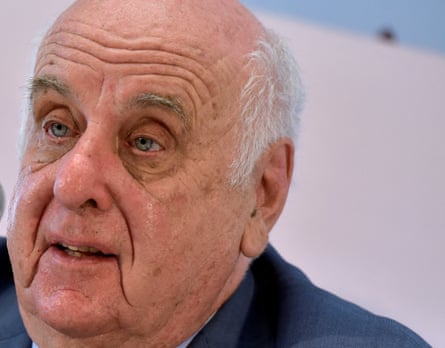
The timing of Davignon's death raises profound questions about justice, accountability, and the possibility of closure for the victims of historical atrocities. His passing without standing trial means that one of the few individuals who might have provided testimony or explanation regarding the events of 1961 will never face judicial examination. For Congolese citizens and those who have advocated for historical accountability, the outcome represents another frustrating moment in a long struggle to obtain justice for Lumumba's assassination and its consequences.
Davignon had occupied a unique position as the last living individual targeted in the investigation into Lumumba's assassination, making his death particularly significant for the historical record. Other figures implicated in the case, including Belgian military and political leaders, had passed away in previous years, limiting the pool of individuals who could be held accountable through the judicial system. The loss of Davignon means that direct testimony from someone positioned to know about the decision-making processes behind the murder will never be obtained through legal proceedings.
The broader context of Belgian accountability for colonial atrocities has shifted substantially in recent years, with growing recognition of the violence and exploitation perpetrated during Belgium's control of the Congo. Lumumba's assassination emerged as a symbol of the broader injustices of colonialism and the Cold War dynamics that prioritized geopolitical considerations over the sovereignty and lives of African leaders. The investigation into Davignon's alleged role reflected a broader reckoning with Belgium's colonial legacy and the need to acknowledge historical wrongs.
The charges against Davignon had been pursued based on evidence suggesting his involvement in high-level discussions and decisions related to Lumumba's fate. The investigation had traced communications and policy decisions through official channels, revealing how the conspiracy to remove Lumumba had been coordinated at multiple governmental levels. Despite his advanced age and health considerations, Belgian authorities had determined that sufficient evidence existed to proceed with prosecuting Davignon for his alleged role in the conspiracy.
For historians and scholars studying the Congo's path to independence and the Cold War's impact on African nations, Davignon's death represents the loss of a potentially crucial witness to historical events. His testimony could have clarified numerous details about Belgian governmental decision-making, intelligence operations, and the involvement of foreign powers in orchestrating Lumumba's removal. The absence of such testimony leaves certain gaps in the historical record that may never be definitively filled.
The investigation into Lumumba's murder has served as a catalyst for broader discussions about transitional justice, historical accountability, and the possibilities for addressing colonial-era crimes decades or generations after they occurred. Belgium has grappled with difficult questions about how to acknowledge and address its colonial past while maintaining contemporary relationships with the Democratic Republic of the Congo. The prosecution of Davignon represented a concrete step toward accountability, even if Davignon's death prevented the process from reaching its judicial conclusion.
The legacy of Lumumba's assassination extends far beyond the individuals directly involved in the conspiracy, influencing African politics, international relations, and debates about neocolonialism for more than six decades. His brief tenure as prime minister represented hopes for an independent Congo that would chart its own course without foreign domination, aspirations that were violently extinguished through the coordinated efforts of multiple actors. The ongoing efforts to investigate and prosecute those responsible reflected a commitment to honoring Lumumba's memory and the principles of justice he represented.
As Belgium and the international community continue to reckon with colonial histories and Cold War legacies, the case of Davignon and the investigation into Lumumba's death remain symbolically significant. The inability to bring Davignon to trial before his death underscores the temporal challenges of pursuing justice for historical crimes and the pressure that time places on accountability mechanisms. Nevertheless, the investigation itself represented progress in acknowledging Belgium's responsibility for events in the Congo and the need for transparent examination of that history.
Source: The Guardian


