
Belgium's Port War: Inside the Drug Smuggling Battle

Antwerp port intensifies cargo scanning as Belgium faces narco-state threat. Customs officers work frontlines against sophisticated drug smuggling operations.
The port of Antwerp stands as one of Europe's most critical commercial hubs, processing millions of containers annually while simultaneously serving as a battleground in an escalating war against international drug trafficking. With the equivalent of 13.6 million 20-foot containers flowing through its terminals each year, the Belgian port has become both a vital economic engine and a strategic target for sophisticated smuggling networks. As law enforcement agencies sound alarms about the nation's vulnerability to becoming a narco-state, customs officials are implementing increasingly rigorous inspection protocols to detect and intercept illicit shipments hidden within legitimate cargo.
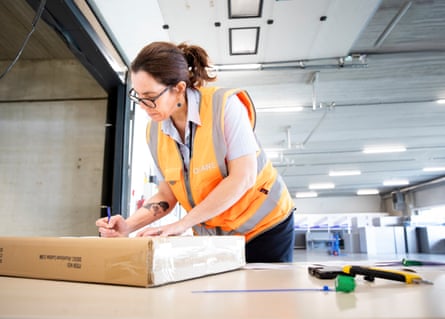
On any given day at the border inspection post nestled within Antwerp's sprawling port complex, customs officer Sara Van Cotthem approaches her work with methodical precision. Armed with a safety knife and an array of detection tools, she meticulously examines cardboard boxes destined for distribution across Europe. In this particular instance, she carefully opens the packaging of what appears to be a standard aluminium stepladder manufactured in China. The inspection process seems routine—checking documentation, verifying the product's composition with a magnet to confirm it is indeed aluminium rather than a concealed contraband container.
Drug smuggling operations have evolved into a sophisticated cat-and-mouse game between law enforcement and criminal organizations that continuously innovate their tactics. What makes Antwerp particularly vulnerable is its sheer volume of cargo—the constant stream of containers means that even with enhanced screening procedures, the odds of detection remain challenging. Criminals exploit this reality by hiding narcotics within legitimate shipments, relying on statistical probability that a high percentage of containers will pass through without thorough inspection. The customs officers working the frontlines understand they are engaged in a perpetual struggle against well-funded organizations with significant resources and motivation.

The Belgium drug trafficking crisis has reached critical levels, prompting government officials and law enforcement to issue stark warnings about the country's trajectory. Intelligence reports suggest that organized crime syndicates view Belgium as an increasingly attractive distribution hub due to its geographic position in Western Europe and robust logistics infrastructure. The proximity to major markets in France, Germany, and the Netherlands makes the port an ideal transshipment point for narcotics destined for distribution across the continent. Furthermore, the sheer complexity of international maritime commerce creates natural blind spots that smugglers exploit with precision.
Van Cotthem's daily work exemplifies the customs inspection protocols now being implemented across European border checkpoints in response to escalating drug seizure statistics. Each container that passes through her station represents both a commercial transaction and a potential security vulnerability. She and her colleagues must balance the economic imperative of maintaining efficient port operations with the urgent public health and safety concerns posed by undetected drug shipments. This tension between commerce and security defines the modern challenge facing ports throughout Europe.
The specific techniques employed by narco-trafficking organizations have become increasingly sophisticated, incorporating advanced concealment methods and exploiting blind spots in conventional inspection procedures. Drugs are hidden within legitimate cargo—hidden in false compartments within machinery, dissolved in liquid shipments, or integrated into solid products manufactured specifically to mask their presence. Some organizations employ chemists to develop new synthetic compounds designed to evade detection by standard drug-testing protocols. Others invest in corruption, attempting to bribe port officials or gain insider knowledge of inspection schedules and procedures.
The economic dimensions of port security and narcotics control create competing pressures within Belgium's maritime sector. Port authorities recognize that excessive delays in cargo processing damage the port's competitiveness and drive business to rival facilities in Rotterdam, Hamburg, or other European alternatives. However, insufficient security measures risk transforming Antwerp into a primary distribution center for illicit substances, with consequent social costs including addiction, overdose deaths, and organized crime violence. This balance requires constant recalibration as law enforcement implements new detection technologies while criminals develop countermeasures.
The warning that Belgium risks becoming a narco-state reflects legitimate concerns about institutional capture by organized crime interests. When trafficking organizations accumulate sufficient resources, they can compromise government officials, law enforcement personnel, and port workers through bribery, coercion, or infiltration. Evidence from other nations demonstrates that without sustained commitment to border enforcement and institutional integrity, trafficking organizations can eventually dominate entire sectors of the economy. Belgium's current situation represents a critical juncture where preventive measures remain feasible, but the window for intervention is narrowing.
Technological innovations are increasingly incorporated into cargo screening operations throughout European ports, including advanced X-ray systems, radiation detection equipment, and chemical analysis tools. These technologies allow inspectors to identify suspicious cargo without opening every container, dramatically improving both efficiency and detection rates. However, technology alone cannot solve the problem—organized crime continuously adapts to new detection methods, developing packaging materials that defeat X-ray imaging or concealment techniques that confound chemical sensors. The human expertise of customs officers like Van Cotthem remains irreplaceable in this ongoing struggle.
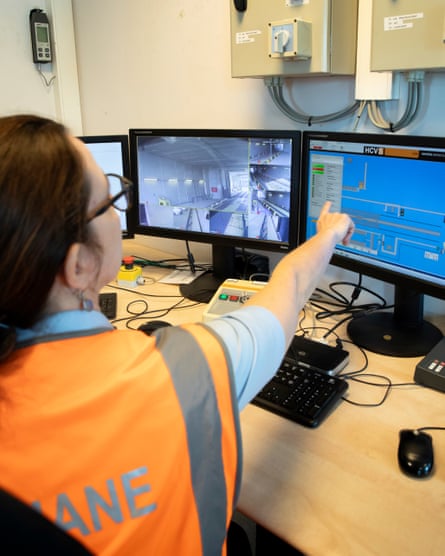
The operational reality facing Antwerp port authorities illustrates the broader European challenge in combating international drug trafficking. Despite tremendous effort and significant resource investment, narcotics continue flowing through the continent's transport networks at alarming volumes. Law enforcement agencies estimate that only a fraction of trafficking attempts result in seizure—the vast majority of contraband successfully reaches its destination. This reality suggests that interdiction alone cannot solve the trafficking problem; comprehensive approaches addressing demand reduction, addiction treatment, and disruption of criminal supply chains are equally essential.
Belgium's position as a primary European thoroughfare for legitimate commerce inevitably makes it vulnerable to smuggling activities that exploit legitimate trade channels. The nation's excellent road and rail infrastructure, its proximity to major European markets, and its role as a logistical hub for international businesses all contribute to its attractiveness for criminal organizations. Additionally, the cultural and linguistic diversity of Antwerp's workforce creates opportunities for smugglers to identify and recruit corrupt officials or port workers willing to facilitate illicit operations. Addressing these vulnerabilities requires sustained vigilance and institutional commitment.
The daily operations at Antwerp's border inspection posts represent only one component of Belgium's multifaceted response to the trafficking crisis. Intelligence agencies work to identify criminal networks and track their operations across international boundaries. Law enforcement conducts raids targeting distribution centers and dismantling trafficking organizations from within. Prosecutors aggressively pursue criminal cases against smugglers and corrupt officials. International cooperation agreements facilitate information sharing and coordinated enforcement operations across European Union member states. Despite these comprehensive efforts, the challenge remains formidable and the criminals continue adapting their tactics.
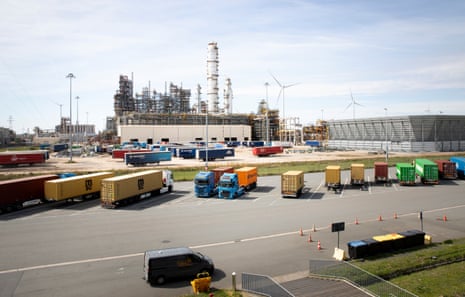
Looking forward, Belgium's capacity to avoid becoming a narco-state depends on sustained commitment to enforcement, investment in detection technology, and unwavering institutional integrity. The individuals working at checkpoints like Van Cotthem represent the frontline defenders against a sophisticated adversary with unlimited resources and high motivation. Their work remains vital, even if the odds of detection remain challenging. The alternative—allowing trafficking organizations to establish secure supply routes through Belgian ports—carries consequences that extend far beyond the nation's borders, affecting public health and safety throughout the European continent.
Source: The Guardian


