
Bergsma's Golden Comeback at 40 Stuns Speed Skating World

Dutch legend Jorrit Bergsma, 40, claims mass start gold at Milano Cortina Olympics, denying Jordan Stolz historic three-gold sweep in thrilling finish.
In a stunning display of veteran prowess, Jorrit Bergsma, the iconic mullet-sporting 40-year-old speed skating champion from the Netherlands, delivered a masterclass performance to capture the men's mass start gold medal on Saturday at the Milano Cortina Olympics. The victory marks his second medal of these Games and represents his first Olympic gold medal triumph since the 2014 Sochi Olympics, proving that age is merely a number in elite competition.
Bergsma powered across the finish line with a commanding time of 7:55.50, demonstrating the tactical brilliance and endurance that have defined his illustrious career. His victory came ahead of Denmark's Viktor Hald Thorup, who secured the silver medal, and Italy's Andrea Giovannini, who delighted the home crowd by claiming bronze on Italian ice. The race showcased the strategic complexity and physical demands that make the mass start event one of speed skating's most unpredictable disciplines.
The Dutch veteran's triumph carried significant implications beyond personal achievement, as it effectively denied American sensation Jordan Stolz the opportunity to etch his name in Olympic history. Stolz had been pursuing the remarkable feat of becoming the first man in 32 years to capture three long-track speed skating gold medals at a single Olympic Games, a milestone that would have placed him among the sport's most elite performers.
Bergsma's victory adds another chapter to what has been an extraordinary Winter Olympics for veteran athletes, with multiple competitors in their 40s defying conventional expectations about peak athletic performance. His success demonstrates the evolving nature of modern sports science, training methodologies, and the mental fortitude that comes with decades of elite competition experience.
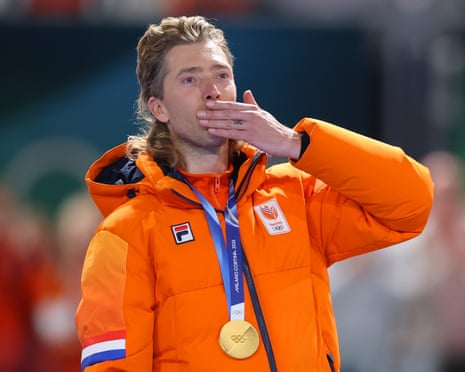
The speed skating mass start format presents unique challenges that often favor experienced competitors like Bergsma, who possess the tactical awareness and race strategy honed through years of international competition. Unlike individual time trials, the mass start requires athletes to navigate positioning, timing, and energy conservation while competing directly against rivals in a pack-style format that can produce dramatic lead changes and sprint finishes.
Bergsma's path to this golden moment has been marked by remarkable longevity and adaptation. Since his breakthrough performances over a decade ago, the Dutch skater has consistently remained competitive at the highest levels of international speed skating, adjusting his training regimen and race tactics to maintain elite status well beyond the typical peak years for endurance athletes.
The disappointment for Jordan Stolz represents a rare setback for the American prodigy, who had been dominating long-track events throughout the Milano Cortina Games. Despite missing out on his historic third gold medal, Stolz's overall performance at these Olympics has established him as a generational talent and future cornerstone of international speed skating competition.
For the Netherlands, Bergsma's triumph continues their nation's storied tradition of speed skating excellence at Olympic competition. Dutch skaters have consistently performed at the highest levels across multiple Olympic cycles, and Bergsma's victory reinforces their depth and quality across different event disciplines and age demographics within their national program.
The race dynamics of Saturday's mass start showcased the strategic elements that make this event compelling for both participants and spectators. Athletes must balance aggressive positioning with energy conservation, timing their moves carefully while anticipating the tactics of rivals who possess different strengths in sprinting, endurance, and tactical awareness.
Bergsma's victory speech highlighted his gratitude for the opportunity to compete at the highest level well into his 40s, acknowledging the support systems, medical advances, and training innovations that have enabled his sustained excellence. His comments resonated with older athletes across various sports who continue pushing boundaries regarding competitive longevity.
The broader implications of this result extend beyond individual achievement, as it reinforces emerging trends in elite athletics where experience, tactical knowledge, and refined technique can overcome the traditional advantages associated with younger competitors. This phenomenon has become increasingly prevalent across winter sports disciplines at recent Olympic Games.
Viktor Hald Thorup's silver medal performance represented a breakthrough moment for Danish speed skating, adding to their nation's growing presence in winter sports competition. His tactical positioning throughout the race demonstrated the international depth and quality that has elevated the competitive standard across long-track speed skating events.
Andrea Giovannini's bronze medal celebration with the Italian home crowd created one of the most memorable moments of the Milano Cortina Games, as the partisan support energized both the athlete and the venue atmosphere. His medal represents continued growth in Italian winter sports programs and their ability to develop competitive athletes across diverse disciplines.
The technical aspects of Bergsma's winning performance revealed the refined race strategy that veteran competitors can employ effectively against younger, potentially faster rivals. His positioning throughout various phases of the race demonstrated patience, tactical awareness, and the confidence to execute race plans under intense Olympic pressure.
Looking ahead, Bergsma's victory raises intriguing questions about his competitive future and whether this Olympic success might inspire continued participation in elite competition. His performance suggests that the traditional assumptions about athletic decline in endurance sports may require reassessment given advances in sports science and training methodologies.
The Milano Cortina Olympics mass start event will be remembered as a showcase of tactical racing at its finest, where experience and strategic thinking proved decisive factors in determining Olympic medals. The race outcome reinforces the unpredictable nature of mass start competition and its appeal as a spectator-friendly format that produces dramatic finishes and unexpected results.
Source: The Guardian


