
Bezos's Met Gala Role Sparks Fashion Boycott

Jeff Bezos's position as honorary chair of the Met Gala has ignited controversy in the fashion world, with critics questioning whether tech billionaires belong at fashion's most exclusive event.
The Metropolitan Museum of Art's annual Met Gala has long stood as fashion's most prestigious event, a carefully curated gathering where the industry's most influential figures, celebrity icons, and artistic visionaries converge to celebrate the intersection of art, culture, and haute couture. However, this year's extravagant celebration threatens to become the most divisive in the event's storied history, as Jeff Bezos's appointment as honorary chair has sparked widespread debate about wealth, influence, and the commercialization of high fashion.
The Met Gala serves as the primary fundraiser for the Costume Institute at the Metropolitan Museum of Art, with tickets reaching approximately $100,000 per person. This year's exhibition, titled "Costume Art," will showcase the intersection of wearable design and artistic expression, featuring pieces that represent the evolution of fashion as a cultural artifact. The event has historically been stewarded by Vogue editor-in-chief Anna Wintour, whose editorial vision has shaped the event's cultural relevance for decades, establishing it as the definitive moment when the fashion calendar's biggest trends are unveiled.
The 2024 Met Gala's co-chairs include entertainment titans Beyoncé, tennis legend Venus Williams, and Academy Award-winning actress Nicole Kidman, individuals whose cultural cachet and artistic contributions to their respective fields have earned them positions of honor. Yet the addition of Amazon founder Jeff Bezos and his partner Lauren Sánchez Bezos as honorary chairs has disrupted the traditional formula that has made the event synonymous with artistic achievement and creative excellence in the fashion industry.
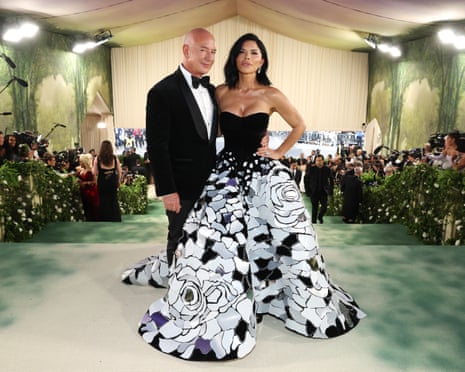
The backlash against Bezos's involvement reveals deeper anxieties within the fashion community about the encroaching influence of technology billionaires on cultural institutions. Critics argue that while Bezos has accumulated unprecedented wealth through his e-commerce empire, his contributions to fashion and artistic patronage remain negligible compared to traditional philanthropists who have long supported the arts. The Bezos Met Gala appointment represents a troubling trend whereby vast financial resources alone grant access to institutions that should prioritize cultural contribution and artistic vision above mere monetary capacity.
Social media has become the primary battleground for this debate, with industry insiders, fashion journalists, and cultural commentators expressing concerns that the event has fundamentally compromised its artistic integrity. Fashion designers who have built careers on creativity and innovation are now questioning whether their work will be overshadowed by the spectacle surrounding the presence of one of the world's richest individuals. The fashion industry boycott movements that have emerged represent an unprecedented pushback against what many perceive as the unwelcome commercialization of a historically arts-focused institution.
Some prominent voices within the fashion world have questioned whether Bezos possesses the requisite knowledge of fashion history, design innovation, or cultural commentary to meaningfully contribute to the curation of the event's themes and guest list. His business empire, while monumentally successful, operates within logistics and commerce—sectors fundamentally disconnected from the creative industries. This disconnect has prompted concerns that his presence dilutes the event's artistic mission and sends a troubling message that wealth supersedes cultural expertise in determining institutional leadership.

The Met Gala's cultural significance has historically derived from its role as a barometer of artistic trends and a celebration of designers whose innovative work pushes the boundaries of wearable art. The event has launched careers, established design houses as cultural forces, and created iconic moments that define entire eras of fashion history. Anna Wintour's stewardship has ensured that every element—from theme selection to guest curation—reflects a coherent artistic vision that elevates the event beyond mere celebrity spectacle.
Bezos's involvement threatens this delicate balance. Rather than contributing artistic perspective, his appointment appears driven primarily by his capacity to serve as a major financial contributor to the museum. This transactional approach to cultural patronage represents a troubling precedent wherein billionaires can essentially purchase roles of influence within institutions that should remain dedicated to merit-based cultural stewardship. The implicit message—that sufficient wealth grants access to any cultural institution—resonates uncomfortably with broader anxieties about inequality and the disproportionate influence of the ultra-wealthy in shaping public institutions.
The 450 guests expected to attend the Met Gala on Monday will undoubtedly provide ample material for fashion commentary and social media discourse. Yet the conversation will likely be dominated by discussions of the Bezos appointment rather than substantive analysis of the couture, design innovations, or artistic statements embedded in the evening's fashions. This represents a significant loss for the industry, as the Met Gala's true value lies in its capacity to highlight creative excellence and push fashion forward as an art form.

The broader implications of this controversy extend beyond a single event. The Met Gala boycott and criticism signal that the fashion community—despite its historical association with luxury and exclusivity—possesses boundaries regarding the infiltration of corporate interests into artistic institutions. Fashion professionals worry that the precedent set by Bezos's appointment will encourage other billionaires to view cultural institutions primarily as vehicles for personal prestige and influence acquisition, rather than as guardians of artistic integrity and cultural meaning.
Anna Wintour and the Met's leadership face a complex challenge: balancing the financial realities of institutional sustainability with the imperative to protect the event's artistic mission. Museums require substantial funding to maintain operations, support artists, and serve their educational mandates. Yet accepting major donors as honorary chairs based solely on financial contributions risks compromising the institution's cultural authority and alienating the creative professionals whose participation makes the event meaningful.
The tech billionaire patronage trend raises uncomfortable questions about whether cultural institutions can maintain independence and artistic integrity when beholden to the financial interests of Silicon Valley titans. Unlike traditional philanthropists who often developed deep relationships with museums and artistic communities over decades, many tech billionaires view cultural patronage as a relatively new interest area—a means of building social capital and legacy rather than expressing genuine commitment to the arts.

Moving forward, the fashion community and cultural institutions must grapple with fundamental questions about patronage, institutional independence, and the appropriate role of wealth in determining cultural authority. The Met Gala, while undoubtedly glamorous and entertaining, ultimately matters because it celebrates creative achievement and artistic innovation. If it becomes primarily a platform for wealthy individuals to accumulate prestige and influence, it will lose the cultural relevance that has made it fashion's most significant event for decades. The controversy surrounding Bezos's appointment serves as a critical moment for the industry to reassert its values and protect the artistic integrity that distinguishes high fashion from mere commercialism.
Source: The Guardian


