
Billionaire's Son Offers Home for Escobar's Hippos

Indian billionaire Anant Ambani revives ambitious plan to house 80 descendants of Pablo Escobar's hippos at his private zoo in India.
In a development that blends the bizarre with the ambitious, Anant Ambani, the son of India's richest billionaire, has reignited his controversial proposal to transport approximately 80 hippopotamuses to his private zoo in India. These remarkable animals represent one of the most peculiar legacies of Colombian drug lord Pablo Escobar's reign – descendants of exotic creatures that were once kept purely for entertainment at his sprawling compound.
The situation surrounding these hippos stands as perhaps the most unusual case in modern zoological history. What began as an eccentric acquisition by a powerful criminal has evolved into an international wildlife management challenge that has stumped experts and authorities for decades. The animals themselves – large, herbivorous creatures native to the savannas and rivers of sub-Saharan Africa – were never meant to inhabit Colombian territory, yet they have thrived in ways that surprised even seasoned wildlife specialists.
Escobar's fascination with exotic animals drove him to establish what amounted to a private menagerie at his estate near Medellín. The drug kingpin acquired the hippos, along with various other exotic species, purely to satisfy his taste for luxury and uniqueness. These were not animals studied for conservation purposes or educational value – they represented nothing more than status symbols for a man whose wealth seemingly knew no bounds during the height of his criminal empire.

Following Escobar's dramatic death in 1993, his private zoo fell into disrepair and neglect. The animals left behind, including the hippos, were essentially abandoned. Most of the exotic creatures either died, were relocated, or escaped into the Colombian countryside. However, the hippos proved remarkably resilient, adapting to their new Colombian environment in ways that surprised wildlife experts and environmental officials alike.
Over the past three decades, these hippos have reproduced successfully, creating a substantial population that now numbers in the dozens. The hippo population has become increasingly problematic for Colombian authorities and local communities. These massive animals, weighing up to 4,000 pounds and naturally aggressive in nature, have begun migrating through Colombian rivers and waterways, posing significant threats to both human safety and local ecosystems.
The ecological impact has been particularly concerning. Native species have suffered as these invasive African mammals compete for resources and habitat. Local farmers and river communities have reported numerous dangerous encounters with the animals, and several fatal incidents have been recorded. Environmental agencies have struggled to develop effective management strategies that address both the conservation concerns and the immediate safety risks posed by this burgeoning population.
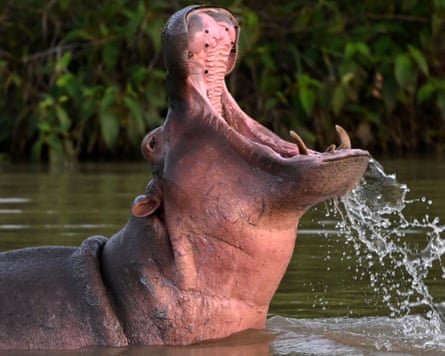
This is where Anant Ambani's proposal enters the equation. The Indian billionaire's son has presented what he characterizes as a creative solution to Colombia's hippo crisis: relocating the animals to a state-of-the-art wildlife facility in India. His private zoo, designed to accommodate diverse species and environments, could theoretically provide adequate space and specialized care for the entire hippo population.
Ambani's offer represents a significant logistical and financial undertaking. Transporting 80 adult hippopotamuses across continents requires specialized equipment, veterinary expertise, and careful planning to ensure animal welfare throughout the process. The proposed relocation would need to address numerous international regulations governing wildlife transport and import restrictions. Environmental impact assessments would be necessary to evaluate potential effects on India's existing ecosystems and wildlife populations.
The proposal has generated considerable debate among conservationists, animal welfare advocates, and environmental experts. Some view it as a pragmatic solution to an intractable problem – removing invasive species from an ecosystem where they do not belong while providing them with appropriate living conditions. Others express skepticism about the feasibility and potential consequences of such a massive translocation effort.
Colombian authorities have historically struggled with responses to the hippo problem. Previous attempts at population control through culling have proven controversial and ethically fraught. The animals are often viewed sympathetically by locals and international observers, despite the genuine dangers they pose. Ambani's proposal offers an alternative that avoids lethal population management while actually removing the invasive species from Colombian territory entirely.
However, significant practical challenges remain. The animal relocation project would require cooperation and approval from multiple governmental bodies in both Colombia and India. Negotiations between private interests, national governments, and international wildlife organizations would need to be carefully orchestrated. Funding for such an ambitious undertaking would be substantial, though Ambani's considerable wealth could potentially cover these expenses.
The logistics of capture, transport, and acclimation would be extraordinarily complex. Hippos are notoriously difficult to handle and can be extremely dangerous when stressed or frightened. Veterinary teams would need to develop comprehensive protocols to ensure the animals' health and safety during the journey, which would likely involve multiple stages of transport across thousands of miles of ocean and land.
From an environmental perspective, the proposal raises interesting questions about responsibility for invasive species. Escobar's original introduction of hippos to Colombia represents a historical accident with continuing consequences. Removing these animals could be viewed as correcting an ecological mistake, even if that mistake originated decades ago. Conversely, some argue that the hippos have now become established parts of Colombia's fauna and should be managed within their current range.
The broader implications extend beyond hippos and Colombia. This case highlights ongoing challenges in wildlife management, invasive species control, and the long-term consequences of exotic animal ownership by private individuals. It demonstrates how personal acquisitions by the wealthy can create generational problems for entire nations and ecosystems. The hippo situation serves as a cautionary tale about the unintended ecological consequences of removing animals from their native habitats and introducing them to foreign environments.
Ambani's renewed offer demonstrates growing international recognition that creative solutions may be necessary to address stubborn ecological problems. Whether his proposal ultimately comes to fruition remains uncertain, but it has certainly elevated the discourse around possible interventions in the Colombian hippo crisis. The coming months and years will likely reveal whether this ambitious plan progresses toward implementation or remains a fascinating thought experiment in unconventional wildlife management.
Source: The Guardian


