
Blue Origin Rocket Grounded Following Satellite Launch Failure

Blue Origin grounds rocket fleet after satellite mishap during launch. Amazon billionaire Jeff Bezos's space company launches investigation into failed mission.
Blue Origin, the aerospace company founded by Amazon billionaire Jeff Bezos, has temporarily suspended operations following a significant setback during a recent satellite launch attempt. The rocket grounding comes as the company initiates a comprehensive investigation into what officials are describing as a satellite mishap that occurred during the mission. This development marks a notable pause in the company's aggressive expansion plans within the commercial spaceflight industry.
The failed launch represents a critical juncture for Blue Origin, which has been positioning itself as a major competitor in the increasingly crowded commercial space sector. The company has not yet released extensive details regarding the specific nature of the malfunction, but internal sources suggest that the issue occurred during the satellite deployment phase of the mission rather than during the primary launch sequence. This distinction is important, as it indicates that the rocket itself may have performed as expected, but the payload handling system experienced complications.
Jeff Bezos established Blue Origin in 2000 with the ambitious goal of making space travel more accessible and affordable. Over the past two decades, the company has developed multiple rocket systems and spacecraft designed for both crewed missions and cargo transport. The aerospace industry has watched closely as Blue Origin competes directly with other major players such as SpaceX and traditional defense contractors who have dominated the government contract landscape.
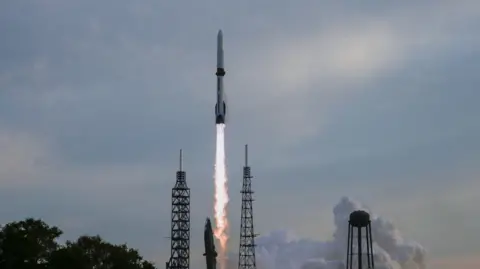
The grounding of the rocket fleet, while undoubtedly frustrating for the company and its stakeholders, is a standard industry response to unexplained technical failures. Safety protocols in the aerospace industry demand that operations cease until engineers can fully understand what went wrong and implement corrective measures. Blue Origin has emphasized its commitment to maintaining the highest safety standards, noting that this investigation is part of their rigorous quality assurance processes.
The timing of this incident is particularly significant given Blue Origin's recent achievements and upcoming missions. The company had been scheduling multiple launches across its product lineup, including missions for the New Shepard suborbital vehicle and the New Glenn orbital rocket currently in development. These delays could impact commercial partners and government agencies that rely on Blue Origin's launch capabilities for their satellite deployment programs.
Industry analysts are watching closely to see how quickly Blue Origin can resolve the investigation and return to flight operations. The company's reputation for transparency and technical excellence has been built over years of successful missions, and stakeholders generally expect that the investigation will be conducted thoroughly. The aerospace industry has a long history of learning from setbacks and implementing systematic improvements based on incident findings.
For the broader commercial space industry, Blue Origin's operational pause highlights the inherent risks associated with rocket launches and satellite deployment. Every launch represents a complex series of operations that must execute flawlessly, from ground systems to the upper atmosphere and beyond. The involvement of multiple subsystems means that failures can originate from numerous potential sources, requiring systematic troubleshooting to identify root causes.
The satellite involved in the mishap belongs to a commercial customer whose identity has not been publicly disclosed at this time. The loss of a satellite represents a significant financial impact, both for the satellite operator and potentially for Blue Origin's insurance carriers. Depending on the contractual terms between Blue Origin and its customer, the financial responsibility for the loss may be subject to legal disputes or insurance claims.
Blue Origin's investigation team is likely employing multiple diagnostic approaches, including data analysis from telemetry systems, hardware examination, and simulation testing. The company maintains sophisticated test facilities and technical expertise that will be directed toward understanding the failure mechanism. This methodical approach to problem-solving is characteristic of the aerospace industry, where lessons learned from individual incidents are often shared throughout the community to prevent similar failures elsewhere.
The space launch market has experienced remarkable growth over the past decade, with multiple companies competing for commercial and government contracts. Blue Origin has made significant investments in vertical integration, controlling much of its supply chain and manufacturing processes. This approach gives the company greater control over quality but also means that investigations may focus on internal processes and systems rather than external suppliers.
From a regulatory perspective, the Federal Aviation Administration (FAA) oversees commercial spaceflight licensing and safety oversight. While the FAA does not typically ground vehicles based on a single mishap, Blue Origin's voluntary suspension demonstrates industry best practices and commitment to safety above schedule pressures. The company's willingness to pause operations reflects the maturity of the commercial space sector, where long-term credibility is valued more highly than short-term schedule adherence.
Industry observers note that the investigation timeline could range from weeks to months, depending on the complexity of the failure and the accessibility of evidence. Blue Origin has not announced a specific date for resuming flight operations, indicating that the company is prioritizing thoroughness over speed. This approach is generally well-received by customers and regulatory authorities who understand that rushing back to flight before completing a full investigation could lead to repeated failures.
For Blue Origin employees and contractors, the operational pause creates both challenges and opportunities. Teams will be focused on the investigation rather than on routine launch preparation activities, but the work is equally important for the company's long-term success. The technical expertise demonstrated during failure investigations often becomes valuable knowledge that informs future design improvements and operational procedures.
Blue Origin's setback also provides perspective on the broader state of the commercial space industry. Despite occasional failures and operational pauses, the sector continues to grow and mature. Multiple companies are successfully launching payloads to orbit, demonstrating that commercial spaceflight has transitioned from experimental to operational status. Each company learns from its experiences and incorporates lessons into future systems and procedures.
As Blue Origin works through its investigation and prepares to resume operations, the company remains focused on its longer-term goals of establishing human spaceflight services and deploying heavy-lift launch capabilities. The satellite deployment failure is a setback, but not a fundamental threat to these ambitious objectives. The commercial space industry has demonstrated remarkable resilience and adaptability in the face of technical challenges, and Blue Origin has the resources and expertise to overcome this obstacle and return to flight operations with enhanced confidence in its systems and procedures.
Source: BBC News


