
Blue Origin's New Glenn Quattro Engine Upgrade Revealed

Blue Origin is ramping up New Glenn rocket development with Quattro, a powerful upper stage featuring four BE-3U engines instead of two.
Blue Origin continues to signal its serious intentions for the commercial space launch market with ambitious development plans for its flagship New Glenn rocket. This week, the aerospace company posted a significant job opening for a senior manager position focused on tank fabrication for an internal project known as "Quattro," and the detailed job description reveals compelling insights into the company's near-term manufacturing and engineering priorities for its heavy-lift launch vehicle.
The job posting for the senior manager role outlines a critical responsibility in Blue Origin's production pipeline. According to the official position description, the successful candidate will serve as "Senior Manager of Gen 2.0 Tank Fabrication" and will directly oversee the production execution of what the company describes as "the most structurally complex and schedule-critical subsystem on the vehicle—the propellant tank." This emphasis on the tank as the highest-priority subsystem underscores the technical challenges Blue Origin faces in scaling up rocket production capabilities.
Quattro represents a significant evolution in Blue Origin's New Glenn architecture and capabilities. Rather than simply refining existing designs, the company is developing an upgraded upper stage configuration that will dramatically increase the rocket's payload capacity and performance characteristics. This more powerful variant will feature four BE-3U engines mounted on the upper stage, replacing the two engines that currently power the existing booster configuration. The strategic decision to quadruple the upper stage's engine count reflects Blue Origin's confidence in its BE-3U engine technology and its commitment to competing effectively in the heavy-lift launch market.
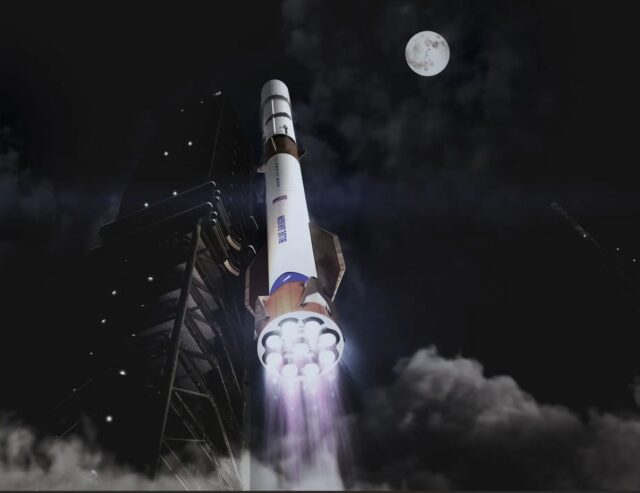
The company formally unveiled its roadmap for this enhanced configuration last November in a detailed presentation of what it calls the 9x4 New Glenn variant. This nomenclature succinctly captures the rocket's architecture: nine first-stage engines and four upper-stage engines, representing a significant departure from earlier proposed configurations. The 9x4 designation specifically distinguishes this more powerful version from other potential New Glenn variants and establishes a clear technical specification for both internal teams and external observers tracking the program's evolution.
New Glenn development has been a centerpiece of Blue Origin's long-term strategy to establish itself as a major player in commercial heavy-lift launch services. The rocket is designed to compete directly with SpaceX's Falcon Heavy and potentially with future variants of Starship for high-value national security and commercial payloads. By announcing and actively recruiting for the Quattro tank fabrication role, Blue Origin is signaling that it has moved beyond the planning and preliminary design phases and is now entering serious production preparation for this enhanced variant.
The emphasis on tank fabrication in the job posting is particularly significant because propellant tanks represent some of the most demanding manufacturing challenges in rocket development. These structures must simultaneously achieve extreme thinness to minimize weight while maintaining sufficient structural integrity to contain highly pressurized cryogenic fluids and withstand the immense forces generated during launch and flight. The fact that Blue Origin identified tank fabrication as the "most structurally complex and schedule-critical subsystem" suggests the company anticipates this component will be on the critical path for the overall Quattro program timeline.
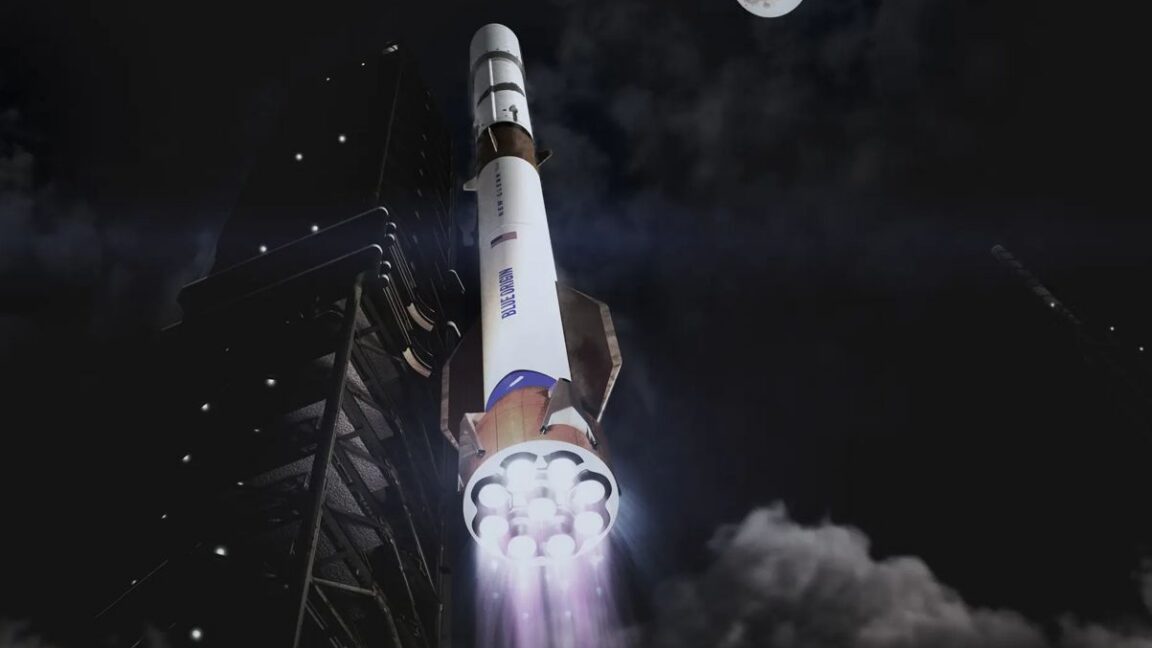
The position of Senior Manager of Gen 2.0 Tank Fabrication further indicates that Blue Origin has already moved through at least one generation of tank design and manufacturing processes and is now entering a second generation of production techniques and designs. The "Gen 2.0" designation suggests iterative improvements based on lessons learned from earlier tank production efforts, possibly including experience from other Blue Origin programs or from manufacturing partnerships. This methodical approach to production evolution reflects the company's broader philosophy of continuous improvement and technical refinement.
Hiring for such a specialized and senior-level position carries significant implications for Blue Origin's timeline expectations and budget allocations. The decision to actively recruit a senior manager specifically dedicated to tank fabrication execution indicates the company expects to ramp up production activities significantly in the near term. Rather than using existing personnel or contractors on a project-by-project basis, Blue Origin is investing in dedicated, permanent leadership infrastructure to manage what it anticipates will be a sustained, high-volume manufacturing operation for New Glenn propellant tanks.
The location of the position, posted for the Space Coast of Florida, further underscores Blue Origin's commitment to developing manufacturing and engineering infrastructure near its primary launch facilities. Florida's Space Coast provides proximity to Blue Origin's Cape Canaveral and Kennedy Space Center operations, enabling efficient coordination between design teams, manufacturing facilities, and launch operations. This geographic strategy allows the company to maintain tight integration across its production and operational divisions while drawing on the region's deep aerospace manufacturing expertise and supplier ecosystem.

The broader context of this job posting extends beyond a single position opening. It reflects Blue Origin's determination to establish itself as a serious competitor in the commercial space launch industry. With ambitious launch targets now publicly documented through its recruitment activities, the company is demonstrating that it intends to move beyond the development phase and into sustained operational service delivery. The Quattro program, with its quadruple-engine upper stage configuration, represents a substantial technical achievement that would position Blue Origin to compete for the most demanding and highest-value launch contracts.
Looking ahead, the success of the Quattro variant and the overall New Glenn rocket program will depend critically on the company's ability to execute complex manufacturing operations efficiently and reliably. By recruiting experienced senior management talent specifically focused on tank fabrication, Blue Origin is signaling its commitment to getting this critical component right. The company recognizes that rocket launches are ultimately about reliably delivering payloads to orbit, and that reliability depends fundamentally on the structural integrity and performance of components like propellant tanks that operate at the edge of engineering limits.
As Blue Origin continues to advance the New Glenn program toward operational status, developments like this job posting provide valuable insights into the company's internal planning, timeline expectations, and technical priorities. The investment in senior manufacturing leadership, the emphasis on tank fabrication complexity, and the preparation for Gen 2.0 production processes all point toward a company that has moved decisively from planning into execution mode. For observers tracking the competitive landscape of commercial space launch, these signals suggest that Blue Origin's ambitious targets for New Glenn operations may be drawing closer to reality with each passing quarter.
Source: Ars Technica


