
Brain Activity Reveals Secrets Behind Immersive Cinema

Bristol University's groundbreaking cinema lab tracks brain activity to help filmmakers create more engaging and immersive films. Discover the science behind compelling cinema.
A remarkable research initiative at the University of Bristol is revolutionizing how filmmakers understand their audiences by literally reading their minds. Equipped with state-of-the-art neuroscience technology, this specialized cinema laboratory combines traditional movie-watching experiences with cutting-edge biometric monitoring to unlock the secrets of what truly captivates viewers on screen.
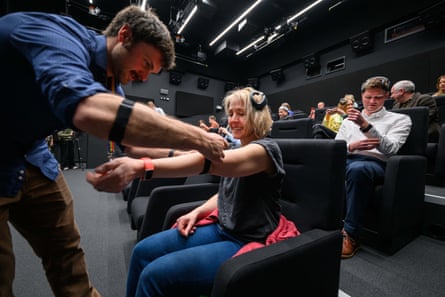
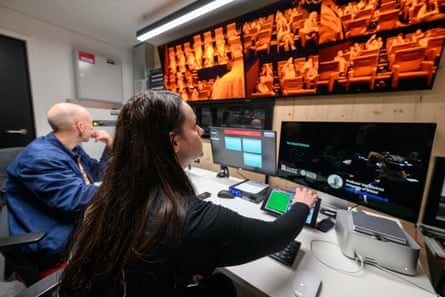
The experimental theater features all the hallmarks of a premium cinema experience: immersive surround sound systems, a high-resolution 4K projector that delivers stunning visual clarity, and luxurious reclining seats designed for maximum comfort. However, what distinguishes this facility from conventional multiplexes is the sophisticated array of scientific instruments worn by research participants. Instead of settling in with traditional movie snacks, volunteers don specialized headsets that continuously monitor brain activity using electroencephalography (EEG) technology. Simultaneously, heart rate monitors track cardiovascular responses, while infrared cameras meticulously record involuntary physiological reactions including eye blinks, pupil dilation, and subtle body movements.
This innovative approach stems from a fundamental question that has long puzzled the entertainment industry: what specific elements make certain films truly unforgettable? The cinema lab at Bristol University represents a pioneering attempt to answer this question through rigorous scientific methodology. By combining objective neurological data with subjective viewer feedback, researchers can identify precisely which scenes, dialogue exchanges, visual effects, and narrative moments trigger the strongest emotional and cognitive responses in audiences.

The research framework integrates multiple data collection streams to create a comprehensive understanding of viewer engagement. Participants watch complete films or carefully selected sequences while their brain activity is continuously recorded through non-invasive EEG sensors. These sensors measure electrical activity across different regions of the brain, revealing which neural networks activate during moments of intense engagement, emotional impact, or narrative confusion. The heart rate monitors provide physiological markers of arousal and stress responses, while the infrared cameras document behavioral indicators such as sustained attention or distraction.
Following each screening session, researchers conduct detailed interviews with participants to gather qualitative insights about their viewing experience. Volunteers are asked to identify specific moments that deeply affected them emotionally, explain which scenes held their attention most powerfully, and articulate why particular narrative elements resonated with them. This combination of objective neurological measurement and subjective human testimony creates a multidimensional dataset that reveals far more about viewer psychology than either approach could achieve independently.
The implications for filmmaking and film directors are potentially transformative. Understanding which story elements, visual compositions, musical choices, and pacing decisions generate the strongest engagement could fundamentally change how creative professionals approach their craft. Directors currently rely heavily on intuition, experience, and industry conventions when making artistic decisions. This research provides an evidence-based foundation that could empower filmmakers to make bolder creative choices with greater confidence, knowing they're backed by neuroscientific validation of what actually works for audiences.
The project has already attracted significant interest from established filmmakers in the industry. At least one prominent director has committed to participating in the research program, bringing their films into the Bristol laboratory for analysis. This real-world application demonstrates how the academic research extends beyond theoretical understanding into practical implementation that could reshape contemporary film production practices. The involvement of professional filmmakers also adds credibility to the project and creates a direct pipeline from research findings to industry adoption.
Neuroscientists involved in the project recognize that viewer engagement operates on multiple levels simultaneously. The brain doesn't process films as simple collections of shots and sounds; instead, it integrates visual information, auditory cues, narrative expectations, emotional context, and memory-based associations into a unified experience. By measuring activity across different brain regions—including those responsible for emotion processing, memory formation, attention control, and social cognition—researchers can map how different cinematic techniques activate these networks in concert.
The technology employed in the Bristol cinema lab represents the cutting edge of neuroscience research. EEG headsets with high spatial resolution can distinguish activity patterns between adjacent brain regions, providing granular insight into which specific neural areas respond to different film elements. Heart rate variability analysis reveals not just baseline arousal but the dynamic moment-to-moment fluctuations in emotional intensity. Eye-tracking data captured by infrared cameras indicates where viewers direct their attention and how that attention shifts in response to on-screen developments. Together, these measurements create a rich tapestry of data about the viewing experience.

One of the most fascinating applications of this research involves understanding failure points in films—those moments when audience engagement dips unexpectedly or attention wavers at critical narrative moments. By identifying these engagement drops with neurological precision, filmmakers can investigate what specifically caused the disengagement. Perhaps a transition between scenes disrupted narrative flow, a visual effect inadvertently distracted from emotional content, or dialogue lost clarity amid the soundtrack. Armed with this knowledge, directors can refine their techniques and avoid repeating these mistakes in future projects.
The research also has implications for understanding individual differences in how people respond to films. While general patterns emerge across many viewers—certain plot points reliably generate excitement, specific cinematographic choices consistently evoke emotional responses—there remain important individual variations in what captivates different audiences. Some viewers show heightened responses to action sequences while others engage most deeply with intimate character moments. Understanding these variations could eventually allow for personalized recommendations or even customized film experiences tailored to individual neurological profiles.
Beyond immediate applications in entertainment, this neuroscience research contributes to broader understanding of human perception, attention, and emotional response. The structured environment of the cinema lab, where variables can be carefully controlled, offers an ideal setting for studying how brains process complex narrative and visual information. Findings from this research could extend to understanding attention disorders, emotional processing difficulties, or the therapeutic potential of carefully designed cinematic experiences for various patient populations.
The Bristol University project addresses a fundamental challenge facing contemporary filmmakers: how to distinguish between their own subjective reactions to their work and how broader audiences will actually respond. Directors inevitably develop blind spots regarding their own films through extensive exposure during production and post-production. This technology provides an objective window into authentic audience responses, helping creators see their work through fresh eyes. The resulting feedback loop could accelerate artistic development and increase the likelihood that films achieve their intended emotional impact.
As the entertainment industry increasingly recognizes the value of data-driven decision-making, projects like the Bristol cinema lab may become more common. Future film production could routinely include audience testing with neuroscientific monitoring, similar to how pharmaceutical companies currently validate drug efficacy through rigorous clinical trials. This doesn't necessarily mean reducing filmmaking to a formula, but rather ensuring that creative risks are taken with full understanding of their likely impact. Some of the greatest films in cinema history succeeded precisely because they took bold artistic chances—and now those chances could be informed by scientific understanding of human response.
The convergence of neuroscience and filmmaking exemplified by this project represents a broader trend of technology-driven innovation in creative industries. As our scientific understanding of human cognition, emotion, and attention deepens, opportunities emerge to apply that knowledge in ways that enhance artistic expression rather than constrain it. The Bristol cinema lab stands at the forefront of this exciting intersection, potentially ushering in a new era where art and science collaborate to create more powerful, meaningful, and ultimately more successful films that truly move audiences.
Source: The Guardian


