
Brazil Finally Protects Uncontacted Kawahiva Territory After 27 Years

Brazil's government begins demarcating 410,000 hectares for the uncontacted Kawahiva people, protecting them from illegal mining, logging, and farming.
In a landmark development for Indigenous rights in South America, Brazil's government has officially commenced the demarcation of land designated for the Pardo River Kawahiva people, one of the Amazon region's most isolated and vulnerable communities. This significant action comes nearly three decades after researchers first confirmed the existence of this nomadic hunter-gatherer group, marking a crucial turning point in efforts to safeguard their ancestral territories and way of life from external threats.
The Kawahiva Indigenous territory encompasses approximately 410,000 hectares (equivalent to roughly one million acres) of pristine Amazonian rainforest situated in the border regions between Mato Grosso and Amazonas states in northwestern Brazil. This vast expanse of land represents not merely a geographical designation but rather a critical lifeline for a community that has successfully maintained its isolation and independence for centuries, relying entirely on the forest's natural resources for survival and cultural continuity.
According to an official announcement from the National Indigenous Peoples' Foundation (Funai), the Brazilian governmental body responsible for Indigenous affairs, the demarcation process received formal confirmation during the previous week. This governmental action represents the culmination of extensive documentation, surveying, and bureaucratic procedures that have accumulated over more than two decades, reflecting the complex nature of land recognition efforts within Brazil's institutional framework.

The protection of the uncontacted Pardo River Kawahiva addresses a constellation of mounting pressures that have increasingly encroached upon their territories in recent years. The demarcation serves as a legal and administrative barrier against illegal mining operations, which have proliferated throughout the Amazon basin, extracting valuable minerals while devastating fragile ecosystems and displacing Indigenous communities. Additionally, the designated territory provides crucial safeguards against agricultural expansion, particularly from large-scale farming enterprises that have aggressively pursued land acquisition across the region for cattle ranching and crop cultivation.
Beyond mining and agriculture, the demarcated land also protects the Kawahiva from the devastating impacts of logging activities, both legal and clandestine operations that have systematically depleted vast portions of the Amazon rainforest. The loss of forest cover directly threatens the survival of uncontacted groups whose entire existence depends upon the availability of wild game, edible plants, medicinal resources, and the spiritual dimensions of their homeland. By establishing formally recognized territorial boundaries, the Brazilian government aims to create enforceable legal protections that can deter or prosecute those who illegally exploit forest resources.

The Kawahiva people represent an extraordinary example of cultural persistence and resistance to external influence. Their commitment to maintaining separation from mainstream Brazilian society reflects a deliberate choice to preserve their traditional knowledge systems, social structures, and spiritual practices intact and uncontaminated by outside contact. The uncontacted status of this community makes them particularly vulnerable to introduced diseases, for which their immune systems possess no defensive mechanisms, rendering even seemingly minor illnesses potentially catastrophic at the population level.
However, the demarcation process does not proceed without significant obstacles and opposition. Multiple legal challenges have emerged from entities connected to Brazil's powerful agribusiness sector, which views territorial protections for Indigenous communities as impediments to profitable economic expansion. These legal disputes may stretch through the judicial system for years, potentially delaying full implementation of the territorial protections and allowing continued unauthorized exploitation of resources within the designated area.
The political dimension of this land demarcation cannot be overlooked, as Brazil faces a pivotal presidential election scheduled for October that will determine the country's trajectory on environmental and Indigenous rights issues. The incoming administration's commitment to enforcing and defending the Kawahiva territorial demarcation remains uncertain, particularly if political shifts favor economic development over conservation and Indigenous protection. Previous Brazilian administrations have demonstrated varying degrees of enthusiasm for protecting Indigenous territories, with some actively supporting Indigenous land rights while others have proved hostile or indifferent to these concerns.
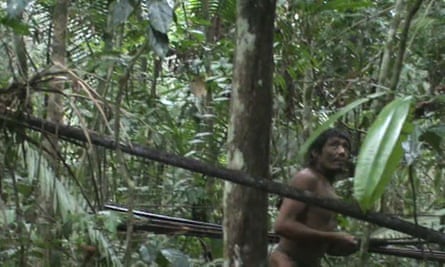
The recognition of the Kawahiva territory builds upon decades of advocacy by Indigenous rights organizations, anthropological researchers, and international environmental groups who have consistently documented the existence and cultural significance of uncontacted Amazonian communities. These efforts have generated scientific evidence, collected testimonies from neighboring Indigenous groups, and compiled photographic documentation that conclusively established the presence of the Kawahiva people despite their deliberate avoidance of external contact. This accumulated body of evidence ultimately convinced Brazilian authorities that formal territorial recognition had become both justified and necessary.
The approximately 27-year timeline between initial confirmation of the Kawahiva's existence and the commencement of official demarcation procedures illustrates the substantial bureaucratic and political obstacles that frequently obstruct Indigenous land rights recognition in Brazil. The lengthy delay during which the community remained vulnerable to external threats demonstrates the urgent need for more expedited procedures that can provide timely protection to vulnerable populations. Dozens of other uncontacted or semi-contacted Indigenous groups throughout the Amazon region continue awaiting similar territorial recognition and legal protections.
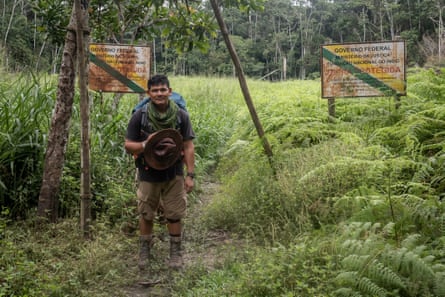
The Kawahiva case carries implications extending far beyond the immediate concerns of a single community, as it represents a test case for Brazil's commitment to honoring Indigenous rights within the broader framework of international environmental agreements and human rights obligations. The successful demarcation and protection of this territory could establish important precedents for other vulnerable communities seeking recognition and territorial security. Conversely, failure to effectively enforce these protections would demonstrate the insufficient commitment of Brazilian institutions to safeguarding Indigenous peoples and their lands.
Looking forward, the demarcation of the Kawahiva territory requires not only formal governmental action but also sustained enforcement mechanisms capable of preventing incursions by miners, loggers, and agricultural enterprises. This will necessitate adequate funding for monitoring systems, ranger patrols, and legal prosecution of violators. The Brazilian government must demonstrate genuine resolve to convert the demarcation into meaningful on-the-ground protection, transforming bureaucratic recognition into tangible security for the Kawahiva people and their irreplaceable forest home.


