
Brazilian Film Warns of Democracy's Fall & Amazon Loss

New documentary 'Vitória Régia' imagines post-coup Brazil surrendering the Amazon rainforest to US control, highlighting Indigenous threats.
A provocative new film titled Vitória Régia presents a dystopian vision of Brazil's future, imagining a scenario where far-right coup plotters successfully overthrow the nation's democratic government with alleged assistance from the United States. The documentary serves as both a political warning and a cautionary tale about the fragility of democratic institutions in Latin America, particularly in the context of contemporary geopolitical tensions and resource competition.
Set in the year 2025, the film's narrative depicts an alarming sequence of events that fundamentally reshape Brazil's political landscape. The scenario involves the assassination of the sitting president, the forceful closure of the national congress, and the subsequent surrender of the Amazon rainforest—one of the world's most crucial ecosystems—to American control and exploitation. This dystopian premise serves as the foundation for exploring deeper themes about sovereignty, environmental destruction, and the vulnerability of developing nations to external pressures.
The filmmakers employ dark satire to underscore their message, including a chilling scene where a character with a thick American accent addresses a group of journalists on a propagandistic tour of an oil refinery constructed within the newly annexed jungle territory. The soldier's welcoming remarks—"Ladies and gentlemen, welcome to the Amazon of America"—encapsulate the film's central horror: the complete appropriation of Brazilian sovereignty and natural resources by a foreign power.

The film's symbolism extends to an audacious monument constructed within the wilderness: a replica of the Statue of Liberty carved directly from the jungle landscape. This symbolic gesture represents Washington's complete dominion over what was once Brazilian territory, transforming one of humanity's most vital natural resources into a colonial possession masquerading under the banner of American freedom and democracy. The juxtaposition of American democratic symbols superimposed upon a subjugated landscape creates a powerful visual commentary on imperialism and resource exploitation.
Beyond its political messaging, Vitória Régia places particular emphasis on the catastrophic consequences that such a scenario would have for Indigenous peoples inhabiting the Amazon region. The film illuminates how political instability, foreign intervention, and the prioritization of resource extraction over environmental and cultural preservation would devastate the Indigenous communities who have stewarded these lands for millennia. By centering Indigenous perspectives and vulnerabilities, the documentary underscores that the threats facing the rainforest are inherently intertwined with threats to Indigenous sovereignty and survival.
The timing of the film's release reflects genuine concerns within Brazil and internationally about democratic backsliding and the resurgence of far-right political movements. The reference to Bolsonaro and alleged coup plotting connects the fictional narrative to real-world political controversies that dominated Brazilian news cycles in preceding years. By dramatizing these concerns through cinematic storytelling, the filmmakers aim to raise awareness about the potential consequences of political extremism and the importance of protecting democratic institutions against authoritarian threats.
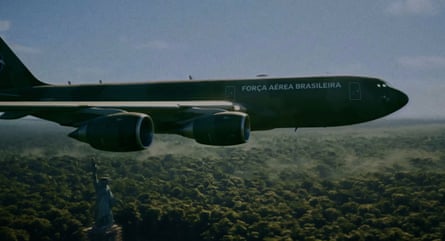
The Amazon rainforest occupies an irreplaceable position in global environmental discourse, serving as Earth's crucial carbon sink and home to unparalleled biodiversity. Any scenario involving the transfer of control over this territory to foreign interests would represent an unprecedented environmental catastrophe. The film explores how economic desperation, political corruption, and external pressure could theoretically conspire to overcome environmental consciousness and national pride, leading to the liquidation of Brazil's most valuable natural inheritance.
The documentary's approach of presenting a fictional but plausible future scenario proves particularly effective as a medium for social commentary and political awakening. Rather than presenting abstract arguments about democratic fragility or environmental threats, Vitória Régia creates an immersive narrative that allows audiences to viscerally experience the consequences of catastrophic political failure. The use of propaganda imagery, staged tours, and official rhetoric creates an unsettling portrait of totalitarianism and foreign occupation.
The film also serves as commentary on the broader geopolitical context of resource competition in the twenty-first century. As global demand for energy resources intensifies and climate change makes pristine ecosystems increasingly valuable, the strategic importance of regions like the Amazon grows ever more acute. The fictional scenario presented in Vitória Régia explores whether weak democratic institutions and internal political divisions could render Brazil vulnerable to external predation on an unprecedented scale.
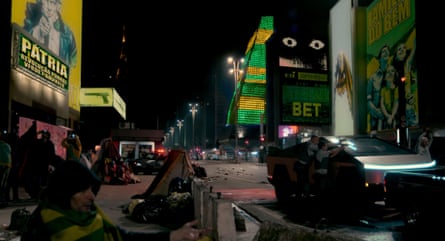
The film's representation of American involvement in the hypothetical coup raises uncomfortable questions about foreign intervention in Latin American politics, a region with a troubled history of US-backed coups and political interference. By invoking these historical precedents, the filmmakers tap into deep anxieties within Brazilian society about maintaining genuine sovereignty in the face of powerful external actors with competing interests. The fictional narrative becomes a lens through which to examine contemporary power dynamics and structural inequalities between developed and developing nations.
Indigenous communities featured or referenced within the documentary represent not merely victims of the imagined scenario but also the frontline defenders of the Amazon ecosystem. These communities possess centuries of ecological knowledge and demonstrated commitment to forest preservation, making them essential stakeholders in any serious discussion about the rainforest's future. The film's emphasis on Indigenous perspectives corrects a common deficit in mainstream environmental discourse that often marginalizes the voices and agency of the people who have successfully protected these ecosystems for generations.
The production and distribution of Vitória Régia itself represents a form of political resistance and artistic expression within Brazilian society. By creating this provocative film, the filmmakers contribute to public discourse about the fragility of democratic governance and the necessity of vigilance against authoritarian movements. The documentary functions simultaneously as entertainment, political commentary, and historical warning, using speculative fiction to illuminate present-day threats and vulnerabilities.
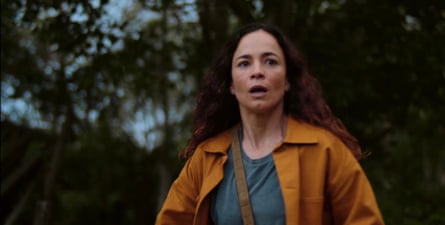
As Brazil continues to grapple with deep political polarization and environmental pressures, films like Vitória Régia serve crucial social functions by fostering critical reflection on the nation's trajectory. The documentary invites viewers to consider not merely what could happen in the catastrophic scenario it depicts, but what must be done in the present to prevent such outcomes. Through artistic storytelling and visual symbolism, the film translates complex geopolitical anxieties into emotionally resonant narratives that engage broader audiences than traditional political analysis might reach.
Source: The Guardian


