
British Diplomat James Roscoe Departs Washington Embassy Role

Senior UK diplomat James Roscoe has abruptly left his posting at the British embassy in Washington following Peter Mandelson's removal as ambassador.
A significant shift has occurred at the British embassy in Washington as James Roscoe, a prominent British diplomat who stepped into a critical interim role following upheaval in UK-US diplomatic relations, has unexpectedly departed from his position. The announcement, delivered through a terse official statement from the Foreign Office on Tuesday evening, offered minimal explanation for the sudden exit of the seasoned envoy.
Roscoe had assumed the role of charge d'affaires—effectively serving as the head of mission—after the controversial removal of Peter Mandelson from his post as British ambassador to the United States. This interim appointment placed Roscoe in one of the most visible and strategically important diplomatic positions within the Foreign Office network, overseeing bilateral relations between two of the world's closest allies during a period of considerable uncertainty.
The Foreign Office's official response to inquiries about the departure remained notably sparse. A spokesman confirmed simply: "James Roscoe has left his post." The absence of detailed commentary regarding the circumstances or reasons behind his abrupt exit sparked immediate speculation within diplomatic and political circles about potential underlying tensions or disagreements that may have contributed to his decision to step down.
Prior to his interim ambassadorial duties, Roscoe had served in the capacity of deputy head of mission at the British embassy since 2022, where he accumulated extensive experience in managing day-to-day embassy operations and serving as a key liaison between London and Washington. His tenure in this role provided him with deep institutional knowledge of the embassy's functions and established relationships with both British government officials and American counterparts across multiple levels of government.
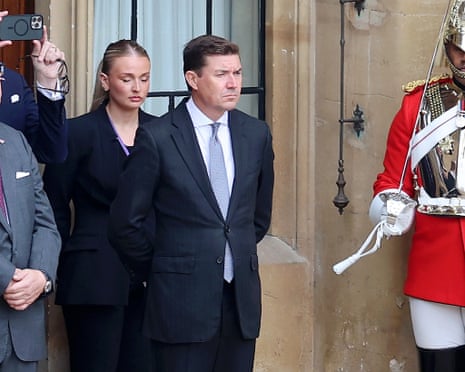
The timing of Roscoe's departure raises questions about the broader context of recent changes in UK-US diplomatic relations. The removal of Peter Mandelson, a figure with significant political history and influence within Labour circles, had already signaled turbulence within the diplomatic establishment. Mandelson's departure from such a prestigious posting under circumstances that led to his "sacking" suggested deeper issues regarding either diplomatic strategy, political disagreements, or personnel management at the highest levels of the Foreign Office.
Roscoe's subsequent move into the interim ambassador position represented a holding operation, typically implemented to maintain continuity and stability in embassy operations during periods of transition. However, the relatively swift exit of the interim charge d'affaires suggests that this transitional period may have been more contentious or challenging than publicly acknowledged.
The diplomatic corps represents one of Britain's most important institutional frameworks for projecting influence and protecting national interests abroad. The Washington embassy holds particular significance as the primary channel for high-level communication between the British and American governments, encompassing everything from trade negotiations and security cooperation to cultural and educational exchanges.
Personnel changes at such strategic locations typically involve careful planning and coordination, particularly when they occur in rapid succession. The abrupt nature of Roscoe's departure, combined with the earlier removal of Mandelson, suggests that the embassy may have been navigating particularly difficult circumstances during this period of transition.
Throughout his career within the Foreign Office, Roscoe had developed a reputation as a capable administrator and experienced diplomat with knowledge of transatlantic relations. His assignment to Washington as deputy head of mission reflected confidence in his abilities to manage complex bilateral issues. The decision to elevate him to interim charge d'affaires, despite the unusual circumstances surrounding his appointment, indicated that senior officials believed he possessed the requisite skills to maintain embassy operations during an uncertain period.
The absence of public explanation for his departure contrasts with typical diplomatic protocol, where transitions are usually announced with careful wording that preserves dignity and protects the reputation of departing officials. The brevity of the Foreign Office statement and the apparent lack of advance notice or public preparation for the announcement suggest that the exit may have been more contentious or unexpected than routine personnel changes.
Questions remain about who will assume responsibility for the embassy's leadership in the wake of Roscoe's departure. The Foreign Office has not yet announced arrangements for a replacement charge d'affaires or indicated whether another interim appointment will be made while a permanent ambassador is selected and confirmed. The extended absence of clear leadership at such a critical diplomatic post could potentially impact the embassy's operational effectiveness and its ability to respond to urgent bilateral issues.
The situation underscores the complexities of maintaining stable diplomatic relations during periods of political transition and change. The rapid succession of departures from key positions within the Washington embassy raises broader questions about the current state of British diplomatic operations and the potential challenges facing the Foreign Office as it navigates an increasingly complex international environment.
Officials within the British government have remained notably silent on the circumstances surrounding recent changes in embassy leadership. Neither the Foreign Office nor the Cabinet Office has provided substantive commentary on the underlying causes or implications of these departures, maintaining a strategy of minimizing public discussion of what appears to be significant internal disruption.
The departure of Roscoe represents another chapter in what has been a tumultuous period for British diplomatic representation in Washington. As the UK continues to navigate its relationship with the United States—a connection of paramount importance to British foreign policy, trade strategy, and security interests—the stability of embassy operations and leadership clarity become increasingly critical considerations for effective governance and international relations.
Source: The Guardian

