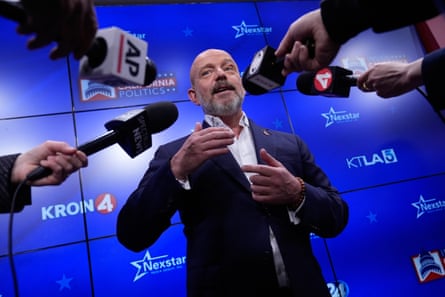
British Fox Host Eyes California Governor Seat

Steve Hilton, former Fox News host and UK adviser, surprisingly leads polls in California's 2026 governor race against fractured Democratic field.
The race to determine who will inherit the California governorship following Gavin Newsom's tenure has emerged as one of the most volatile and unpredictable political contests in recent memory. As Democrats remain in considerable disarray, an unlikely figure has emerged at the forefront of polling data: Steve Hilton, a British-born Republican strategist whose unconventional background and outsider appeal have captured the attention of voters across the state.
Steve Hilton represents a fascinating anomaly in contemporary American politics. The transplanted British national combines a unique blend of credentials that would have seemed improbable just years ago: he served as a strategic adviser within the corridors of 10 Downing Street during David Cameron's tenure as Prime Minister, subsequently launched his own business ventures, and most recently hosted a nationally broadcast program on Fox News. His claim to possessing connections with approximately half of Donald Trump's cabinet members has further amplified his profile within conservative circles and among those seeking an alternative to traditional political establishments.
For the past two decades, Republican candidates for statewide office in California have faced seemingly insurmountable odds. The state's political landscape has transformed dramatically, with Democrats commanding supermajorities throughout the state legislature and maintaining a substantial two-to-one voter registration advantage over their Republican counterparts. Against this historically daunting backdrop, Hilton's emergence as a competitive force represents a genuinely remarkable political development that has surprised seasoned political observers and commentators.

With approximately six weeks remaining before the crucial primary election that will substantially narrow the field of candidates, most recent polling data demonstrates Hilton occupying a narrow lead position over an increasingly fractured Democratic field. This polling advantage, while not commanding, nevertheless underscores the significant vulnerability of the Democratic coalition in a state they have long considered politically secure and reliable. The California governor election has proven far more unpredictable than conventional political wisdom would suggest, with multiple unexpected developments reshaping expectations regarding the eventual outcome.
The composition of the Democratic field has itself become a source of considerable concern for party leadership and establishment figures. Rather than coalescing behind a single strong candidate capable of leveraging the state's inherent Democratic advantages, the party has fractured into multiple competing factions, each advancing their own vision for California's future. This internal splintering has opened a genuine pathway for Republican advancement in what most observers considered an impossible political environment.
Hilton's background provides intriguing context for understanding his unexpected rise in California politics. His tenure as a Downing Street adviser provided him with experience in high-level strategic decision-making and governmental operations, exposure that distinguishes him from many politicians who rise through traditional party structures. His subsequent entrepreneurial ventures demonstrated business acumen and an ability to navigate complex market environments, credentials increasingly attractive to voters skeptical of career politicians.
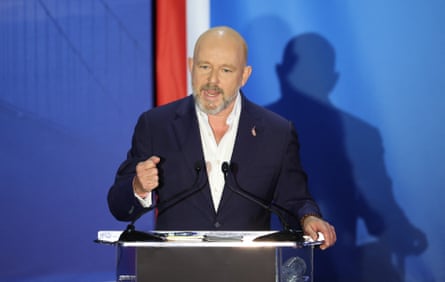
The 2026 California governor primary represents more than merely a competition for political office; it embodies a broader realignment of California's political landscape and a potential rejection of traditional partisan categories. Voters across the state appear increasingly open to candidates presenting unconventional backgrounds and outsider perspectives, particularly those offering critiques of existing governmental structures and policy approaches. This fundamental shift in voter preferences has created unexpected opportunities for candidates like Hilton who can effectively position themselves as authentic alternatives to political establishment figures.
Hilton's media presence through his Fox News program has provided him with substantial name recognition and direct communication channels to segments of the electorate that Republican candidates historically struggled to reach. His television platform allowed him to articulate policy positions and personal brand directly to viewers, bypassing traditional media interpretation and framing. This direct-to-audience communication strategy has proven remarkably effective in contemporary political campaigns, particularly among voters seeking alternatives to conventional political messaging.
The Democratic response to Hilton's unexpected competitiveness has been mixed and somewhat disorganized. Rather than mounting a coordinated attack against the Republican frontrunner, Democratic candidates have continued focusing primarily on internal competition and differentiating themselves from rival Democratic candidates. This intra-party competition has inadvertently strengthened Hilton's relative position and allowed him to avoid the kind of sustained opposition that might otherwise diminish his polling advantage.
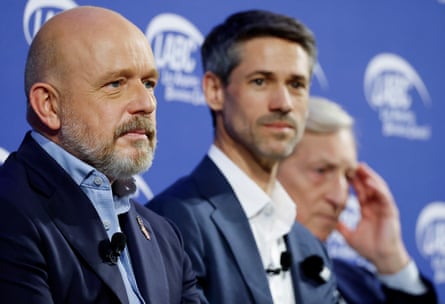
The broader political implications of Hilton's unexpected surge extend beyond the immediate gubernatorial race. His competitiveness challenges fundamental assumptions about California political dynamics and suggests that even in heavily Democratic states, the right candidate under appropriate circumstances can generate genuine competitive pressure. This development carries significant implications for how political strategists assess state-level political opportunities and invest campaign resources across different geographic regions.
Looking forward, the trajectory of Hilton's campaign will likely depend substantially on his ability to maintain focus and message discipline during the intensive final weeks before the primary election. The volatility that has characterized this race thus far suggests that significant developments and unexpected shifts remain highly possible. Whether Hilton can ultimately translate his current polling advantage into victory, and subsequently into a general election triumph against a reunified Democratic party, remains genuinely uncertain despite his current competitive positioning.
The California governor's race 2026 ultimately demonstrates that even in contemporary American politics, seemingly settled political questions can be unexpectedly reopened through the emergence of compelling candidates and changing voter preferences. Steve Hilton's improbable rise from British political strategist and Fox News personality to serious gubernatorial contender reminds observers that political outcomes remain perpetually contingent on circumstances, messaging, and candidate strength rather than predetermined by demographic and registration advantages alone.