
British Man's Wife Urges Saudi Release

Wife of detained British national Ahmed al-Doush appeals to Saudi Arabia for his release after UN finds his imprisonment arbitrary.
The wife of Ahmed al-Doush, a British national languishing in a Saudi Arabian detention facility since 2024, has made an emotional and urgent appeal for her husband's immediate release. Her desperate plea comes as his physical and mental health continues to deteriorate while in custody, raising serious concerns among international human rights advocates and his family members about his wellbeing and the circumstances surrounding his continued imprisonment.
Al-Doush's detention stems from social media posts he published, which Saudi authorities deemed problematic enough to warrant his arrest nearly two years ago. The charges relate to content he shared on various online platforms, a practice that has become increasingly scrutinized in the Kingdom as part of broader government efforts to regulate digital speech and online content. Since his arrest, his condition has reportedly worsened significantly, with medical and legal observers expressing alarm at the pace of his physical decline while in state custody.
In a significant development that strengthens the family's case for his release, the United Nations Working Group on Arbitrary Detention issued a formal determination in November regarding al-Doush's case. The UN body, which specializes in investigating allegations of arbitrary detention under international law, concluded that al-Doush is indeed being held in violation of international legal standards and fundamental human rights principles.

The UN working group's findings were based on an exhaustive eight-month investigation into the circumstances and legality of al-Doush's imprisonment. During this period, the international panel examined evidence, reviewed documentation, and evaluated the justification Saudi authorities had provided for his continued detention. Their investigation revealed that the basis for his arrest and ongoing imprisonment does not meet the threshold required under international law for lawful detention, particularly given the vague nature of the social media content charges.
Beyond simply declaring the detention arbitrary, the UN working group also issued a specific recommendation that Saudi Arabia take immediate action to remedy the situation. The group called for al-Doush's prompt and unconditional release from custody, recognizing that his continued incarceration serves no legitimate legal purpose. Furthermore, the international body recommended that the Saudi government provide financial compensation to al-Doush for the harm he has suffered as a result of his unlawful imprisonment.
The case of al-Doush reflects broader concerns among international human rights organizations about detention practices in Saudi Arabia, particularly regarding individuals accused of making critical or controversial statements online. Digital speech and social media posts have become a flashpoint in Saudi Arabia's efforts to control public discourse and suppress dissenting voices. Critics argue that the vague nature of laws governing online expression creates an environment where citizens and residents face uncertainty about what constitutes permissible speech.

Al-Doush's case is not isolated within the Kingdom. Saudi Arabia has faced sustained criticism from international watchdog organizations for its approach to online speech and the use of broad security laws to prosecute individuals who post content deemed critical of the government or its policies. The application of such laws has led to numerous detentions and lengthy prison sentences for journalists, activists, and ordinary citizens who dared to express themselves on digital platforms.
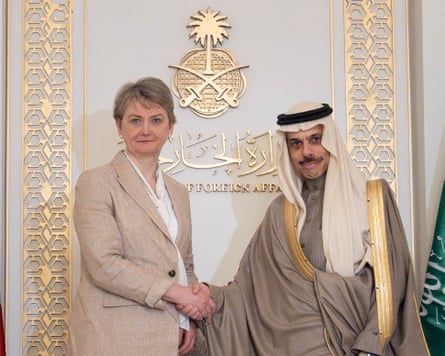
The British government's position on al-Doush's detention has become increasingly important as the case has gained international attention. As a British national detained abroad, al-Doush falls under the jurisdiction and protective responsibility of the UK Foreign Office, which has reportedly been engaged in diplomatic discussions with Saudi counterparts regarding his case. The appeals from his wife and the UN's formal findings have added pressure on both the British and Saudi governments to reach a resolution.
Medical professionals and observers who have followed al-Doush's case have expressed serious concerns about the deterioration in his health since his arrest. The physical toll of prolonged detention, combined with the psychological stress of being held under questionable legal grounds, has reportedly manifested in visible declines in his condition. These health concerns underscore the urgency of his wife's pleas and the international community's calls for his release.
The situation highlights the ongoing tension between Saudi Arabia's national security concerns and its international obligations regarding human rights and the treatment of detainees. While the Saudi government has positioned its approach to online content regulation as a necessary measure for maintaining public order and national security, critics counter that such broad applications effectively criminalize legitimate expression and violate fundamental freedoms recognized under international conventions to which Saudi Arabia is a signatory.
Al-Doush's wife has become the public face of his case, appearing in media interviews and making direct appeals to Saudi leadership for compassion and reconsideration of the charges against her husband. Her advocacy efforts have been supported by human rights groups and international organizations that view al-Doush's case as emblematic of larger systemic issues within the Kingdom's justice system and approach to digital governance. These organizations have utilized her case to draw broader attention to patterns of what they characterize as political detention masked under the guise of security law enforcement.
The UN working group's determination carries significant moral and legal weight, even if it is not directly enforceable under international law. The findings represent an official assessment by a respected international body that al-Doush's detention violates accepted international standards. This formal conclusion strengthens the legal and moral foundation of arguments being made by his family, his supporters, and international advocates for his immediate release and return to his family in Britain.

As al-Doush's case continues to unfold, it serves as a barometer for the international community's willingness and ability to pressure governments on human rights issues, particularly in strategically important regions like the Middle East. The resolution of his case will likely have implications for how other nations with citizens detained in Saudi Arabia approach their own diplomatic efforts and advocacy strategies. His wife's courageous public campaign represents a personal struggle for one family while simultaneously embodying larger questions about justice, human rights, and the boundaries of state authority in the digital age.
Source: The Guardian


