
British Soldiers Lost Control in 1972 Belfast Shootings

Inquest finds British army soldiers used excessive force in killing five civilians during Troubles in Belfast. Judge rules victims posed no threat.
A significant legal ruling has emerged regarding one of the most contentious incidents from Northern Ireland's turbulent history. An inquest judge has determined that British army soldiers lost control during a devastating shooting incident that claimed five civilian lives in west Belfast in 1972, concluding that the military personnel employed force that was fundamentally not reasonable under any circumstances.
The incident, which occurred on July 9, 1972, in the Springhill and Westrock areas of west Belfast, has long remained a point of contention and grief for the families of those who died. Mr Justice Scoffield's ruling, delivered on Thursday following a thorough inquest process, represents a critical moment in the ongoing efforts to establish accountability and truth regarding controversial killings during the conflict known as the Troubles.
Among those killed in the shooting were four individuals who the judge explicitly found posed absolutely no risk whatsoever at the moment they were fired upon. The victims included two teenagers whose lives were cut tragically short, a father of six who was simply going about his day, and a Catholic priest who was engaged in his pastoral duties. The fifth victim's circumstances were also examined in detail during the inquest proceedings.
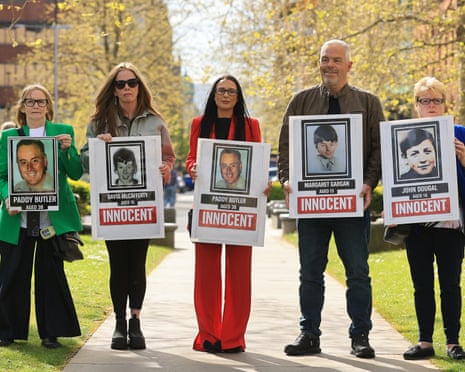
The Springhill shooting inquest has taken years to reach this conclusion, reflecting the complex and sometimes difficult process of seeking truth and justice regarding incidents from decades past. Families of the victims have long fought for recognition of what they contend was an unjustified use of lethal force by military personnel. The inquest process has allowed for comprehensive examination of evidence, witness testimony, and military records related to the tragic events of that July day.
This ruling adds to a growing body of evidence suggesting that during certain operations in Northern Ireland, military forces may have exceeded their authority and used excessive force against civilians. The judge's determination that the soldiers had lost control is particularly significant, as it suggests a breakdown in command discipline and adherence to rules of engagement that were theoretically in place to protect civilian populations.
The historical context of this incident is important to understand. In 1972, Northern Ireland was experiencing intense violence and civil unrest as part of the broader conflict between republican and unionist communities. British military personnel were deployed in significant numbers throughout the region, tasked with maintaining order and combating what military officials characterized as terrorist activities. However, this mission frequently placed soldiers in situations where their actions resulted in civilian casualties.
The inquest's findings regarding the 1972 Belfast shooting have implications beyond the immediate case itself. They contribute to a larger conversation about accountability for actions taken during the Troubles, a period that lasted from the late 1960s through the 1990s and resulted in thousands of deaths. Many families have pursued inquests and legal actions seeking answers about why their loved ones were killed and whether those responsible have ever faced justice.
Mr Justice Scoffield's examination of the evidence appears to have focused particularly on whether the soldiers reasonably believed themselves to be under threat at the moment they opened fire. The judge's conclusion that four of the five victims posed no risk suggests that the shooting cannot be justified as a defensive response to an immediate danger. This distinction is crucial in legal terms, as it moves the incident from potential justifiable use of force into the realm of excessive or unlawful killing.
The Troubles in Northern Ireland resulted in numerous controversial incidents involving security forces. Some of these have been investigated and ruled upon, while others remain disputed or have never been properly examined. The Springhill shooting, having now been subjected to formal inquest, joins a growing list of cases where official inquiries have questioned the actions of British military personnel and found them wanting in terms of proportionality and necessity.
For the families of those killed, the inquest ruling represents a form of official recognition that their loved ones were wrongfully killed. While an inquest finding does not necessarily result in criminal charges or prosecutions, it serves as an important statement of fact and can influence ongoing discussions about how historical injustices should be addressed. In recent years, there has been growing momentum in Northern Ireland and beyond for systematic examination of deaths during the conflict period.
The ruling also raises questions about what mechanisms exist to ensure accountability for military personnel responsible for civilian deaths. The British legal system has not consistently pursued criminal prosecutions in cases where inquests have found excessive use of force by security personnel during the Troubles. This has been a source of frustration for victims' families and human rights advocates who argue that accountability is necessary for genuine reconciliation and healing.
The Springhill inquest findings come at a time when Northern Ireland is grappling with how to address its contested past. Various initiatives, including oral history projects, truth commissions, and legal proceedings, are attempting to create comprehensive records of what occurred during the conflict. Some argue that understanding these historical events is essential for building a peaceful and inclusive future for all communities in Northern Ireland.
As society continues to reckon with this period of history, cases like the Springhill shooting demonstrate the ongoing importance of thorough investigation and accountability. The inquest process, while sometimes lengthy, provides an opportunity for facts to be established in a formal setting with legal scrutiny. Mr Justice Scoffield's ruling that soldiers lost control and used unreasonable force serves as a documented statement of what occurred and represents an important step in the path toward addressing historical injustices in Northern Ireland.
Source: The Guardian


