
British Strategist Steve Hilton Eyes California Governorship

Former David Cameron adviser Steve Hilton emerges as surprising contender in California governor race. Learn about his controversial policy ideas and political ambitions.
In a stunning political development that has surprised observers on both sides of the Atlantic, Steve Hilton, the controversial British strategist and former adviser to Prime Minister David Cameron, has emerged as an unexpected frontrunner in the highly competitive primary race for California governor. The announcement has sparked considerable debate among political analysts and voters about whether his unconventional approach to governance could resonate with California's diverse electorate or whether his track record of polarizing proposals will ultimately derail his ambitions.
Hilton's political reputation has long been defined by his willingness to propose bold and often unorthodox solutions to policy problems. During his tenure as a key strategist in the Cameron administration, he became known for championing innovative—and sometimes eccentric—ideas that pushed the boundaries of conventional political thinking. His willingness to challenge the status quo earned him both admirers who appreciated his creative approach and critics who questioned the practicality of his proposals. This reputation as a political maverick has followed him throughout his career and now factors prominently into assessments of his gubernatorial candidacy.
Perhaps his most memorable policy proposal came during his time in British politics, when he advocated for the use of state-owned cloud busters to literally make the country sunnier. While the idea never came to fruition, it became emblematic of Hilton's tendency to think outside conventional political boundaries and his willingness to embrace science-based solutions, however unconventional they might seem. This reputation for generating discussion-worthy proposals has earned him the nickname "pint-sized Rasputin" among Conservative circles in the UK, a reference that captures both his diminutive stature and his perceived outsized influence on political decision-making.

According to friends and colleagues, Hilton possesses a natural talent for generating public controversy and media attention in ways that recall the approach of former President Donald Trump. Those close to him describe how he "knows how to wind people up like Trump," a characterization that speaks to his instinctive understanding of political messaging and his ability to command attention in crowded media landscapes. This skill at capturing headlines and dominating news cycles could prove valuable in a state as large and politically diverse as California, where candidates must find ways to break through the noise and reach voters.
The California governor race has attracted an unusually diverse field of candidates, each bringing different perspectives and policy priorities to the campaign. Hilton's entry into this competitive landscape adds another layer of complexity to what was already shaping up to be a consequential election for the nation's most populous state. His campaign has adopted the slogan that a vote for him will make California "Califordable," a play on words that reflects his focus on addressing the state's well-documented housing and cost-of-living crisis.
The housing affordability crisis in California has become one of the defining issues of contemporary state politics, affecting millions of residents who struggle with skyrocketing rent and home prices. Hilton's campaign messaging directly addresses this concern by making affordability a central plank of his platform. Whether his unconventional approach to problem-solving will resonate with California voters grappling with genuine economic hardship remains an open question, however.
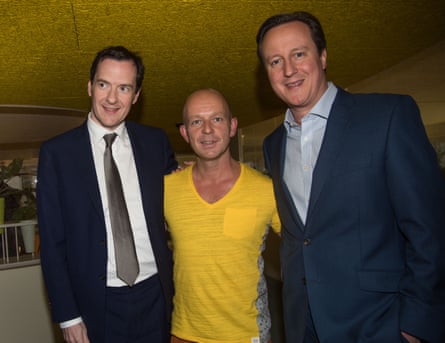
Not everyone in California's political establishment or among the state's voters appears convinced by Hilton's candidacy, despite his emergence as a primary frontrunner. Critics have raised concerns about his track record of controversial proposals and questioned whether his approach to governance would be effective at addressing California's complex, interconnected policy challenges. Some political observers have suggested that his status as a frontrunner may reflect media fascination with his outsider status rather than genuine grassroots support among the electorate.
Hilton's background as a former adviser to David Cameron gives him a significant credential in terms of high-level political experience. However, it also associates him with the Cameron government's record, which remains contentious in certain quarters due to its austerity policies and various controversial decisions. As he campaigns in California, Hilton will need to navigate questions about how his British political experience translates to the American context and whether lessons from UK politics are applicable to California's unique circumstances.
The British strategist's entry into California politics represents a broader trend of international figures bringing their expertise and perspectives to American electoral politics. Whether this represents healthy cross-pollination of ideas or an unwelcome intrusion of foreign perspectives into American political processes remains a matter of debate. Hilton's campaign will likely face questions about his motivations for seeking high office in California and what his long-term intentions are regarding American politics.
The California governor primary will ultimately be decided by voters who must weigh Hilton's unconventional approach against other candidates' more traditional platforms and policy proposals. As the campaign progresses, voters will have opportunities to evaluate whether his controversial ideas and proven ability to generate public discussion represent assets or liabilities. The outcome will say much about California's appetite for political disruption and novel approaches to longstanding policy problems.
Political analysts will be watching closely to see how Hilton's campaign develops over the coming months. His surprising emergence as a primary frontrunner has already changed the nature of the conversation about California's future direction and the qualities voters are seeking in their next governor. Whether he can translate his status as a media sensation into sustainable political support remains one of the central questions of the current California election cycle.
Source: The Guardian


